
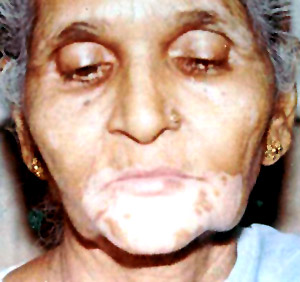
 Leucoderma literally means `white skin` and is a condition in which there is a localized loss of pigmentation of the skin. Leucoderma is also known as vitiligo. This is mainly a distressing skin condition. There is a gradual loss of pigment melanin from the skin layer, which results in white patches. These patches look ugly, especially in persons with a dark complexion. The condition does not cause any organic harm.
Leucoderma or Kilas
It means `white skin` and is a condition in which there is a localized loss of pigmentation of the skin.
Introduction
Leucoderma literally means `white skin` and is a condition in which there is a localized loss of pigmentation of the skin. Leucoderma is also known as vitiligo. This is mainly a distressing skin condition. There is a gradual loss of pigment melanin from the skin layer, which results in white patches. These patches look ugly, especially in persons with a dark complexion. The condition does not cause any organic harm.Causes and Symptoms
The problems usually start with a small white spot, which later develops into patches. These patches are pale in the beginning, but as time passed by due to the loss of pigmentation the patches become whiter and whiter. On the enlargement of the patches the spot enlarge and they merge into each other and in course of time form a very broad patch. In some cases most of the skin of the body may be covered by with white patches. Ayurveda maintains that leucoderma is caused by some morbidity of the liver, which results in a deficiency of pitta.
The main causes of leucoderma are said to be excessive mental worry, chronic or acute gastric disorder, and impaired hepatic function such as jaundice, worms or other parasites in the alimentary canal. The other causes can be mentioned as typhoid, a defective perspiratory mechanism, and burn injuries. Heredity is also a well-recognized causative factor.
The main causes of leucoderma are said to be excessive mental worry, chronic or acute gastric disorder, and impaired hepatic function such as jaundice, worms or other parasites in the alimentary canal. The other causes can be mentioned as typhoid, a defective perspiratory mechanism, and burn injuries. Heredity is also a well-recognized causative factor.
Treatment of Leucoderma
 There are certain disposing factors in leucoderma. These can be explained as persons suffering from chronic dysentery and other digestive disorders are more prone to it than others. If a patient of leucoderma is found to be suffering from digestive disorders, they should be treated first. Extra attention should be given to those affected people. Kutaja or Holarrhena antidysenterica seems to be the drug of choice in this condition. Powder of the bark of the plant should be given in one-teaspoonful doses thrice daily to correct the condition. This is an effective medicine in the disease. Arogyavardhini Vati is another useful prescription. The normal dose is four tablets given thrice daily. Bhallataka or Semecarpus anacardium is also helpful in treating this condition. Linctus prepared from the drug is given in one-teaspoonful doses thrice daily. Swallowing a little ghee or butter before ingesting the drug can ward off the side effects that the drug is likely to have. It should be followed by a glass of milk.
The following are specially recommended for Kilas patients:
1. Rasa Manikya: Shashilekha Vati; Vakuchi Taila; Honey: 60 mg Rasa Manikya, 240 mg Shashilekha Vati, and 4 ml each of Vakuchi Taila and honey to be taken thrice daily.
2. Decoction of Khadira and Amla: One dose of 58 ml to be taken in the morning.
3. Shweta Gunjadi Taila: Should be applied on the affected parts.
Diet and Other plans for therapy
The patient should be kept on a salt-free diet, as the absence of salt in the diet will speed up the recovery. Only rock salt is advised and that too in small quantities. Vegetables with a bitter taste like bitter gourd are beneficial.
Some other factors have to be taken care of and these include exposure to sun and heat should be avoided. The patient should avoid worry and mental strain. Some other measures are also important such as constitutional measures should be adopted to cleanse the system of accumulated toxins.
Regarding diet the patient should be extra conscious. To begin with the patient should undertake a fast of juices for about a week. After the juice fast the patient may adopt a restricted diet consisting of fresh fruits, raw or boiled vegetables and whole meal bread and chapattis. Curd and milk may be added to this diet after a few days. The patient may thereafter gradually embark upon a well balanced diet of seeds, nuts, grains, vegetables, oil, honey and yeast. Juice fasting may be repeated at intervals of two months or so. The patient should avoid tea, coffee, or any type of alcoholic beverages. All condiments and highly flavored dishes, sugar, white flour products, denatured cereals like polished rice and pearled barley and tinned or bottled foods should also be avoided.
Some other factors have to be taken care of and these include exposure to sun and heat should be avoided. The patient should avoid worry and mental strain. Some other measures are also important such as constitutional measures should be adopted to cleanse the system of accumulated toxins.
Regarding diet the patient should be extra conscious. To begin with the patient should undertake a fast of juices for about a week. After the juice fast the patient may adopt a restricted diet consisting of fresh fruits, raw or boiled vegetables and whole meal bread and chapattis. Curd and milk may be added to this diet after a few days. The patient may thereafter gradually embark upon a well balanced diet of seeds, nuts, grains, vegetables, oil, honey and yeast. Juice fasting may be repeated at intervals of two months or so. The patient should avoid tea, coffee, or any type of alcoholic beverages. All condiments and highly flavored dishes, sugar, white flour products, denatured cereals like polished rice and pearled barley and tinned or bottled foods should also be avoided.
Symptoms of Leucoderma
The problem usually starts with a small white spot and later on it develops into patches. These patches are pale in the beginning but become whiter and whiter as time passes due to loss of pigment. As spots enlarge, they merge into each other and, in course of time, form a very broad patch. In some cases most of the skin of the body may be covered with white patches.
Home Remedies for Leucoderma
There are many home remedies also, that are useful for leucoderma. One is the use of red clay, which is found by the riverside or on hill slopes, which should be mixed in ginger juice and applied over the white spots once a day. The copper contained in the clay seems to bring back skin pigmentation and ginger juice serves as a milk stimulant, facilitating increased blood flow to the spots. Drinking water kept overnight in a copper vessel also helps in the reduction of leucoderma.
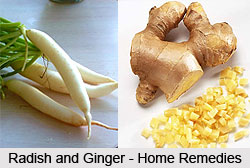
A paste made from the seeds of the radish is valuable in treating leucoderma. About 35 grams of these seeds should be powdered in vinegar and applied on the white patches. For better results, seeds should be finely pounded, mixed with a little white arsenic and soaked in vinegar at night. After two hours, when leaves appear, it should be rubbed on the leucoderma patches.
Few home remedies have been found useful in the treatment of Leucoderma.
• Psoralea Seeds should be steeped in the juice of ginger or cow"s urine for 3 days. The seeds should then be rubbed with hands to remove their husks, dried in the shade and powdered. 1 gram of this powder should be taken every day with fresh milk for 40 days continuously. The ground seeds should also be applied to the white spots.
• Babchi seeds, combined with tamarind seeds, are also of use. Equal quantity of both the seeds should be steeped in water for 3-4 days. They should then be shelled and dried in the shade. They should be ground into paste and applied to the white patches for a week. If the application of this paste causes itching or the white spots become red and a fluid being to ooze out, it should be discontinued.
• Another functional remedy for Leucoderma is Red Clay found by the river side or on hill slopes. The clay should be mixed in ginger juice and applied over the white spots once a day. The copper contained in the clay seems to bring back skin pigmentation and ginger juice serves as a milk stimulant, facilitating increased blood flow to the spots.
• Drinking water kept overnight in a copper vessel also helps.
• A paste made from the seeds of the radish is helpful in treating Leucoderma. About 35 grams of these seeds should be powdered in vinegar and applied on the white patches. For better results, seeds should be delicately pounded, mixed with a little white arsenic and soaked in vinegar at night. After 2 hours, when leaves appear, it should be rubbed on the Leucoderma patches.
• The use of turmeric and mustard oil is also considered valuable in the treatment of Leucoderma. About 500 grams of turmeric should be pounded and soaked in 8 litres of water at night. It should be heated in the morning till only 1 litre of water is left. It should then be strained and mixed with 500 ml of mustard oil. This mixture should be heated till only the oil is left. It should be applied on white patches every morning and evening for a few months.
The use of turmeric and mustard oil is also considered beneficial in the treatment of leucoderma. About 500 Gms of turmeric should be pounded and soaked in eight kgs of water at night. It should be heated in the morning till only one kg. of water is left. It should then be strained and mixed with 500 Gms of mustard oil. This mixture should be heated till only the oil is left and it should be applied on white patches every morning and evening for a few months.
A paste made from the seeds of the radish is valuable in treating leucoderma. About 35 grams of these seeds should be powdered in vinegar and applied on the white patches. For better results, seeds should be finely pounded, mixed with a little white arsenic and soaked in vinegar at night. After two hours, when leaves appear, it should be rubbed on the leucoderma patches.
Few home remedies have been found useful in the treatment of Leucoderma.
• Psoralea Seeds should be steeped in the juice of ginger or cow"s urine for 3 days. The seeds should then be rubbed with hands to remove their husks, dried in the shade and powdered. 1 gram of this powder should be taken every day with fresh milk for 40 days continuously. The ground seeds should also be applied to the white spots.
• Babchi seeds, combined with tamarind seeds, are also of use. Equal quantity of both the seeds should be steeped in water for 3-4 days. They should then be shelled and dried in the shade. They should be ground into paste and applied to the white patches for a week. If the application of this paste causes itching or the white spots become red and a fluid being to ooze out, it should be discontinued.
• Another functional remedy for Leucoderma is Red Clay found by the river side or on hill slopes. The clay should be mixed in ginger juice and applied over the white spots once a day. The copper contained in the clay seems to bring back skin pigmentation and ginger juice serves as a milk stimulant, facilitating increased blood flow to the spots.
• Drinking water kept overnight in a copper vessel also helps.
• A paste made from the seeds of the radish is helpful in treating Leucoderma. About 35 grams of these seeds should be powdered in vinegar and applied on the white patches. For better results, seeds should be delicately pounded, mixed with a little white arsenic and soaked in vinegar at night. After 2 hours, when leaves appear, it should be rubbed on the Leucoderma patches.
• The use of turmeric and mustard oil is also considered valuable in the treatment of Leucoderma. About 500 grams of turmeric should be pounded and soaked in 8 litres of water at night. It should be heated in the morning till only 1 litre of water is left. It should then be strained and mixed with 500 ml of mustard oil. This mixture should be heated till only the oil is left. It should be applied on white patches every morning and evening for a few months.
The use of turmeric and mustard oil is also considered beneficial in the treatment of leucoderma. About 500 Gms of turmeric should be pounded and soaked in eight kgs of water at night. It should be heated in the morning till only one kg. of water is left. It should then be strained and mixed with 500 Gms of mustard oil. This mixture should be heated till only the oil is left and it should be applied on white patches every morning and evening for a few months.
Natural Remedy for Leucoderma
Few home remedies have been found useful in the treatment of Leucoderma.
•Psoralea Seeds should be steeped in the juice of ginger or cow"s urine for 3 days. The seeds should then be rubbed with hands to remove their husks, dried in the shade and powdered. 1 gram of this powder should be taken every day with fresh milk for 40 days continuously. The ground seeds should also be applied to the white spots.
•Babchi seeds, combined with tamarind seeds, are also of use. Equal quantity of both the seeds should be steeped in water for 3-4 days. They should then be shelled and dried in the shade. They should be ground into paste and applied to the white patches for a week. If the application of this paste causes itching or the white spots become red and a fluid being to ooze out, it should be discontinued.
•Another functional remedy for Leucoderma is Red Clay found by the river side or on hill slopes. The clay should be mixed in ginger juice and applied over the white spots once a day. The copper contained in the clay seems to bring back skin pigmentation and ginger juice serves as a milk stimulant, facilitating increased blood flow to the spots.
•Drinking water kept overnight in a copper vessel also helps.
•A paste made from the seeds of the radish is helpful in treating Leucoderma. About 35 grams of these seeds should be powdered in vinegar and applied on the white patches. For better results, seeds should be delicately pounded, mixed with a little white arsenic and soaked in vinegar at night. After 2 hours, when leaves appear, it should be rubbed on the Leucoderma patches.
•The use of turmeric and mustard oil is also considered valuable in the treatment of Leucoderma. About 500 grams of turmeric should be pounded and soaked in 8 litres of water at night. It should be heated in the morning till only 1 litre of water is left. It should then be strained and mixed with 500 ml of mustard oil. This mixture should be heated till only the oil is left. It should be applied on white patches every morning and evening for a few months.
•Psoralea Seeds should be steeped in the juice of ginger or cow"s urine for 3 days. The seeds should then be rubbed with hands to remove their husks, dried in the shade and powdered. 1 gram of this powder should be taken every day with fresh milk for 40 days continuously. The ground seeds should also be applied to the white spots.
•Babchi seeds, combined with tamarind seeds, are also of use. Equal quantity of both the seeds should be steeped in water for 3-4 days. They should then be shelled and dried in the shade. They should be ground into paste and applied to the white patches for a week. If the application of this paste causes itching or the white spots become red and a fluid being to ooze out, it should be discontinued.
•Another functional remedy for Leucoderma is Red Clay found by the river side or on hill slopes. The clay should be mixed in ginger juice and applied over the white spots once a day. The copper contained in the clay seems to bring back skin pigmentation and ginger juice serves as a milk stimulant, facilitating increased blood flow to the spots.
•Drinking water kept overnight in a copper vessel also helps.
•A paste made from the seeds of the radish is helpful in treating Leucoderma. About 35 grams of these seeds should be powdered in vinegar and applied on the white patches. For better results, seeds should be delicately pounded, mixed with a little white arsenic and soaked in vinegar at night. After 2 hours, when leaves appear, it should be rubbed on the Leucoderma patches.
•The use of turmeric and mustard oil is also considered valuable in the treatment of Leucoderma. About 500 grams of turmeric should be pounded and soaked in 8 litres of water at night. It should be heated in the morning till only 1 litre of water is left. It should then be strained and mixed with 500 ml of mustard oil. This mixture should be heated till only the oil is left. It should be applied on white patches every morning and evening for a few months.
Recently updated articles in Homeopathy
Homeopathy for Bedwetting
Bedwetting can be treated by using homeopathic medicines. Infants commonly pass urine in bed during sleep. It becomes a matter of concern, however, if...
Homeopathy for Burning or Painful Urination
Homeopathy is helpful in treating burning or painful urination burning or pain while passing urine, combined with a sense of urgency.
Homeopathy for Heel Pain
The aim of homeopathy is not only to treat heel pain but to address its underlying cause and individual vulnerability.
Homeopathy for Backache or Lumbago
Homeopathy can treat different type of backaches according to the symptoms of the patient. Backache is one of the most common scourges of mankind.
Homeopathy for Shoulder Joint Pain or Stiffness
Homeopathy offers numerous treatments which can gradually treat frozen shoulder or Shoulder joint pain.
Related articles in Homeopathy

Homeopathy - Traditional Indian Medicine
Homeopathy, the traditional Indian medicine is a system of medicine that is based on the Law of Similars.
Diagnosis & Treatment in Homeopathy
The diagnosis and treatment in homeopathy does not concentrate on the disease but on the particular individual.