
Rudra is a liminal figure in the Rig Veda, invoked with Vedic hymns but not invited to partake in the regular Vedic sacrifice; as the embodiment of wildness and unpredictable danger, he is addressed more with the hope of keeping him at bay than with the wish to bring him near. Vishnu is a far more typically Vedic god, vaguely solar, benevolent, and procreative, often associated with Indra and prayed to jointly with him, but appearing alone in several hymns. The two gods are significant not merely for their roles in the Rig Veda but for the far more important roles they were destined to play in later sectarian Hinduism.
Only three hymns have been dedicated to Rudra in the entire Rig Veda. The rich ambivalence of his character is the basis of hymns dedicated to him. It has been said that Rudra is fierce and destructive like a terrible beast, like a wild storm; the sage begs him to turn his malevolence elsewhere. Yet Rudra is not merely demonic, for he is the healer and cooler as well as the bringer of disease and destructive fever.
The Rig Vedic hymns state that Rudra should help mankind to drive away all kinds of anguish, hatred and diseases from them. All kinds of evil, attacks and injury should be driven away from them. In the hymns Rudra has been called the best healer of all healers. It is believed that Rudra possess a vital energy and in turn inspires other with that vital energy of life.
The hymns dedicated to Rudra sings that the fierce, tawny god of many forms that is Rudra has adorned his firm limbs with shimmering gold. It has been wished that never the Asura power should go away from Rudra, the ruler of this vast world. The hymns describe that Rudra carries the arrows and bow; wears the precious golden necklace shaped with many forms and colours; and extends this terrible power over everything.
Rudra is considered the giver of plenty and the true lord and the one who gives healing medicines to mankind. With the help of the hymns the worshippers pray to Rudra that all his evil aspects and wrath should not affect his worshippers. The worshippers with the help of the hymns have asked for protection their family, their children and they expect that they should get double protection from Rudra who is the god of the heroes.
Lord Vishnu, like Rudra, seems prominent in the Rig Veda only through Hindu hindsight; though he is often invoked in conjunction with Indra, he is merely one of several similar gods of a generally solar and beneficial character. This hymn is the basis of the later myth of the dwarf avatar who takes three steps to win the world from the demons.
The hymns narrate that Vishnu, who lurks in the mountains, wanders like a ferocious wild beast. It is believed that this three fold steps is full of honey and he is able to rejoice in the sacrificial drink. Lord Vishnu alone supports the three elements of the Universe: the earth, the sky and the creatures.
A belief which is expressed through the hymns dedicated to Vishnu is that the highest footstep that is the footstep of Vishnu is the fountain of honey. The hymn ends with a prayer from the worshippers. The worshippers have expressed the desire to go to the dwelling place of Lord Vishnu where they will find heavenly bliss.
Hymns on Rudra and Vishnu
Hymns on Rudra and Vishnu concentrate on the different characteristics of the two lords and how the prayers towards both the lord are different.
Recently updated articles in Indian Puranas
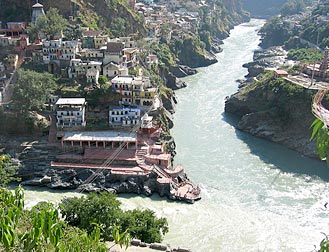
Mandakini, Holy River
Mandakini River is a significant Himalayan river in Uttarakhand, renowned for its ecological, cultural, and religious importance. Originating near the...
Kausika, Son of Vasudeva
Kausika is a minor figure in Hindu mythology and is identified in the Vishnu Purana as the only son of Vasudeva and his wife Vaishali. He is recognize...
Tandu, Attendant of Lord Shiva
Tandu is revered as the divine attendant of Lord Shiva and the foremost exponent of the Tandava dance. According to the Natya Shastra, he instructed S...
Niramitra, Mahabharata
Niramitra was a son of Nakula and Kareṇumati in the Mahabharata. A descendant of the Pandavas and the Kuru dynasty, he fought on the Pandava side duri...
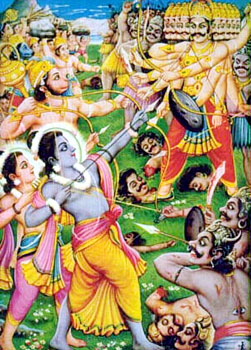
Mahodara, Ramayana
Mahodara was a prominent Rakshasa warrior, minister, and army chief who served under Rāvaṇa during the Battle of Lanka in the Ramayana. Celebrated for...
Related articles in Indian Puranas
Adhyayas in Agni Purana
Adhyayas in Agni Purana are all encompassing. The chapters have dealt with a variety of subjects related to human lives. A large number of chapters ha...
Indian Puranic Tribes
The existence of Indian Puranic tribes is often mixed with mythology and fiction that depict them as superhuman or sub.
Puranic Texts
Puranic Texts are vital according to Hindu, Jain or Buddhist religion; they describe the history of the Universe.

Puranic Shaivism
Puranic Shaivism established during the Gupta Dynasty. This puranic religion developed and expanded, and was accompanied by the development of Brahman...
Nilamata Purana
Nilamata Purana is a Kashmiri Purana that is referred by Kalhana. It is considered as one of the sources of ancient history of Kashmir.