 Embroidery of Karnataka is enriched with an array of intricate embroidery works that are the identification of the state. Kasuti embroidery is considered as kashidakari among the local people. The prime centres of embroidery work in Karnataka are Dharwad and Bijapur where the artisans are known for their exclusive creations.
Types of Embroidery of Karnataka
Karnataka is famous for two types of embroidery works. Kasuti or Kasuthi is the most popular embroidery work in this state and primarily originated here. Another form of embroidery that is prevalent in Karnataka is Kaudi or Kowdhi embroidery. Both these forms of embroidery work are not just visually appealing but also holds prominence in the art and culture of the state of their historical relevance.
Kasuti Embroidery
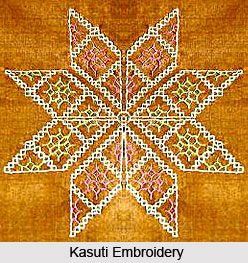
The tradition of Kasuti embroidery, in the history of embroidery of Karnataka dates back to the Chalukya period at the time of 6th to10th century. The women folk of this state mastered this form of embroidery work in that era and since then the artisans had been practicing this type of embroidery work. The process of this form of embroidery work is derived from the geometric designs of the temple sculptures. The artisans create emblems of bells, chariots birds, animals and rangoli with needle and thread. The usage of vibrant and bright colours like shades of red, orange yellow and purple make the items attractive and exclusive. Kasuti embroidery is done with simple running stitch, cross stitch, Murgi and Gavanthi stitches. The local people of this state create different designs including Gopi Kamala Chittu Kamala, Gundala Gopura, Dagabaji Gopura, Gandolagida, Tulasi, Peacock, Elephant, Lions, Vankipatti, Kayapatti etc.
There are almost seven hundred variations of designs and patterns that are implemented in Kasuti embroidery. The patterns are created in such a way that both the sides of the cloth have similar in appearance. Though cotton threads and fabrics were the first preference of the artisans for creating different items but in present days the artisans use silk yarns and fabrics that are highly in demand. This embroidery is done by counting the threads of the weft and the warp. The women folk create different designs on handloom irkal sarees. Vertical, horizontal, and diagonal stitches are used for creating these items. Another form of Kasuti embroidery is practiced in Coorg that has its own embroidery similar to Kasuti embroidery. This embroidery is an amalgamation of cross-stitch and the line or double running stitches. The motifs are based on the religious or mundane existence of the inhabitants.
Kaudi Embroidery
Kaudi Embroidery, also known as Kowdhi, is a traditional quilting technique deeply rooted in the cultural heritage of northern Karnataka, India. This age-old art form involves the meticulous crafting of Kaudi, a blanket or bedspread, using repurposed old fabrics. Women in the region skillfully employ simple running stitches and the Gubbi Kaalu stitch to transform worn-out cloth swatches into vibrant and intricate patchwork quilts.
Referred to as "Grandmothers` art," Kaudi embroidery is a manifestation of the rich creativity and imagination of women in northern Karnataka. The technique, passed down through generations, weaves together thousands of stitches to depict traditional folklore.
The incorporation of Kaudi stitches into variegated home textiles, such as yoga mats, has garnered positive consumer acceptance, showcasing the technique`s adaptability and appeal. This value addition not only promotes the sustainability of Kaudi embroidery but also opens avenues for rural entrepreneurship, encouraging start-ups and microenterprises with minimal investment.
The embroidery of Karnataka is the creation of the local people who have mastered the art of embroidery work since the commencement period of embroidery in the state. The rich cultural heritage and the simple nature of the vicinity have provided the artisans to diverse themes for their creations.