
The eleventh day rite in Garuda Purana has been explained by Lord to Garuda. One needs to visit the water reservoir on the eleventh day and perform carefully all funeral ceremonies. One who would perform this rite should invite Brahmins who are well-read in Vedas and other religious texts.
A preceptor by bathing and performing Sandhya should be purified. The tenth day Sraddha is performed in the family name without any chanting of the mantras. On the eleventh day a rice ball is offered to the departed through the chanting of mantras. A golden image of Vishnu, silver image of Brahma, copper image of Rudra and an iron image of Yama should be made. In the western direction a pot filled with Ganges water should be placed for Lord Vishnu. Upon it one should place Lord Vishnu`s image that is clad in yellow clothes. In the eastern direction there should be a pot of milk and water for Lord Brahma. The image of Lord Brahma draped in white robes need to be placed there. In the northern direction there should be a pot of honey and clarified butter for Rudra. Rudra`s image needs to be clad in red clothes. In the southern direction there should be a pot of rain-water for Lord Yama. Lord Yama needs to be placed upon this and should be clothed in black robes.
The son places Kusa-grass after having made a circle in the middle. He should be facing southward with the sacred thread tied over the right shoulder thereby offering water. This should be done by chanting Vedic mantras to Lord Vishnu, to creator, to Lord Shiva and perform the offering to Agni and then the eleventh-day Shraddha is performed. He should gift a cow for the helping along of his forefathers.
After washing the Brahman`s feet he should honour him with clothes, give him cooked food, sweetmeats, flour-cakes and milk. Then the son should place a golden image upon the bed and after worshipping it give the bed for the sake of the departed. This should be given to a Brahmin preceptor who has a family. It is considered through this gift, Sraddhas of the ninth and other days and by the rite of dedicating a bull, the departed goes to heaven.
On the eleventh day the rite of dedicating a bull is performed as prescribed. A lame, ill or very young cow cannot be used. This should be dedicated and never be used for domestic purposes. In order to release the forefathers, the bull-sacrifice is performed. After bringing together a young bull and cow they should be tied together with a marriage string according to the marriage rites and bind them to a post. The bull and young cow should be bathed from the pot of Rudra and worship them with fragrances and garlands. After that he walks round them.
After releasing the bull, the son, with folded hands he should recite a mantra. In the two eclipses, at a sacred bathing place this rite should be performed. If a woman, having a husband and a son, die earlier then the dedication of a bull should not be done.
Eleventh Day Rite
The eleventh day rite as mentioned in the Garuda Purana is a part of the funeral ceremonies that begins in the morning.
Recently updated articles in Indian Puranas
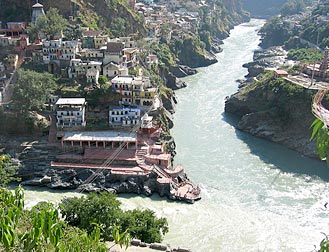
Mandakini, Holy River
Mandakini River is a significant Himalayan river in Uttarakhand, renowned for its ecological, cultural, and religious importance. Originating near the...
Kausika, Son of Vasudeva
Kausika is a minor figure in Hindu mythology and is identified in the Vishnu Purana as the only son of Vasudeva and his wife Vaishali. He is recognize...
Tandu, Attendant of Lord Shiva
Tandu is revered as the divine attendant of Lord Shiva and the foremost exponent of the Tandava dance. According to the Natya Shastra, he instructed S...
Niramitra, Mahabharata
Niramitra was a son of Nakula and Kareṇumati in the Mahabharata. A descendant of the Pandavas and the Kuru dynasty, he fought on the Pandava side duri...
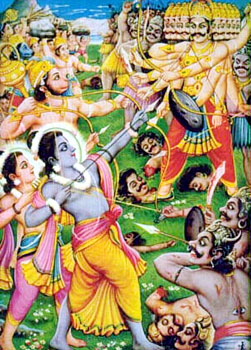
Mahodara, Ramayana
Mahodara was a prominent Rakshasa warrior, minister, and army chief who served under Rāvaṇa during the Battle of Lanka in the Ramayana. Celebrated for...
Related articles in Indian Puranas
Adhyayas in Agni Purana
Adhyayas in Agni Purana are all encompassing. The chapters have dealt with a variety of subjects related to human lives. A large number of chapters ha...
Indian Puranic Tribes
The existence of Indian Puranic tribes is often mixed with mythology and fiction that depict them as superhuman or sub.
Puranic Texts
Puranic Texts are vital according to Hindu, Jain or Buddhist religion; they describe the history of the Universe.

Puranic Shaivism
Puranic Shaivism established during the Gupta Dynasty. This puranic religion developed and expanded, and was accompanied by the development of Brahman...
Nilamata Purana
Nilamata Purana is a Kashmiri Purana that is referred by Kalhana. It is considered as one of the sources of ancient history of Kashmir.