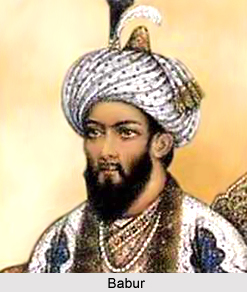
 Unani medicine, an admixture of Arabic medicine or Tibbi with Ionian-Greek medicine, developed considerably in India during the Mughal rule. India earned an esteemed position with the influx of distinguished physicians in the royal courts of the Mughal rulers. Their versatility in various subjects, expertise and vast knowledge augmented the growth and development of Unani medicine. Their high skills not only endeared them to the masses but also earned them respect and high positions. The founder of the Mughal Dynasty, Babur (1526-1530), when ascended the throne of Delhi, the medical services of the country took a new shape. Hospitals, well equipped with salaried physicians were readily available to the general mass. Babur was himself interested in the medical art and had a number of competent personal physicians in his court. Some of them have been elucidated below:
Hakim Amir Abul Baqa
One of the early physicians who came to the court of Babur (1526-30), the founder of the Mughal Empire in India, was Hakim Amir Abul Baqa. He was a close confidant of the Emperor and was well-versed in medicine. He also lived during the reign of Emperor Humayun for a long time. Humayun held him in high esteem. He died in an accident in 1541 A.D. Hakim Baqa is known as the author of a Persian Commentary on Mir Sayyid Sharif.
Hakim Yusuf Bin Muhammad Bin Yusuf Al-Harawi
Hakim Yusuf Bin Muhammad Bin Yusuf Al-Harawi was the son of Hakim Muhammad Bin Yusuf, a well-known physician of Hirat. In 1526 A.D. he came to India and was appointed as the personal physician of the Mughal Emperor Babur. He also served as a physician during the reign of Emperor Humayun. The Hakim also served in the court of Emperor Humayun. Besides being a notable physician he was also a renowned poet.
Yusuf Bin Muhammad Harawi was the author of the following medical works.
* Usui al-Usul
* Delail al-Bawl (1536)
* Dalail al-Nabd (1538)
* Fawaid al-Akhyar (1507)
* llqj cd-Amrad (Beginning of 16th century)
* Fami ul-Fawaid (1508)
* Wasidar dor Hifz-i Sihhat (1531)
* Risalah Makul wa Mashrub (1557-58)
* Riyad al-Adwiyah (1540)
* Sittah-i Daruriyah (1538)
* Amrad-i Chashm (1535)
* Tibbi-e-Yusufi
* Quesida Jit Hifz-ul-Sihhat
Yusuf bin Muhammad had also authored a non-medical work known as Biyad al-Insha on rhetoric and composition.