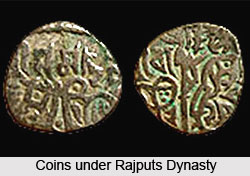
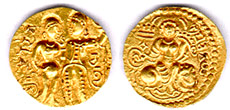
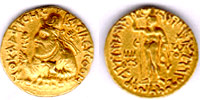
 Coins of Rajput period suggest the existence of common administrative elements amongst north Indian states. The Rajputs in control of central India circulated mostly gold, copper and billon coins. They rarely circulated silver coins. There were three dominant currencies of the Rajput era namely, Lakshmi-type gold coins, bull-and-horseman billon coins and gadhaiya billon coins. Only the third type of coinage maintained the tradition of anonymity. In some kingdoms, the gold coinage was supplemented by copper coinage. The area of circulation of the latter was strictly local, while the base gold passed throughout the mid-Ganga region. The coins of Rajput period can be studied according to the place and dynasties to which they belonged like the Delhi Coinage under Rajput, Coins of Kanauj, Coins under Mahipala, Coins of Chauhan Dynasty and Coins of Yadava Dynasty. The physical profile of the coinage of Rajput period was amazingly similar in different states, allowing evolutionary tendencies in design over time. The likelihood is strong that particular caste or family groups served as traditional financial administrators to the various Rajput ruling clans of the period. Whatever their background, it is clear that it was the specialized knowledge of the commercial or banking fraternity, which was responsible for elements of uniformity in the base gold coinage of Gangetic kingdoms during the period.
Lakshmi-Type Gold Coins
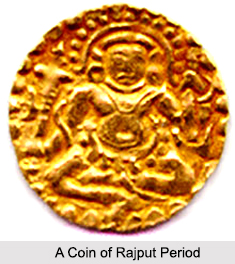
During the Rajput period, there existed coins that had goddess Lakshmi on their faces. The goddess was depicted in four arms instead of the usual two arms in the Gupta coins. Lakshmi became the motif on the coins of the Rajputs. The area of circulation of the Lakshmi-type gold coinage was generally congruent with the area of circulation of the Adivaraha Billion Coinage of the Pratihara Empire in the 9th and 10th centuries. The new gold coinage system succeeded or displaced the earlier billon coinage, and therefore satisfied many of the same exchange and savings demands.
The Lakshmi base gold coins of Rajput dynasty make conflicting indications of their monetary function. During the Rajput rule, gold coins were used in larger transactions like inter-state trade. It goes without saying that a merchant coming from an area outside the empire of a certain king would not be willing to accept at its intended value a debased gold coin issued by that king. Thus, in inter-state and foreign trade relations, gold coins were used according to their real weight and purity of metal.
As per the exchange process for the Lakshmi gold coins within Rajput states, it is unimaginable that the coins gave the professional moneychangers and bankers a moment`s trouble. Quite the opposite, there was much profit to be made from a currency, which required value assessment before being accepted. It is also said that the anonymity of the coinage of the early medieval period had largely come to an end under the Rajput regimes.
Other Coins of Rajput Period
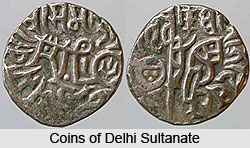
Seated bull and horseman were the invariable devices in billons and silver coins issued by Rajputs. The Tomaras, Chauhans of Delhi, Rathors of Kanauj, Rajputs of Narwar and Amritapala rajas of Badayun are credited with the continuity of these kinds of coins.