
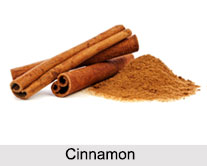
 Cinnamon is one of the most important spices of India and is grown in different parts of India. The quality of cinnamon depends, among other factors, on the region where it is grown. Pure cinnamon is free from any admixture with cassia, which is considered inferior to the former in appearance, flavour and odour.
Cinnamon
Cinnamon is one of the most important tree spices grown in India that also possesses medicinal properties.
Introduction
Cinnamon is one of the most important spices of India and is grown in different parts of India. The quality of cinnamon depends, among other factors, on the region where it is grown. Pure cinnamon is free from any admixture with cassia, which is considered inferior to the former in appearance, flavour and odour.Etymology of Cinnamon
Properties of Cinnamon
Cinnamon displays antiviral, antibacterial and antifungal properties. It also contains large amounts of antioxidants. The antioxidants in cinnamon have been found to have anti-inflammatory effects. It is also high in manganese and contains small amounts of calcium and fibre. It is aromatic, astringent, stimulant and carminative.
History of Cinnamon
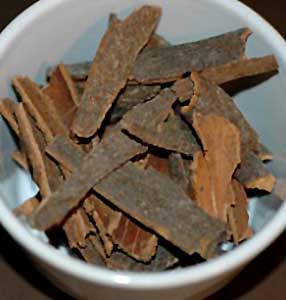 History of Cinnamon starts in India with the Dutch trade routes. Cinnamon has been known from distant antiquity, and it was so highly treasured among primeval nations that it was regarded as a gift fit for monarchs and other great potentates.
Later, Cinnamon was imported to Egypt from China as early as 2000 BC, and is mentioned in the Bible in Exodus 30:23, where Moses is known to use both sweet cinnamon and cassia. In their mythology it is stated that the lover`s bed is perfumed with myrrh, aloe and cinnamon. Herodotus and other classical writers also write about it. Cinnamon was commonly used on funeral pyres in Rome, and the Emperor Nero is said to have burned a year`s supply of cinnamon at the funeral for his wife Poppaea Sabina, in 65 AD. In the Middle Ages, the history of cinnamon was a mystery to the western world.
Arab traders brought the spice of Cinnamon via overland trade routes to Alexandria in Egypt, where Venetian traders from Italy who held a monopoly on the spice trade in Europe bought it. The disorder of this trade by the rise of other Mediterranean powers such as the Mameluk Dynasties and the Ottoman Empire was one of several factors that forced Europeans to search more widely for other routes to Asia.
Portuguese traders finally discovered Ceylon (Sri Lanka) at the end of the fifteenth century, and modernised the traditional production of cinnamon by the salagama caste. The Portuguese established a fort on the island in 1518, and faultlessly protected their own monopoly for over a hundred years. Dutch traders finally extricated the Portuguese by making treaty with the inland Ceylon kingdom of Kandy. They established a trading post in 1638 and took control of the factories by 1640. Finally, they expelled all remaining Portuguese by 1658.
The Dutch East India Company continued to renovate the methods of harvesting Cinnamon in the wild, and eventually began to cultivate its own Cinnamon trees. The British took control of the island from the Dutch in 1796. However, the importance of the monopoly of Ceylon was already declining, as cultivation of the cinnamon tree spread to other areas and also into India, the more common cassia bark became more acceptable to consumers, and coffee, tea, sugar and chocolate began to outstrip the popularity of traditional spices. Since the British era, various uses of Cinnamon were noticed and the usage spread rapidly all across the nation. Eventually, Cinnamon was used as an important ingredient in Ayurvedic mixtures and is still used in various foods and medicinal mixtures. The history of Cinnamon has a strong influence in its contemporary importance and this spice is noticeably used in south India.
Benefits of Cinnamon
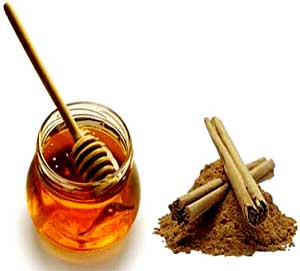 The innumerable benefits of Cinnamon were recognised since the start of natural medicine in India. Cinnamon is a small tree that grows in India, Sri Lanka, Indonesia, Brazil, Vietnam, and Egypt. In India, it`s one of the oldest known spices. The process of preparing Cinnamon includes drying of the bark of the cinnamon tree and rolling into cinnamon sticks, also called quills. Cinnamon can also drying be dried and ground into a powder. However, Cinnamon in every form is beneficial to mankind.
The characteristic flavor and aroma of cinnamon comes from a compound in the essential oil of the bark called cinnamonaldehyde, which is added to many dishes prepared in India. Although there are four main varieties of cinnamon, Ceylon cinnamon and Cassia cinnamon are the most popular. Ceylon cinnamon is sometimes called true cinnamon, is more expensive, and has a sweet taste. This kind is imported to India and used extensively. The quills are softer and can be easily ground in a coffee grinder. Ceylon cinnamon is sold in specialty stores and used for various purposes.
The benefits of Cinnamon mainly revolve around medicinal properties. Besides using it in cooking, cinnamon is also believed to have health benefits. In traditional Chinese medicine, Cassia cinnamon is used for colds, flatulence, nausea, diarrhea, and painful menstrual periods. It`s also believed to improve energy, vitality, and circulation and be particularly useful for people who tend to feel hot in their upper body but have cold feet. Since then, Cinnamon is highly regarded to be a medicinal spice in India as well.
In Ayurveda, cinnamon is used as a remedy for diabetes, indigestion, and colds, and it is often recommended for people with the kapha Ayurvedic type. Cinnamon is a common ingredient in chai tea, and it is believed to improve the digestion of fruit, milk and other dairy products. Recent studies have found that amongst the benefits of cinnamon, checking blood sugar is another important one. Preliminary lab and animal studies have found that cinnamon has antibacterial and antifungal properties and is active against Candida albicans, the fungus that causes yeast infections and thrush, and Helicobacter pylori, the bacteria responsible for stomach ulcers.
People taking diabetes medication or any medication that affects blood glucose or insulin levels however should not take therapeutic doses of cinnamon unless they are under a doctor`s supervision. Taking them together may have a preservative effect and cause blood glucose levels to dip too low. Also, the people who have been approved medication to manage their blood sugar should not reduce or discontinue their dose and take cinnamon instead. Improperly treated diabetes with Cinnamon can lead to serious complications, such as heart disease, stroke, kidney disease, and nerve damage.
Cassia cinnamon, the kind of cinnamon normally sold in grocery stores and in supplement form, naturally contains a compound called coumarin. Coumarin is also found in other plants such as chamomile, celery, sweet clover, and parsley. At high levels, coumarin can damage the liver. Coumarin can also provides a "blood-thinning" effect, so cassia cinnamon supplements should not be taken with prescription anti-clotting medication, such as Coumadin (warfarin), or by people with bleeding disorders.
 Cinnamon can also be found in a concentrated oil form that is derived from cinnamon bark. Some of these products are not intended for consumption, but instead are used for aromatherapy essential oils. Also, the oil is highly powerful and an overdose can depress the central nervous system. People should not take the oil to treat a condition unless it is prescribed by close supervision of a qualified health professional. Pregnant women should avoid excessive amounts of cinnamon but moderate amounts of Cinnamon shall keep her healthy.
It is found that mixture of honey and cinnamon cures most of the diseases. One part honey if added to two parts of luke warm water and a small teaspoon of cinnamon powder, thus making a paste and should massage it on the itching part of the body. It is noticed that the pain deceases within a minute or two. For arthritis patients, cinnamon is suggested daily morning and night with one cup of hot water with two spoons of honey and mixing one small teaspoon of cinnamon powder. If drunk regularly even chronic arthritis can be cured.
The doctors treat their patients with a mixture of one tablespoon Honey and half teaspoon cinnamon powder before breakfast to relieve from any kind of pain within a week and out of the 200 people, 73 patients are successfully cured. Those suffering from hair loss or baldness may apply a paste of hot olive oil, one tablespoon or honey, one teaspoon cinnamon powder before bath, keep it for approximately 15 minutes, and then wash the hair. Two tablespoons of cinnamon powder and one teaspoon of honey if taken with a glass of Luke warm water and drunk, it destroys the germs of the bladder.
A paste of one teaspoon of cinnamon powder and five teaspoons of honey and if applied on the aching tooth, gives great relief. This may be done 3 times a day daily till such time that the tooth has stopped aching. Two tablespoons of honey and three teaspoons of cinnamon powder if mixed in 16 ounces of tea water if given to a cholesterol patient, it reduces the level of cholesterol in the body by 10% within 2 hours. As mentioned for arthritic patients, if taken 3 times a day any chronic cholesterol is cured. Those suffering from common or severe colds should take one tablespoon Luke warm honey with 1/4 teaspoon cinnamon powder daily for 3 days that will cure most chronic cough, cold and clear the sinuses.
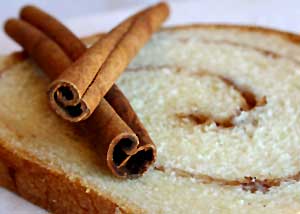
If honey is taken with cinnamon powder, it cures stomachache and also clears stomach ulcers from the root. According to the studies done in India, it is revealed that if honey is taken with cinnamon powder the stomach is relieved of gas. A paste of honey and cinnamon powder if applied on bread or chappati instead of jelly and jam and taken regularly for breakfast, it reduces the cholesterol in the arteries and saves the patient from Heart attack. Also those who have already had an attack, if they do this process daily, are kept miles away from the next attack. Daily intake of honey and cinnamon powder strengthens the immune system and protects the body from bacteria and viral attacks. Cinnamon powder if sprinkled on two tablespoons of honey and taken before food, it relieves acidity and digests the heaviest of meals.
Cinnamon also helps to cure influenza, as it kills the influenza germs and saves the patient from flu. Tea made with honey and cinnamon powder, when if taken regularly arrests the ravages of old age. The mixture of cinnamon and honey also keeps the skin fresh and soft and arrests old age. Three tablespoons of honey and one teaspoon of cinnamon powder paste is probably the best natural remedy for pimples. Applying honey and cinnamon powder in equal parts on the affected parts also cures skin infections like Eczema, Ringworm and others. Also drinking of this mixture regularly does not allow the fat to accumulate in the body even though the person is consuming a high calorie diet.
Cinnamon is also effective for checking bad breath and daily morning and night honey and cinnamon powder taken in equal parts restores hearing. The benefits of Cinnamon are almost unlimited and the consumption of this spice can be done in different forms, like powder, paste, bark and so on. The alluring taste and aroma of this spice has also made it an integral ingredient of Indian dishes.
Use of Cinnamon in Cuisine
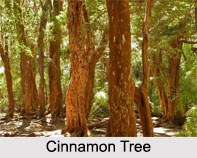 Cinnamon is largely used for adding flavour in food. It has a delicate fragrance and a warm agreeable taste. It is extensively used as a spice or condiment in the form of small pieces or powder. It is used in beverages, pickles, chutneys and ketchup. It is also used in various types of baked foods, confectionary and drinks preparations. In baking it is used for both colouring and flavouring.
Cinnamon Oil
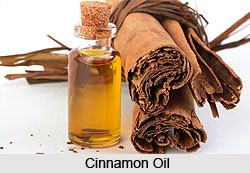 Cinnamon oil has various applications in aromatherapy. Cinnamon is widely known as Dalchini in India, and is used for food preparations. It is obtained from the bark and leaves of cinnamon trees. Cinnamon is widely grown in tropical countries of South America, West Indies and southern Asia. It is one of the best oils for circulation, especially during menopause, because it enhances circulation, it is very supportive of the heart. Cinnamon bark oil has a high percentage of aldehyde and is not recommended for use on the skin, as it can be irritating. Cinnamon leaf oil has a very low percentage of aldehyde and is more suitable for use in liniments or massage oils.
Properties of Cinnamon Oil : It has a sweet pungent taste and has heating or neutral energy. It acts as a stimulant, diaphoretic, aphrodisiac, antispasmodic, expectorant, analgesic, diuretic, alterative and carminative. It affects maximum on plasma, blood, muscle, marrow and nerves tissues. It mixes well with the oils like Cardamom, Orange, Nutmeg, Anise, Fennel and Trifola. However, it acts as a skin irritant and convulsive in high doses.
Uses of Cinnamon Oil :
•Cinnamon is an excellent flavoring agent; so many people prefer adding cinnamon oil while they are cooking.
•It can be useful for parasites, scabies or lice.
•The aroma of cinnamon oil makes it a very effective as a room freshener.
Health Benefits of Cinnamon Oil :
•It is good for heart.
•It improves digestion and appetite.
•It is empowering to the will.
•It works well in cold or sinus problems and menopause.
•It makes it a good brain tonic.
•It helps to remove nervous tension and memory loss.
•It improves sexual function and increases sexual desire.
•It helps to remove blood impurities.
•It helps to remove stiffness of the muscles and joints.
•It is useful for diabetic patients as it is capable of controlling blood sugar.
•It helps to destroy germs in the gall bladder.
•It reduces the risk of colon cancer.
•It can be applied to the skin. However, it is advisable to test the skin first, as sensitive skin types may react.
Recently updated articles in Food in India
Food in Gupta Period
Food during the Gupta Period reflected the diverse culinary traditions of ancient India. People consumed both vegetarian and non-vegetarian dishes, in...

Mehboob Alam Khan
Mehboob Alam Khan is a renowned culinary historian, chef, and educator dedicated to preserving Hyderabad's rich gastronomic heritage. Celebrated for r...

Assamese Cuisine
Assamese Cuisine is a mixture of different indigenous styles with regional variations and considerable external influences. Assamese use simple and fl...
Tamarind
Tamarind Pulp is the thick pulp of ripe fruit of Tamarind which is commonly used as condiment.
Food in Mauryan Period
Food in Mauryan Period largely includes the food and drinks during 300BC to 75 AD which has been extensively discussed in Arthashastra, rock edicts of...
Related articles in Food in India
Food in Ancient India
Food in Ancient India has been largely agro based as the society in India in the ancient times was primarily agro based. The food of ancient India ref...

Food in Indus Valley civilization
Food in Indus Valley civilization largely depicts the agrarian culture of ancient India. As this had been one of the earliest civilisations of India,...

Indian Regional Cuisines
The intriguing style of different cooking style contributes to the diversity of the Indian regional cuisines.
Indian Festive Foods
Indian Festive foods augmenting the richness of Indian festivals, have gained popularity.
Ancient Buddhist Cuisine
Ancient Buddhist Cuisine has been well described in the early Buddhist works in which food has been classified into four categories.