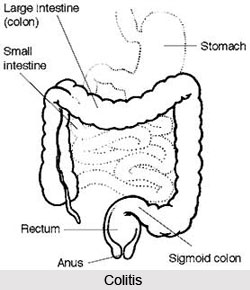
 Causes of Colitis react as the inflammation of the colon. A variety of illnesses and infections can be the causes of Colitis like, infection, food poisoning, lack of blood supply and so on.
Infectious Colitis is a kind of Colitis that is caused by viruses and bacteria infections in the colon. Most are food-borne illnesses or "food poisoning." Common bacterial causes of Colitis include Shigella, E.Coli, Salmonella and Campylobacter. These infections often present with bloody diarrhea and can cause noteworthy dehydration.
Pseudomembranous colitis is caused by the bacteria Clostridium difficile (C. difficile) and this disorder is often seen in patients who have recently been taking antibiotics to cure an infection. The antibiotic changes the normal bacteria present in the colon and allows an overgrowth of the Clostridium bacteria. Clostridium bacteria generate a toxin that causes diarrhea. This is an illness, often occurring with fever. The diarrhea is usually not bloody.
Ischemic Colitis is another type of Colitis with different causes. The arteries that supply blood to the colon are alike any other artery in the body and they have the potential to narrow due to atherosclerosis, just like blood vessels in the heart, which can cause angina, or conical vessels in the brain can cause a stroke. When these arteries narrow, the colon looses its blood supply and becomes inflamed. The colon can also lose its blood supply for automatic reasons. A couple of examples include volvulus, in which the bowel twists on itself, or an incarcerated hernia in which a portion of the colon gets stuck in an out pouching of the abdominal wall and thus cause Colitis. In patients who are at risk for decreased blood flow to the colon, ischemic colitis can occur if the blood pressure falls. This may occur with anemia, dehydration, or shock. Ischemia or lack of blood supply causes major pain, fever, and bloody bowel movements.
Inflammatory Bowel Disease is another kind of Colitis and the causes of this kind of Colitis are mainly due to the weak immune system of the individual. There ate two types of inflammatory bowel disease. The first is the ulcerative colitis that is an autoimmune illness in which the body`s immune system attacks the colon and causes inflammation. Ulcerative colitis originates in the rectum and may gradually spread throughout the colon. The signs and symptoms are generally abdominal pain and bloody bowel movements.
Crohn`s disease is the second type of inflammatory bowel disease, and may engage any part of the digestive tract from the esophagus and stomach to both the small and large intestine. It often has bounce lesions that is diseased areas are interspersed with healthy areas of tissue. Microscopic Colitis is the second type that too characterises colon inflammation, namely collagenous colitis and lymphocytic colitis. In these diseases, some layers of the colon wall become enlarged with either collagen or lymphocytes cause the inflammation. Watery, non-bloody diarrhea is the most common symptom. This is a rare illness that is seen more frequently in elderly women. The cause of this kind of Colitis is unknown but an autoimmune potential may exist. Chemicals cause chemical Colitis. If chemicals are instilled into the colon, inflammation and injury can occur. One of the complications of an enema is the swelling of the mucosal lining of the colon caused by harsh chemicals.
The causes of Colitis often suggest its remedies and areas of prevention. However, the causes of Colitis should not be neglected and appropriate treatment should be done thereafter.