 Velankanni is officially spelled as Vailankanni, which means Virgin of Velai also spelled as Velanganni. Velankanni or Velanganni is a panchayat town in Nagapattinam district of Tamil Nadu.
Velanganni or Velankanni is located on the Coromandel Coast of the Bay of Bengal, 350 kilometres south of Chennai and 12 kilometres south of Nagapattinam.
Velanganni or Velankanni was once a port traded with Rome and Greece, Velanganni or Velankanni was the tiny commercial centre steadily lost its significance to the larger city of Nagapattinam.
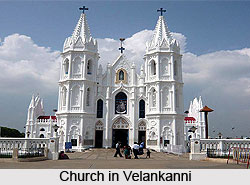
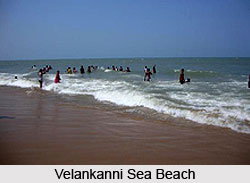 Velankanni canal built to link this town with Vedaranyam still lies to the west. The Vellayar, a minor branch of the Kaveri River, runs south of the town and discharges into the sea. Velankanni was among the worst hit by the tsunami caused by the 2004 Indian Ocean earthquake. The town of Velankanni is home to a significant Roman Catholic shrine. This church is dedicated to Our Lady of Good Health.
According to the Population Census in the year 2001, Velankanni had a population of 10,144. The males constitute 48 percent of the population and females 52 percent. The citizens have an average literacy rate of 69 percent, higher than the national average of 68 percent. The male literacy is 75 percent, and female literacy is 64 percent. 12 percent of the population is under 6 years of age.
Velankanni is the eternal abode of one of the biggest Catholic pilgrimage centres in India. The Catholic Basilica devoted to Our Lady of Good Health is popularly known as the Lourdes of the East. The origins of this church can be traced back to the 16th century and its founding is attributed to three miracles: the apparition of Mary and Jesus to a slumbering shepherd boy, the curing of a lame buttermilk vendor, and the survival of Portuguese sailors assaulted by a violent sea storm. This church was built in Gothic style. It was modified by Portuguese and then further expanded later on due to the influx of pilgrims. The church building was raised to the status of basilica in 1962 by Pope John XXIII.
Annually, 20 million pilgrims flock to the shrine from all over India and abroad, out which an estimated 3 million people visit the shrine during its annual festival from 29 August to 8 September. The 11-day annual festival of Christians concludes with the celebration of the Feast of the Nativity of Mary on 8 September every year.