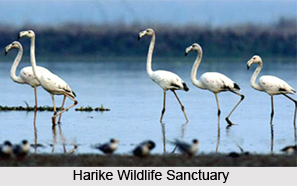
 Harike Wildlife Sanctuary is located along the border of Amritsar and Ferozepur districts of Punjab at the confluence of Sutlej and Beas rivers. Stretching over an area of 86 square kilometres, it forms one of the most significant wildlife sanctuaries of the country and is recognized across the globe. The region holds international significance owing to its wetland and was thus declared as a Ramsar site in the year 1990 by the International Body of Wetlands under the UNDP. In 1999 it was raised to the stature of a Wild Life Sanctuary.
Inhabitants of Harike Wild Life Sanctuary
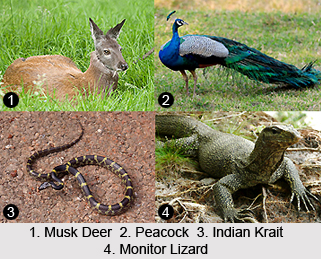
Harike Wild Life Sanctuary is the home to a great variety of birds, both resident and migratory, and forms an exquisite site for bird watching. During winters flocks of spectacular migratory birds arrive at the sanctuary from far off places such as Arctic and Siberia. When the migratory season reaches the peak, about 45,000 ducks have been recorded in the sanctuary. The common species during the winter season include brahminy ducks, shoveller, pintail, common teal and wigeon. The area hosts a beautiful lake which is especially famed for diving ducks including tufted ducks, common pochard and crested pochard which are found extensively in the lake. Birds of 375 species have been documented here among which 40 are the migrants that arrive from long distances. In addition to the vast range of avifauna 26 species of fish and 7 species of turtle are also the inhabitants of Harike Wild Life Sanctuary. Mammals of the sanctuary enlist common mongoose, Indian wild boar, jackal, jungle cat and smooth Indian otter.
Threats to Harike Wild Life Sanctuary
Encroachments on the wetland habitats have caused some major problems in Harike Wild Life Sanctuary lately which mainly comprise water hyacinth weed infestation. This weed is gradually choking the system and decreasing the siltation and available surface area. This has resulted in the reduction in the volume of water. Other problems encountered by the sanctuary are deposition of toxic and untreated industrial effluents into the system from major cities such as Kapurthala, Jallandhar and Ludhiana. Illegal poaching of birds and fishing are also added threats to Harike Wild Life Sanctuary.