Abhinaya Chandrika is a comprehensive manual on Odissi's
expressive aspects, including facial expressions, hand gestures (mudras), and
motional portrayal (bhava), especially lasya bhava. This text contains 284
verses. The first two verses are in praise of Ganapati and Lord
Jagannath. Till the 18th verse, the author gives an account of Nrutya
Prasansa and then he describes the origin of Odissi dance. The author has
vividly described the Pada Mudras of the Odissi dance. According to him there
are four basic positions of the feet Stambha Pada (Samapada), Kumhhapada
(Ayatamandalapada), Dhanupada and Mahapada. Then he has enumerated Sama,
Bisama, Ghatita (Udghatita) Suchi and Agratala Sanchara. The author of Abhinaya
Chandrika has described only sixteen Mudras with different names. He has
described twenty-eight Hasta Mudras. He goes on to give a detailed description
of the Bandhas (acrobatic poses) of Bandha Nrutya. Other things which find
mention in the text are Sapta Tandava of Lord Shiva,
dances of different regions, folk dances of Odisha, Bhumis, Charis,
Karakshetras, Mukharagas etc.
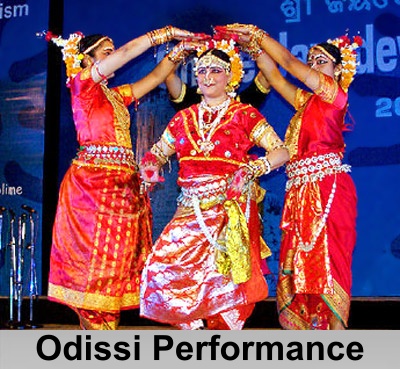
According to Abhinaya Chandrika, a complete performance of
Odissi includes eight steps:
First step: The dancer enters the stage.
Second Step: The dancer offers respects in the form of
Pranamas to Guru, Bhumi, and musical instruments accompanying the dance
performance.
Third Step: The dancer prays to Lord Shiva
Fourth Step: The dance, then prays to Lord Ganapati
Fifth Step: In this step, the dancer offers pranamas
to the audience, as a form of welcoming them to enjoy the performance as a work
of art.
Sixth Step: The dancer starts performing Odissi repertoire,
also known as Pallavai. It includes svara and gita. Odissi repertoire marks the
beginning of the performance.
Seventh Step: This is where the actual dance performance
begins.
Eighth Step: This is the final step where the Odissi performance ends with druta and Ananda nritya.