
The first-born child is of immense importance in the Indian society. The first child comes up with many duties and responsibilities. Every care is taken of the mother in her antenatal period and also at the time of the birth of the child. If the child happens to be a son, great care is taken in his every aspect of growth. If the first child is a son then it is an occasion for grand rejoicing. The families go for pilgrimage in gratitude.
Sacrifice, donations and feasts are given at the holy shrines. A son is to every Hindu the first and the last of all he desires. If a son is born, through himself he pays his own father the debt and he owes him for his own life, and thus secures similar payments for the gift of life that was given to him. Aitreya Brahman of the R`GVeda in chapters of VU.5.13 have mentioned something worthwhile, such as when a father perceives the face of a living son, he automatically pays a debt in him and gains immortality. The pleasure, which a father can have in his son, exceeds all other materialistic enjoyments. His wife is a friend; his daughter can be an object of sympathy, while his son shines as his future light in the highest world. The texts in Manu, chapter VII.3 mentions that when a man is perfect and when he comprises of three individuals - himself, his wife and his son. Again, Yajnavalkaye says that immortality in future worlds and heavenly ecstasy are obtained by means of grandsons, sons and great grandsons.
On the eleventh day of the birth of the first born, alms are given to the poor. Brahmins and kinsmen are feasted. Menials receive gifts in forms of kind or cash. In ancient days, if a child was born to parents, who did not have a child for a long tenure often takes a vow that their first born shall be given the name of the small pox Goddess Shitala. This practice is now considered as a crime and thus exits no more.
If the first born of one particular sex and after three years another child is born of the other sex, it was considered unlucky and its birth indicates the death of a parent or loss of wealth; sometimes fire to the house of birth or some other calamity such as snake bite, disaster by lightning.
A boy is born after three girls; then the ill luck is grave. But it is not unlucky if a girl is born after three boys. Various remedies and ceremonies are performed to ward off the ill effects of one born after three, and are usually the same as are observed to avert the evil effects of one born under an evil nakshatra. A horseshoe, painted with vermilion, is burnt for a long time on the third or tenth day after such a child takes birth. The burned horseshoe is attached to the bed of the mother. This is one of the superstitious remedies among many others.
Importance Of first born child
The first-born child attains great importance in the Indian society.
Recently updated articles in Indian Festivals
Festivals of Dadra and Nagar Haveli
Festivals of Dadra and Nagar Haveli reflect the vibrant tribal culture and traditions of the region. Celebrations such as Tarna Festival and Divasol F...
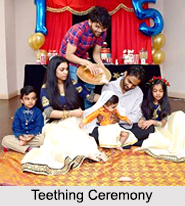
Teething Ceremony in Indian Customs
In India, teething is observed with deep cultural significance, blending health and tradition. Families often use age-old remedies like rubbing honey,...
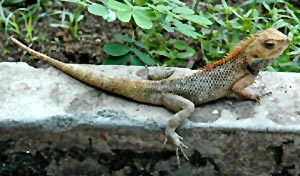
Lizard Chirping - Indian Belief
In Hinduism, lizard chirping is often regarded as a sign of divine communication and is considered auspicious in many traditions. The sound, such as h...
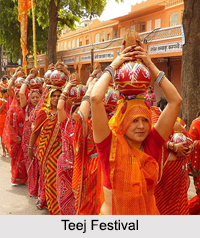
Festivals of Haryana
The festivals of Haryana reflect the state's rich cultural heritage and religious fervor. Celebrations like Gugga Naumi, Teej and Gangore are marked b...
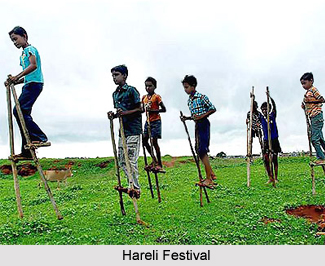
Hareli Festival
Hareli Festival is a popular festival of Chhattisgarh. It is celebrated in the month of Shravan by the farmers who worship cows and other equipments u...
Related articles in Indian Festivals
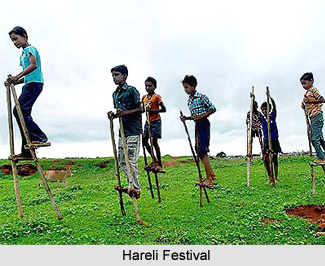
Hareli Festival
Hareli Festival is a popular festival of Chhattisgarh. It is celebrated in the month of Shravan by the farmers who worship cows and other equipments u...
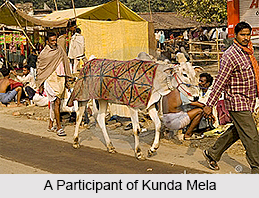
Kunda Mela
Kunda Mela is one of the famous and largest festivals of Jharkhand. The biggest attraction of this fair is the cattle trade.
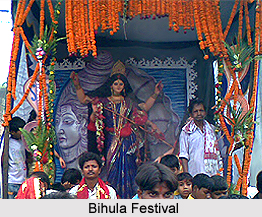
Bihula Festival
Bihula Festival is one of the popular festivals in Bhagalpur, Bihar.
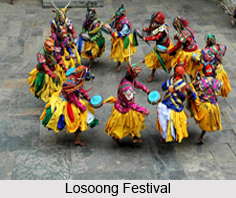
Losoong Festival
Losoong Festival is the Sikkimese New Year, of the Bhutia tribe, celebrated every year in the month of December. This festival is very famous in easte...
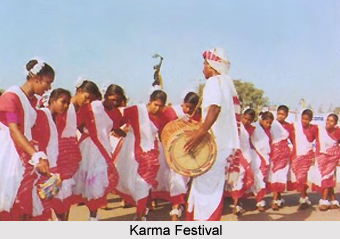
Karma Festival
Karma Festival is a tribal festival celebrated in Madhya Pradesh, Bihar, Jharkhand and Chhattisgarh.