
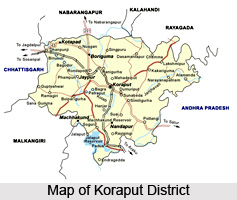
 Koraput District, an administrative district of Orissa, was created on 1st.April, 1936. It has its headquarters at Koraput. In the backdrop of green valleys contemplating immaculate freshness, Koraput District is the hub of the tribal population in Orissa. Bounty of meadows, forests, waterfalls, terraced valleys and darting springs dotted over the district makes it alluring to the nature loving people. Only with a small geographical area of about 8379 sq kms, Koraput district is one of the historical districts of the state of Orissa.
Koraput District
Koraput District is the storehouse of rich and diverse mineral resources and is a tribal dominated district of Orissa. Koraput District came into existence in the year 1936.
Introduction
Koraput District, an administrative district of Orissa, was created on 1st.April, 1936. It has its headquarters at Koraput. In the backdrop of green valleys contemplating immaculate freshness, Koraput District is the hub of the tribal population in Orissa. Bounty of meadows, forests, waterfalls, terraced valleys and darting springs dotted over the district makes it alluring to the nature loving people. Only with a small geographical area of about 8379 sq kms, Koraput district is one of the historical districts of the state of Orissa.Location of Koraput District
Koraput District is located between 17 degree 40 minutes 20 degree 7 minutes north latitude and between 81 degree 24 minutes 84 degrees 2 minutes east longitude. Average altitude of the district is 2900 feet above the sea level. Total geographical area of the district is 8379 sq kms. Koraput District is bounded by Rayagada District and Srikakulam District of Andhra Pradesh in the east. It is surrounded by Bastar District of Chhattisgarh in the west, by Nowarangpur District, Vizianagaram District and Visakhapatnam District of Andhra Pradesh in the south.
History of Koraput District
 Regarding the historical facts of Koraput, not much is known. Since, the past records of the Koraput district are limited to the excavated facts and the mere assumptions of the historians, a codified historical document of the Koraput district does not exist. As far as the history of Koraput is concerned, the region of Koraput existed far back in the 3rd century BC when it belonged to the valiant and dreaded Atavika people. The vigorous Atavika, the original inhabitants of the Koraput fought hard to retain their kingdom and glory but unfortunately subdued by the Mauryas in the Kalinga warfare. As the chronicle of Koraput runs, Koraput was under the Mauryas for a consid erable period of time. The region successively came to be ruled by several dynasties, like Satavahans, Ikshvakus, Nalas, Ganga kings and kings of Suryavanshi, who dominated the Koraput region before the arrival of the British. It was the British, who composed the separate district of Koraput in the year of 1936 and in the post independence period it was adjoined with the Orissa province of Indian Union. Koraput abounds in the imprints of Orissa`s glorious past.
Culture of Koraput District
Handicrafts of Koraput District reflect the vivid imagination and skillful creativity of the indigenous people. The exquisite, vegetable-dyed scarves and saris spun by `Mirgan` weavers are Koraput`s signature handicrafts, nationally awarded and internationally renowned for their breathtaking beauty and rare artistry. Besides these, there are other handicrafts ranging from terracotta to metal work. Likewise Koraput Region is also rich with traditional art, craft, like paper making, mask making, lacquer art, bamboo crafts, docra casting, terracotta, metal works, weaving, leaf art, paddy craft etc. Every aspect of tribal life is charming and colourful. But the place of honour is occupied by tribal dance and music. The invigorating dances set to the beat of tapping music of traditional instruments are a way of life for the tribal communities. In all seasons and occasions, the people sing and dance in Koraput.
Festivals of Koraput District
 Festivals of Koraput District offer a kaleidoscopic view of the colourful tribal culture and religious beliefs of the people. Every aspect of tribal life is charming and colourful. The various festivals of this district of Orissa are celebrated with dedication. Tribal dances and music enhances the charm of the festive season of the region. People of Koraput District celebrate various festivals in almost all season.
Some of the popular festivals of Koraput District are as follows -
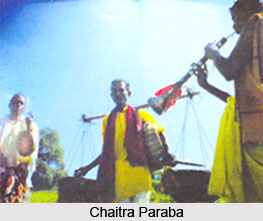
Chaitra Paraba: Chaitra Paraba celebrated for the whole month of Chaitra. Men and boys go out into the forest for hunting. If they come back without anything, they cannot show their face to the women. Women dance and sing the whole day.
Bali Jatra: This festival begins five days before the Bhadrapada full-moon and ends five days after it. The beginning of the festival is identified with the Nuakhia feast on which new rice is first eaten. Bali Jatra is an occasion of great rejoicing and men of all classes put on fancy dress and they dance and sing. The festival takes its name from the ceremonial planting of various grains in wet sand brought from a nearby stream and placed in a structure called `Bali Ghar` or sand house.
Sume-Gelirak: The "Sume-Gelirak` festival celebrated among the Bonda Poraja tribes. It is unique in character. All the year round young men look forward to this festival. Sume-Gerlirak lasts for ten days.
Among the Kondhs, Koya Tribe and Gadaba Tribe communal dances are observed on the occasion of marriage and religious festivals. Further, the greatest festival of Koraput District is Dussehra. This festival is held in honour of Kanaka Durga (Golden Durga). This festival lasts for sixteen days and a series of ceremonies are held throughout the period. The legend of human sacrifice is associated with this festival. Shivaratri, Holi and Ratha Yatra are among the other chief festivals celebrated by the people of this district. On Shivaratri, people gather in large number at the Gupteswar caves in the Jeypore Tehsil. During Holi or the Swing festival imitation flowers of paper or Pith are tied in bunches to bamboo poles 20 feet or more in length, called dhandas. On the night before full-moon these dhandas are carried in procession with music and dance to a bonfire which is lighted in the north of the town and are thrown into flames. On the following day everybody celebrate this festival with coloured water and coloured powder. On the occasion of Ratha Yatra, idols of Lord Jagannath, his brother Balabhadra and sister Subhadra are taken out in procession in several places of the district. These are some of the festivals of Koraput District that contribute to the rich culture of the region.
Tourism in Koraput District
 Tourism in Koraput District comprises visits to several places of interest that are meant to give the travellers a pleasing experience. The waterfalls, forests and hills enhance the charm of tourism. The tourist attractions of this district of Orissa attract the tourists from various parts across the globe.
Some of the popular attractions of Koraput District are as follows -
Savara Shrikhetra, Koraput: The district headquarters are situated 2,900 ft above sea level. There is a Tribal Museum here that educates the tourists about the culture and heritage of the tribal communities.
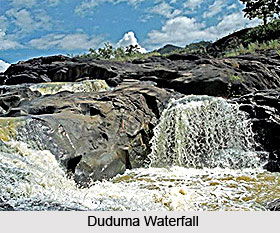
Duduma Waterfall, Machkund: The majestic waterfall, also known as "Matsya Tirtha" falls from a height of 175 meters. A hydroelectric project with its winch developed amidst deep greenery is a place for pleasure. 3 kms away from Duduma waterfall, a small village of Ankadeli draws the attention of foreign tourists to its weekly markets on Thursdays where the most primitive tribe "Bonda Poraja Tribe", come from the remote, inaccessible dense forest. Jolaput is known for its newly constructed dam reservoir. The lake formed by the dam is 68 sq kms. It is a picnic spot, 77 kms from Koraput.
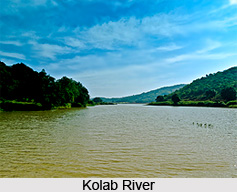
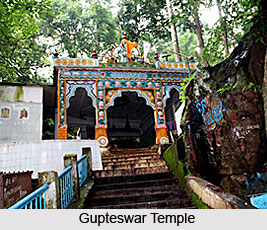
Gupteswar Temple: Important cave shrine of Lord Shiva situated on a lime stone hill on the bank of Kolab River, surrounded by natural scenery. The sacred "Lingam" called Gupteswar, literally meaning, "Hidden God", is also popularly known as "Gupta Kedar" in Chhattisgarh. Shivaratri is the major festival which attracts a large umber of visitors.
Dumuriput: The famous Sri Ram Temple situated in the locality is widely known for the highest kneeling Hanuman Statue in Orissa. Ram Navami festival is popularly celebrated every year which attracts a large number of devotees.
Nandapur: This ancient attracts a number of visitors to witness the Batrisa Sinhasan, an object of interest. The 1.8 metres tall image of Ganapati speaks of ancient heritage of the place. The shrines of Sarbeswar and its inscriptions point to the antiquities of the place.
 Museum: There is a Government Museum with antiquities and craft works, mostly famous for Jain iconography. It is located in the town hall complex.
Kolab Dam: Kolab Dam has an altitude of about 3000 ft above the sea level on Kolab River. The place is highly admired for its scenic beauty, attracting people for weekend picnic and boating.
Damanjodi: The town came to limelight with the coming up of NALCO, Asia`s biggest Alumina Complex Nearby stands the highest peak of Orissa, Damanjodi an ideal place for trekking.
Maliguda: 35 kms eastwards of Jeypore, is a small village where on a hill top stands India`s highest broad gauge Railway tunnel. The place is an ideal picnic spot.
Jeypore: The city of victory and the palace of erstwhile Jeypore estate. The old fort is encircled by high masonry wall with an imposing gateway. A mile and a half wide great water tank, west of the town, known as Jagannath Sagar, is ideal for water sports. Jeypore, developed as the center of trade in Koraput district, is also famous for paper mask crafts.
Tribal Museum: The Tribal Museum behind the temple speaks about the culture and heritage of the tribal groups.
Tourist spots in Koraput District can transform the travelling experience into an enriching one filled with peace and tranquility.
Recently updated articles in States of India
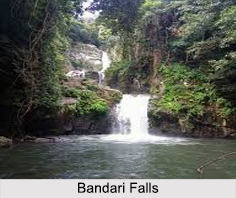
Bandare Waterfalls, Meghalaya
Bandare Waterfalls in South Garo Hills, Meghalaya, is a secluded natural attraction surrounded by dense subtropical forests and rugged mountain terrai...
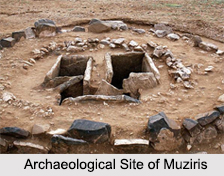
History of Thissur District
Early History of Thissur District explains flourishing of the port cities. Now these port cities are transformed into archaeological sites.
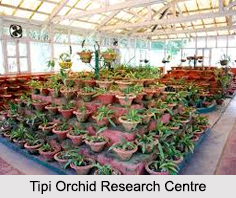
Tippi Orchid Research Centre, Arunachal Pradesh
Tippi Orchid Research Centre in Arunachal Pradesh is renowned for its rich collection of exotic and endangered orchids. Surrounded by lush rainforest...
Tourism in Nashik District
Pilgrimage tourism in Nashik district involves visiting the various places of Hindu and Jain worship located here. Some of the holiest sites for Hind...
Mangadu, Kerala
Mangadu in Kerala’s Kollam district is a significant megalithic site known for its urn burials, cist burials, menhirs, and stone circles. Excavations...
Related articles in States of India
East Indian States
East Indian States comprises of Bihar, Jharkhand, West Bengal, Odisha and also the Union Territory of Andaman and Nicobar Islands. It defines the cult...
Purnia District in Bihar
Purnia District is located in Bihar and extends from River Ganga to Nepal. The district has a rich Hindu history and glorious past.
Hooghly district
Hooghly District along the bank of the river Hooghly is one of the principal trading ports of West Bengal.
Geography Of Chittoor District
Geography of Chittoor district is spread along the topography of the land which is divided into two natural divisions; Chittoor has a dry and healthy...
Districts of West Bihar
Districts of West Bihar is comprised of medieval monuments that were built by the different governors of Mughal era.