
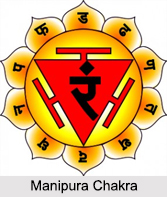
 Manipura Chakra is the third chakra of the Kundalini Chakras which is located between the naval and the heart at the pericardium. It is also known as the Solar Plexus Chakra which refers to "Seat of the Soul" or the solar network. This Chakra is associated with the elements; fire and water and is connected to the internal organ; stomach.
Manipura Chakra
Manipura Chakra, the third Chakra is a source of personal power and governs self-esteem, warrior energy and the power of transformation.
Introduction
Manipura Chakra is the third chakra of the Kundalini Chakras which is located between the naval and the heart at the pericardium. It is also known as the Solar Plexus Chakra which refers to "Seat of the Soul" or the solar network. This Chakra is associated with the elements; fire and water and is connected to the internal organ; stomach.Appearance of Manipura Chakra
Manipura Chakra is yellow in colour which has 10 petals dark-blue or black in colour resembling the heavily laden rainclouds. These petals has syllables like dda, ddha, nna, ta, tha, da, dha, na, pa and pha. They relates to the Vrittis of spiritual treachery, ignorance, sadness, delusion, disgust, shame, fear, foolishness, thirst and jealousy.
Function of Manipura Chakra
Manipura Chakra is the area that defines our self-esteem. During puberty the personality growth depends on this Chakra. The purpose of Manipura or Solar Plexus Chakra is to understand the emotional life. It also gives some spiritual lesson to accommodate oneself in the life stream. When the Chakra works properly one becomes confident, adventurous and able to take risks.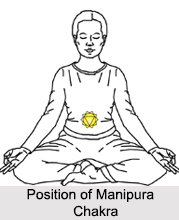
The physical dysfunction of Solar Plexus Chakra causes many diseases including stomach ulcers, intestinal tumours, pancreatitis, diabetes, indigestion, hepatitis, anorexia/bulimia, cirrhosis, adrenal imbalance, colon diseases, arthritis etc. The mental and emotional issues associated with malfunctioning of Solar Plexus Chakra are self-esteem, fear of rejection, fear of self-image, indecisiveness, over sensitivity to criticism and fear of secrets to be found out. Many information are stored inside the Solar Plexus Chakra like personal power, personality, consciousness of self within the universe i.e. sense of belonging to the universe and personal knowledge. The areas of body that are governed by the Solar Plexus Chakra are upper abdomen, umbilicus to rib cage, liver, gall bladder, middle spine, spleen, kidney, adrenals, small intestines and stomach.
The physical dysfunction of Solar Plexus Chakra causes many diseases including stomach ulcers, intestinal tumours, pancreatitis, diabetes, indigestion, hepatitis, anorexia/bulimia, cirrhosis, adrenal imbalance, colon diseases, arthritis etc. The mental and emotional issues associated with malfunctioning of Solar Plexus Chakra are self-esteem, fear of rejection, fear of self-image, indecisiveness, over sensitivity to criticism and fear of secrets to be found out. Many information are stored inside the Solar Plexus Chakra like personal power, personality, consciousness of self within the universe i.e. sense of belonging to the universe and personal knowledge. The areas of body that are governed by the Solar Plexus Chakra are upper abdomen, umbilicus to rib cage, liver, gall bladder, middle spine, spleen, kidney, adrenals, small intestines and stomach.
Awakening of Manipura Chakra
With an open and balanced Solar Plexus Chakra, one can deeply fulfil the emotional life and possess an outgoing and sociable attitude to the world. Many foods stimulate Manipura or Solar Plexus Chakra, resulting in boosting of self-esteem and encouraging self-love. The grains include pastas, breads, cereal, rice, flax seed, sunflower seeds, etc; the Dairy comprises of milk, cheeses, yoghurt; and the spices include ginger, mints, chamomile, turmeric, cumin and fennel. The gemstones associated with the Solar Plexus Chakra are - Jasper, Golden Topaz and Yellow Tourmaline. The Chamomile, Golden Yarrow and Peppermint flower essence can stimulate Solar Plexus Chakra.
Exercise for Manipura Chakra
There are many asanas associated with this chakra.
Breath of Fire Exercise : Here the practitioner needs to sit in an upright, comfortable posture with his back straight and legs relaxed. Then using the muscles of the abdomen he needs to snap in his diaphragm, causing a quick exhale to escape through the nose. The mouth needs to be kept closed. Next when the practitioner relaxes his abdomen, air will naturally enter his nose and chest, causing an inhale. He then again needs to snap the diaphragm, followed by relaxation, causing another exhale and inhale. Once the practitioner becomes comfortable with this process he must repeat it quickly, causing several quick, sequential exhales. This rapid diaphragmatic breathing exercise cleans the toxins from the body, raise internal fire, and stimulate the ascending current.
Stomach Crunches : The practitioner begins the exercise with his knees bent and feet parallel. He must lace his fingers behind the neck. He now should tighten the stomach muscles until the head has lifted a few inches off the floor, exhaling. The muscles do their work in the first few inches of contraction. He must inhale as he lowers his head. This process should be repeated many times. This exercise increases the muscle tone over the third chakra, and helps tone the digestive organs.
Woodchopper Exercise : The associated tone of the third chakra is a loud "ah" sound. This should accompany the motions in this exercise. This is also an excellent anger release. Here the practitioner needs to stand with his feet planted firmly in the ground, with heels about two feet apart. Next he should raise the arms together, over the head, with hands joined. He then arches back slightly making the "ah" sound as he descends. He must also swing the whole upper portion of the body downward, bringing the hands between the legs and through. The motion should be smooth and rapid, and emit as much force and power as is possible. Repeat five to ten times in a session and feel the energy break through into the upper body.
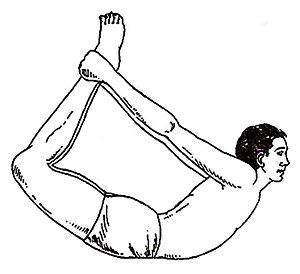 Bow Pose Exercise or Dhanurasana : Here the practitioner lies on his stomach with his hands on the side. He then takes a deep breath and bends his knees and reaches for his ankles. He then inhales, lifts his head, press the sacrum down, and arches his back by lifting the chest and pulling on the ankles. He should then let his arms pull his shoulders back, and balance on his belly. While doing so he also needs to breathe deeply. The practitioner must allow his hands to maintain the arch while he relaxes the rest of his body.
Belly Push Exercise : Here the practitioner from a seated position pushes both feet out straight in front, with his palms placed on the ground by his hips. He next needs to push his pelvis upward, approaching a slight arch from his feet to his head, pushing, especially through the solar plexus. Now the practitioner slowly needs to relax and return to a seated position.
Pike Pose Exercise : Resting on his back the practitioner needs to bring his feet, legs and the torso up making a v-shape with his body. The practitioner needs to keep this position as long as possible. He must try lifting one leg at a time, or placing the feet against a wall, so that the focus remains more on belly muscles than on the thigh muscles.
Power Walk Exercise : Here the practitioner needs to stand erect with his arms bent at the elbows and hands in a fist at the chest. He next takes a step and pushes one arm outward. He then release the other arm. This process needs to be repeated.
Breath of Fire Exercise : Here the practitioner needs to sit in an upright, comfortable posture with his back straight and legs relaxed. Then using the muscles of the abdomen he needs to snap in his diaphragm, causing a quick exhale to escape through the nose. The mouth needs to be kept closed. Next when the practitioner relaxes his abdomen, air will naturally enter his nose and chest, causing an inhale. He then again needs to snap the diaphragm, followed by relaxation, causing another exhale and inhale. Once the practitioner becomes comfortable with this process he must repeat it quickly, causing several quick, sequential exhales. This rapid diaphragmatic breathing exercise cleans the toxins from the body, raise internal fire, and stimulate the ascending current.
Stomach Crunches : The practitioner begins the exercise with his knees bent and feet parallel. He must lace his fingers behind the neck. He now should tighten the stomach muscles until the head has lifted a few inches off the floor, exhaling. The muscles do their work in the first few inches of contraction. He must inhale as he lowers his head. This process should be repeated many times. This exercise increases the muscle tone over the third chakra, and helps tone the digestive organs.
Woodchopper Exercise : The associated tone of the third chakra is a loud "ah" sound. This should accompany the motions in this exercise. This is also an excellent anger release. Here the practitioner needs to stand with his feet planted firmly in the ground, with heels about two feet apart. Next he should raise the arms together, over the head, with hands joined. He then arches back slightly making the "ah" sound as he descends. He must also swing the whole upper portion of the body downward, bringing the hands between the legs and through. The motion should be smooth and rapid, and emit as much force and power as is possible. Repeat five to ten times in a session and feel the energy break through into the upper body.
Bow Pose Exercise or Dhanurasana : Here the practitioner lies on his stomach with his hands on the side. He then takes a deep breath and bends his knees and reaches for his ankles. He then inhales, lifts his head, press the sacrum down, and arches his back by lifting the chest and pulling on the ankles. He should then let his arms pull his shoulders back, and balance on his belly. While doing so he also needs to breathe deeply. The practitioner must allow his hands to maintain the arch while he relaxes the rest of his body.
Belly Push Exercise : Here the practitioner from a seated position pushes both feet out straight in front, with his palms placed on the ground by his hips. He next needs to push his pelvis upward, approaching a slight arch from his feet to his head, pushing, especially through the solar plexus. Now the practitioner slowly needs to relax and return to a seated position.
Pike Pose Exercise : Resting on his back the practitioner needs to bring his feet, legs and the torso up making a v-shape with his body. The practitioner needs to keep this position as long as possible. He must try lifting one leg at a time, or placing the feet against a wall, so that the focus remains more on belly muscles than on the thigh muscles.
Power Walk Exercise : Here the practitioner needs to stand erect with his arms bent at the elbows and hands in a fist at the chest. He next takes a step and pushes one arm outward. He then release the other arm. This process needs to be repeated.
Recently updated articles in Yoga
Khanda Manda Yoga
Khanda Manda Yoga is a difficult form of yoga where the Yogi cuts off his own arms and legs with a sharp cleaver, that is axe-like knife, and throws t...
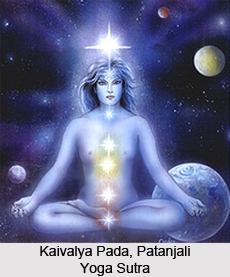
Kaivalya Pada
Kaivalya Pada, the fourth chapter of Patanjali Yoga Sutra denotes an absolute, indivisible state of existence of the Yogi. The Kaivalya Pada is someti...
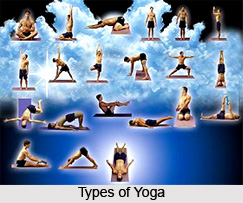
Vibhuti Pada
Vibhuti is the Sanskrit term for “power” or “manifestation.” In this third chapter, Patanjali introduces the final three limbs of Aṣṭanga Yoga, collec...
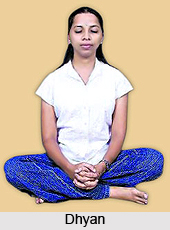
Sadhana Pada
Sadhana Pada in Patanjali Yoga Sutra denotes the idea of practicing yoga that leads to spiritual illumination. Sadhana, the Sanskrit term for “practic...
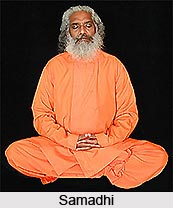
Samadhi Pada
Samadhi Pada is the first chapter of Patanjali Yoga Sutra. In this chapter, the author explains the essence of yoga, the nature of samadhi, and the me...
Related articles in Yoga
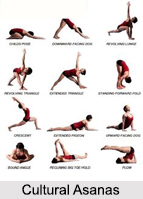
Cultural Asanas
Cultural Asanas refer to the daily physical exercise postures that train the body and mind in Yoga Practice.
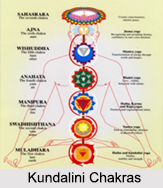
Kundalini Chakras
Kundalini Chakras are psychic energy centres or vortices, which connect between our psychic and physical energy systems.
Patanjali Yoga Sutras
Patanjali’s Yoga Sutras presents a foundational guide to the philosophy and practice of yoga. Through concise aphorisms, it outlines the nature of the...
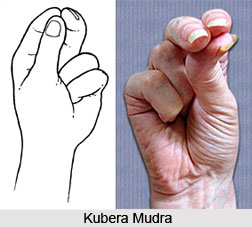
Kubera Mudra
Kubera Mudra, a form of Hatha Yoga, leads to the elevation of mental peace and physical relief by proper practice and cleanses frontal sinuses.