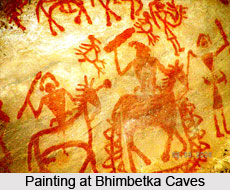
Indian Paintings as an Art form has been practiced since the ancient times. Among the various forms of art, painting is most adored from earliest period, as painting captures the emotion and expression and retains this for a long period. Painting is the visual documentation of man`s thought and experience. In India painting was practiced from ancient time as evidence can be found in the prehistoric cave paintings of Bhimbetka. This paintings was done even before 5550 BC and spans around 600 hundred years, starting from upper Paleolithic to prehistoric and medieval times.
Early History of Indian Paintings as an Art Form
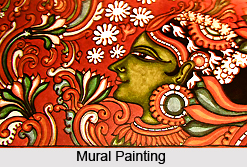
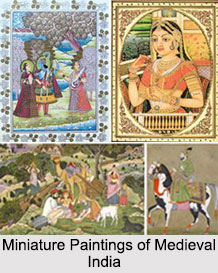
The antediluvian cave men engraved on the walls of caves with the blunt stone tools and coloured with twigs using minerals, earth and coal. They painted images of animals, scenes of hunting and also some feeble human figures. Eventually painting flourished in different regions of India in different periods of time. The paintings are segmented in two different forms- wall painting and miniature. In various times, the paintings have been illustrated on the walls of caves, temples and palaces and on clothes as Patachitra or on leaves. These paintings reveal the influence of local cerebral and cultural sensibilities as well as give cross-cultural insights.
 Types of Indian Paintings as an Art Form
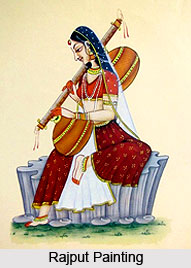
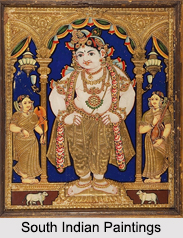
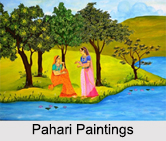
The vastness of India, its different geographical locations and various forms of culture gave rise to different forms of art and paintings, which are distinct from each other with their own characteristics but carry a common Indian essence. The Madhubani/Mithila painting, Pahari painting, Rajasthani painting, Warli painting from Maharastra and different South Indian styles namely Tanjore, Mysore, Lepakshi are the common examples. Also under royal patronage several styles evolved namely Mughal paintings, Rajput painting etc. Medium and technique also poses an important feature to the paintings. In India, lots of painting materials are available naturally and depending on this, various forms of painting like Batik, Kalamkari, Glass painting, Marble painting, Palm leaf etching etc have been evolved. There are also typical local forms of paintings like Phadas, Pithora, Pichwai, Worli, Thangka paintings etc.
Indian Cave Paintings as an Art Form
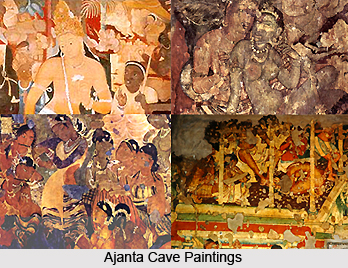
The maximum prosperity of painting starts from the cave paintings of Ajanta and Ellora in the early historic period. In the numerous caves of Ajanta and Ellora beautiful frescoes are found whose subtle details on subject and vivid colours are simply striking and outstanding. The Buddhist monks employed painters to paint on life of Lord Buddha and the stories of Jataka. In Ellora among five caves only one Kailasha cave still retains the frescoes and those are mainly on Hindu divinities.
Influence of British era on Indian Paintings
The typical Indian traditional painting changed in the colonial era with the influence of European realism and renaissance. From late 19th century to early 20th century, different painters experimented with the forms, technique and medium to bring the neo-Indian style. This individual effort is a new concept in Indian art because so far the painters remained in backdrop of their paintings.
Raja Ravi Verma`s name can be taken in regard as the pioneer of modern era who blended European realistic style with classical Indian subject. By the time of independence different schools were found to give access to modern techniques and ideas, which started with the foundation of Bengal School of Art. The total movement started with the art-personalities like Abanindranath Tagore, Nandalal Bose, Jamini Roy and others who stuck to the core Indian subject and forms in search of Indian Art spirit.
 Modern Indian Paintings as an Art Form
In the post-colonial era a number of galleries are established for the exhibition of paintings. The Modern Indian Art typically influenced by the western styles but consciously draw inspiration from Indian themes and images. Major Indian artists started performing exhibition abroad and fetched international fame.
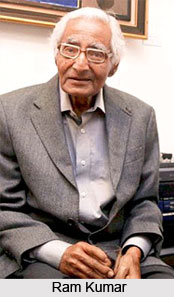
The Progressive Artist`s Group, established shortly after India became independent in 1947, was intended to establish new ways of expressing India in the post-colonial era. The founders were six eminent artists, K. H. Ara, S. K. Bakre, H. A. Gade, Maqbool Fida Hussain, Syed Haider Raza and Francis Newton Souza. Though the group was dissolved in 1956, it was profoundly influential in changing the idiom of Indian art. Almost all India`s major artists in the 1950s were associated with the group. Few of the famous Indian artists of this era are Bal Chabda, Vasudeo S. Gaitonde, Krishen Khanna, Ram Kumar, Tyeb Mehta, and Akbar Padamsee.
Since 1980s Indian artists started showing more vitality and variety in their work. Many of the new genera artists bring newer concept and style. Jahar Dasgupta, Bijon Choudhuri, Jogen Choudhuri, Vagaram Choudhary and many others are enriching the modern art for India and the journey of Indian painting as an art is gradually evolving.