
Munda Tribe
Munda Tribes are one of the largest tribes of India, developing their own system of governance.
Introduction
Munda Tribes are residents of West Bengal and apart from it they are populated in various corners of Chhattisgarh, Bihar, Jharkhand, Assam and Odisha. A good number of the Munda tribes can be found in a small mouza named Kumar Pukuria, located in Sonarpur block of South 24 Parganas district of West Bengal.
Origin of Munda Tribe
Munda tribes are one of the largest tribes of India. The word Munda has an etymological significance. It means headman of a village. They believe that they are the descendants of "Sing Bonga", the supreme God. Main languages spoken by these tribes include `Munda` or `Killi`, Santali and Mundari. Munda tribes are also called by their alternative name, `Heriki`. The physical characteristics of the Mundas are the typical Indian tribal personality, with darkish complexion and curly hairs.
Society of Munda Tribe
The Munda society is divided into sub groups namely Patar, Mahali, Kampat Munda, etc. A `Gotiora` is situated in each Munda village and this carries a well adopted habitual culture in training the young men of Munda. Moreover, the society is governed by the `Panchayat` and there is an `Akhara` which is the medium of entertainment for the villagers. They built up the Parha system of Government, which is fundamentally a `confederacy of village governments`. The Munda tribes uphold their tribal identity by barring intermarriage with other tribal communities.
Occupation of Munda Tribe
In earlier times the Munda tribes were wandering huntsmen and collectors. Very recently, these Munda tribes too take up the profession of shifting cultivation, thereby following the practice of most of the tribes of Indian subcontinent. Many of these people still depend on labour to earn a livelihood.
Religion of Munda Tribe
 Religion of Munda Tribe refers to the worship of the different deities and spirits according to their hierarchy. Munda, the tribal community from Eastern India, are residents of West Bengal, Chhattisgarh, Bihar, Jharkhand, Assam and Odisha.
Deities of Munda Tribe
The Munda tribal group worship several spirits. The position, activities and personality of the bongas of all the groups are discussed below:
Sing Bonga
Sing Bonga is regarded as the head of all the bongas and is believed to be the creator of this universe, as well as its ruler. He appoints all other bongas to take care of the human beings and other animals. He is thought to reside in the Sun and hence known by the name "singi", the sun.
Sing Bonga is usually invoked by the Mundas during the time of crisis, serious disasters or general outbreak of epidemics and other calamities. According to the Mundas, Sing Bonga resides on a high banyan tree and writes the fate of people on the banyan leaves. When a child is born, a leaf is ceremoniously dropped and his entire life is guided by the banyan leaf.
Desauli Bonga
The Desauli Bonga is believed to reside in the Sarna tree, while others say that he lives in the rocks. When the witch finder detects that he has caused some diseases, the villages worship him to appease him.
Chandi Bonga
The word Chandi is believed to have been derived from the Hindu religion. Here goddess Durga or goddess Kali is identified with the name Chandi bestowing valour and strength to her followers. It is believed by some that it resides in the Sarna while others believe them to be field dwellers. Chandi bonga is mostly related to the witches.
Ora Bonga
Ora Bongas are regarded as the household Gods or the ancestor spirits residing in a corner of the house called Ading. It is believed by the Mundas that after the death of a man his gir, i.e. the life substance, goes to Sing Bonga. There it loses its identity and again is transformed into another individual while the dead moves to the world of the Ora Bonga. It is also thought that after the death, the character of the deceased moves round the dead body or the house until the Umbel Adar, a particular rite, is performed.
Ikir Bonga
The word Ikir means pool or pond. Hence, Ikir Bonga means that spirit who resides in a pool or pond. Death ensuing from drowning results in the form of Ikir Bonga. It is said that Ikir Bonga was a benevolent spirit and resided in the depths of pool and ponds. Initially it protected people from drowning, but with time, under the influence of witchcraft he changed into the most notorious spirit. The sacrifice of a single fowl helps in appeasing him. The spirits like Karam Bonga, Hankar Bonga, Nasar Bonga, etc. are the different forms of Ikir Bonga.
Marang Bonga
The word Marang means great, hence Marang Bonga is a great spirit. It is believed that he dwells on high hills and mountain tops. He is less likely to be infuriated and hence if promises made to him are not fulfilled in due time he is not raged.
Bakri Bonga
Bakri Bonga does not occupy any significant position among the Bonga. He is regarded as the most gentle and the simplest of all the bongas. His abode is the family garden and he prefers the sacrifices to be offered there.
Banita Bonga
Banita Bonga remains under the control of magicians and the soothsayers. Banita Bongas encompass a class of some tutelary spirits who are summoned by witches and inflict illness and other diseases on the people. To get rid of any disease a fowl, some rice or some other items as prescribed by the Mati, is given to him.
Baran Bonga
Baran Bonga is one of the most feared bongas of the Munda pantheon. He does not have a permanent residence and is thought to wander in the village, woods, rivers, hill tops and other places. Deemed to cause illness and disease, he is nicknamed as "Rog Bonga".
Festivals of Munda Tribe
 Festivals of Munda Tribe are celebrated with great enthusiasm and gusto marked by dancing, singing and feasting. The life of the Munda Tribe, residing mostly in West Bengal, Jharkhand and Odisha, is closely associated with several religious ceremonies. Every festival has a religious or economic background. Some festivals are celebrated for removing taboo imposed on some economic operations as ploughing, harvesting etc. These festivals mark the initiation of different functions and rituals. Festivals offer a social security to the Mundas. Some festivals are observed to invoke the blessings of the several Gods and Spirits to ensure peace.
Significance of Dance in Festivals of Munda Tribe
Dance is considered to be the most essential part of the Munda festivals. The main dances worth mentioning are the "Mage", "Jadur", "Jopi" and "Lahsua". The Mage dances initiates with the end of Sohrai festival and with the commencement of "Kolom Sing". It is then succeeded by Jadur dances and songs that mark the onset of hunting season. It prolongs for a period of almost one fortnight until the hunting mission ends. Finally the Lahsua dances are performed. These dances and songs are performed throughout the year in a cyclic order. In some of the dances performed the agricultural activities such as ploughing, sowing, harvesting etc. are clearly depicted. "Dom Kach" is a special dance performed during marriage.
Mage Parab of Munda Tribe
The festival is celebrated towards the end of Poush i.e. December-January and during the beginning of Magh i.e. January-February. No fixed dates are appointed for the celebration of the festival as different villages celebrate it on different dates. During the festival the villagers observe fast on Mondays, Wednesdays and Fridays. The wife of the Pahan executes a major role in the performance of the festival as she prepares the sacrificial beer.

Phagu Festival of Munda Tribe
The festival celebrated in the month of Phalgun i.e. during February marks the beginning of the hunting season that is initiated on this day. The festival is believed to have been borrowed from the Hindus.
Sarhul or Ba Parab of Munda Tribe
"Ba" in Mundari means flower and "Parab" is the feast or festival thus, the word Ba Parab is known to be the "Festival of Flower". The festival is observed in the month of Chait i.e. during February and March, generally on the 5th day of the moon in the month of Chait.
Hon-Ba-Parab of Munda Tribe
The festival is celebrated during the month of Baisakh or Jyestha i.e. in April or May before the sowing of the paddy begins. No public sacrifice is offered during this occasion but the head of family offers a sacrifice of a fowl to the "Orabangako".
Karam Festival of Munda Tribe
The Mundas believe that it is part of their duty to observe a feast after ploughing and levelling of the fields has been completed. This feast is observed in accordance to the Hindu feast Karma observed on the 11th day of the moon in the month of Bhado i.e. during August-September.
Ind-Parab of Munda Tribe
The festival is celebrated in villages that have been under the direct influence of the Hindus. Celebrated in the month of Bhado i.e. during July-August, the festival is observed with great enthusiasm on the day succeeding the Karam feast. It is usually celebrated before the Dasai feast.
Jom-Nagoa Festival of Munda Tribe
 This festival is associated with the eating of new rice of the harvest. The festival, observed in the month of Bhado i.e. during July-August or Aswin i.e. during August-September, is celebrated when coarse paddy begins to ripe.
Batauli Festival of Munda Tribe
The festival is observed before the initiation of re-ploughing and Kara operations. It is celebrated in the month of Bhado i.e. during August. The main purpose of this festival is to protect and safeguard the villagers from snakes and tigers.
Dasai Festival of Munda Tribe This festival, celebrated in the month of Aswin-Kartik i.e. September-October, bears a close resemblance to the Dussehra festival of the Hindus. The Mundas usually celebrate the festival with their Hindu landlords residing outside the periphery of the Munda religion. This festival is marked by dancing, singing and a merry making.
Sohrai Festival of Munda Tribe
This festival is celebrated by the Mundas on the 15th day of the month of Kartik, the Kartik Amavasya i.e. during October-November. The festival, celebrated in honour of the cattle is also known as Lakshmi Puja.
Kolom Sing Festival of Munda Tribe
The word "Kolom" means a threshing floor and Kolom Sing is the sacrifice offered by the Pahan in his threshing floor on behalf of the villagers. It is usually performed in the month of Agrahan i.e. during November-December on any of the three days, Monday, Wednesday or Friday when the paddy crop has been cut.
Besides these festivals the Mundas also celebrate few Hindu festivals that resulted from the impact of Hinduism on them that penetrated even in the remotest corner of the Munda villages. Goddess Lakshmi is deeply worshipped and venerated as they identify their cattle with her. The Mundas also worship the cow and adorn, feed and revere her.
Legends of Munda Tribe
 Munda Tribes are one of the largest tribes of India, residing in Chhatisgarh, Bihar, Jharkhand, Assam and Orissa. They are generally short in height and dark complexioned. The Munda Tribes mostly follow the Sarna religion, believing in a god called Singbonga.it is believed by them that the Singbonga at the beginning created the whole universe and then gradually created man, animals and planets. Several fascinating legends are associated with the creation of the universe that are stated below:
Creation of the Earth
In the beginning the entire universe was covered with water and there was no availability of land. The three original and earliest lives were those of a Horo (tortoise), a Karkom (crab) and a Lendad (leech). The Singbonga, much worried over the creation of the earth, asked the animals to gather a lump of clay. The tortoise dived into the depths of the water but of no avail. It returned to the Singbonga empty handed and narrated to him that he was carrying clay on its back but due to the strong currents of the ocean all the clay were swept away.
Now it was the turn of the crab. It also dived in the depths of the water but remained unsuccessful and returned empty handed. It reported that it was carrying a good deal of clay between its pincers but the waves of the water washed it away. Finally the wriggling leech was sent for the same task. It also dived into the water and filled its mouth with clay. Emerging successful it returned to Singbonga. It emptied all the clay in the hands of Singbonga. He was very much pleased with the leech and created the earth with the help of the lump of clay. The Singbonga while creating the earth produced all sorts of trees and plants, herbs and shrubs, jungles and desert of all kinds and dimensions. Then the Singbonga filled the earth with different types of birds and animals.
Creation of Man
Once Singbonga with the intention creating a man made a figure of clay and put it before him to judge the proportions of its different limbs. A horse standing beside him however, struck the clay figure that broke it to pieces. Singbonga again made the same figure and this time again the horse tried to kick it to break to pieces but as he lifted his foreleg the tiger standing beside chased him. The clay figure was thus, saved and the Singbonga gave life to it and sent to the earth. The Singbonga to punish the horse for breaking the clay image cursed him that whenever he would try to kick men will put iron and rope into his mouth sit on his back and whip the hindlimb to control him. On the other hand the tiger was blessed for chasing the horse and preventing the clay figure from being broken. The Singbonga blessed him that all the animals stronger than the tiger would fear and flee away from him.
Another version of the legend of creation of man states that once upon a time the Singbonga filled the earth with different types of animals and plants. The bird Hur said to lay only one egg in it`s the whole lifetime was asked to lay an egg. Out of the egg a boy and a girl appeared who became the progenitors of the `Horo-honko` i.e. the children of men.
Legend Regarding Division of Several Tribes of the Munda Group The Mundas narrate an interesting legend about how their race came into existence. The Singbonga created a boy and a girl who in course of time gave birth. When all of them showed their incapability Singbonga himself became ready to be sacrificed. The sacrifice was to be sacrificed in the furnace hence the smelters worked together for building a new furnace. The Singbonga was placed inside and the bellows were blown. When the bellows stopped the smelters thought that he would be burnt to ashes but they saw Singbonga coming out from the furnace. Singbonga next asked the smelters to enter the furnace promising them gold and silver. All of them readily agreed and their wives were ordered to blow the bellows. The smelters were burnt alive and were thus, met with punishment.
The women soon came to know about the facts and began weeping. Singbonga gave them different types of foods and asked them to choose one by one, on which the fate of their descendants would depend. Thus, depending upon the food they choose the tribes were divided into different groups.
Legend Regarding Changing Shape of the Moon
According to the Mundas Chandor, the Moon is the wife of Sun. Once, the beautiful Chandor deserted her husband that infuriated the Sun who in a fit of anger cut her into two. However, he soon realised his mistake and repenting for his deeds he allowed Chandor to shine at time in her full beauty but as she was cut into two she could not always shine in full.
Legend of the fall of Angels
According to this legend it is believed that earlier the heaven was dominated by the divinities employed for serving Singbonga. Once, they saw their faces in a mirror and realised that they were also made in the form of the god and were in no way inferior to him. This escalated their pride and consequently they refused to obey Singbonga who in turn inflicted them with punishments. They were expelled out from the heaven and thrown away on the earth known as "Terasi Pirhi Ekasibasi". Upon reaching the destination they witnessed a huge quantity of iron ore lying on the ground. They together worked for making a furnace and began smelting iron ore in it. The smelting continued all the day and night long without any break. Slowly the smokes rose high above to the heaven that annoyed and irritated Singbonga. Immediately the Singbonga sent his representatives to King Crow to ask them to smelt the iron either by day or by night. However, they all disobeyed the order of Singbonga and as a sign of their resentment they caught the birds with their furnace tongs. The birds returned to Singbonga and narrated their sad plight. Singbonga as a warning sign again sent a crow but it was caught by them and turned into black in a way that it never became white again.
The Singbonga unable to counter the rebels of his subjects and to punish them for the insults of his messengers himself came down to that place in disguise. He approached a family who dealt with charcoal and began working there. There he was relegated with the job of taking care of their grain and to play with the children. The Singbonga saw that the children played with iron balls and joined them with egg. He crushed their iron balls with his eggs. One day the furnace where the rebels worked collapsed. Anxious and nervous the smelters consulted a Donra who took them to the Singbonga in disguise and asked him for help. Singbonga after meditating for a while informed the smelters that the Supreme Being was infuriated and to appease him a human sacrifice was required. The Singbonga then took pity on them and allotted them a separate place to reside in the form of minor deities or spirits. Some of them occupied fields and jungles, some streams and rivers while others stayed in trees and deserts and so on.
Clan Myths of Munda Tribe
The Munda Tribe before entering the Chotanagpur plateau was divided into a number of clans. With time each and every clan split up and most of them adopted a different name. Most of the clans have a fascinating legend which is related to the origin and the nature of the clan. The legends of different clans are narrated below:
Balemucu Clan
The legendary tale of Balemucu clan states that once few persons of the Horo clan caught a tortoise by means of a bow like net known as Balemucu. Later they ate up the tortoise. From that day they became the members of the Balemucu clan and refrained from eating fish or tortoise that were caught by a mucu-net.
Bodra Clan
As per a myth long ago there lived an old Munda couple in a village named Andiki in Tamar. Once they were invited to attend a feast. The old man was a gourmet and ate so greedily that he smeared his whole mouth, face and hand with the food. The people thus made him into a new clan Bodra and his descendant came to be known as Bodra from that day.
Lengbodra Clan
The fable of Lengbodra Clan states that one day the people of Tebo Bodra clan set out together for a hunt. They wandered in different directions the whole day and met in the evening. Upon inquiring about their hunt none replied but a man who had killed a Lang, the fly-catcher bird. They all tried to fathom the reason as to why they had only killed only a bird. An old man said that as it was the first day of their hunt hence that they had hunted only a Lang. Thenceforward they must be known as Lang Bodra and should refrain form killing the Lang bird. All the people from then adopted their clan as Langbodra.
Ramrabodra Clan
The legend says that one day the people of Iti belonging to the Bodra clan ate Ramra i.e. a pulse before it was prepared. It was actually to be eaten with the cooked rice. From that very day they were called Ramra Bodra.
Dorarae Clan
Once, a man of Mundu Lili went to a tree in search of honey. Upon finding honey in the hollow of the tree he entered into it but his hair was badly besmeared with honey. The villagers came forward to rescue him and took him home. They spent almost seven vessels of oil to soften his hair. Thenceforward he became Dorarae clan.
Horo Clan
The legend here states that once an old man with his kinsmen was crossing a river. All his kins crossed the river but he did not as the river was flooded. In fear and agony he proclaimed that whoever would help him across the river would become his kin. None but a horo i.e. a tortoise came forward and took the old man with bag and baggage across the river. The old man to remain true to his promise accepted the Horo as his kin and from that day he adopted the Horo clan.
Hunipurti Clan
Once, a Munda had planted cotton in his field. When the capsules began bursting his wife went to gather wool in the field. In the field she kept her baby and engaged in collecting wool. During this time the field rats came by and upon seeing a lively child they took it to their hole. The wife of the Munda soon came in search of her find only to find him missing. Anxious and concerned she began weeping loudly and informed the villagers about the incident. The villagers made a vigorous search and found the baby in the rat hole. They saw the baby lying comfortably on a bed of cotton wool and playing. Considering the fact that the rats had given the child much comfort and treated it kindly they thought of regarding them as their brethren. Thus, they addressed the rats as their brethren and decided that in future they would inflict no harm on the rats. From then they came to be known as Hunipurti clan.
Kandir Clan
According to this legend a certain Munda family had several brothers and a sister who was quite hefty and bulky. The circumference of her waist was such that it required about 9 feet of cloth to cover it up. She was relegated the job of cooking food for her brothers but never carried out in a responsible way. The brothers thus, thought of marrying her off as she did not care for them. All of them took half a maund of flattered rice with them and set out in search of a bridegroom. After a few days they returned and marriage their sister off and sent her to Arnapota to her husband`s house. As the brothers went out with half a maund of flattered rice, they from that day began to be known as Kandir clan.
Mundu Clan
The legendary tale states that a batch of Munda once resolved to migrate from their original village to Mundu. They travelled the whole day and when night crept in they lighted the end of a rope made of paddy straw to enable themselves to locate their way. However, when they reached close to the village Mundu (Murhu) the rope burnt down. As their rope had burnt down the leader of the migrating batch declared that they must discontinue their journey. They settled there and founded the village Suranda and came to be known as Mundu clan.
Pandu or Nag Clan
The legendary fable suggests that once a snake charmer had kept a white Nag and named it Pandu Bing. He kept it with him during his shows. One day the charmer died on the way while returning his home from a village. The faithful nag coiled itself round the corpse and carried him away to his house. The sons of the charmer were much obliged to the Nag for its help and gave it plenty of food to eat. The Nag also in return promised not to harm them. The sons from that moment in a sense of gratitude, called themselves as Nag Kili.
Sarukad Purti Clan
The legend of Sarukad Purti Clan states that once a group of Mundas were migrating to some other place when a river they had to cross became flooded. One of them ventured to cross it by swimming but was swept away by the strong current. However, he succeeded in saving himself by catching hold of a faro plant through which he reached the shores on other end of the river. He then advised others to cross the river taking help of the faro plant. One by one all of them crossed the river. Upon being safely transported to the other side the group thought of offering a sacrifice of fowl in case they thought, the spirits might become displeased. To roast the fowl they rolled it in the leaves of the same faro plant. Since the faro helped them cross the river and bake the fowl by rolling over the leaves of faro plant they were called the Sarukad Purti clan.
Soy Clan
The legend of Soy Clan states that a Munda had planted cotton in his field beside a river. A giant fish regularly visited the cotton field through a passage and caused damage to the plant. The Munda at first were completely unaware of the source that damaged their crops. One night he laid an ambush and noticed that a fish was there in the field. He shot arrows at the fish that resulted in its death. However, the fish was too heavy to be carried by him alone to the village hence he summoned his bhayads who took it to the village. The Munda who killed the fish came to be known as Tuingsoe Kili as Tuing means shooting an arrow. He who chopped the bones was said as Jangsoe Kili and those who divided the fish into shares were recognised as Tilsoe as Til means to divide or distribute. Another Munda who brought a leaf to have his share was known as Patra Kili as Patra means leaf. The other sub-divisions of the Soe Kili were thus, formed in this manner.
Tuti Clan
According to a legend once a group of Munda were migrating from one village to another. They divided themselves in two groups. During their journey they required to cross Kanchi River. The first group easily crossed it soon but when the second group reached there it was raining heavily. The river became flooded hence they could not cross the river. The tribal group lit fire to cook their meal and warm themselves to seek protection against the cold. The people on the other bank trembled with cold as they had no fire. Taking pity on them another group on the bank of river made a fork of Tuti plant that abounded the surrounding places. They threw fire in it by means of a bow. When the flood settled the other group also crossed the river. They decided to be called as Tuti clans as the Tuti plant had helped them in saving their life. From that day they and their descendants came to be called as the Tuti clan.
Balemucu Clan
The legendary tale of Balemucu clan states that once few persons of the Horo clan caught a tortoise by means of a bow like net known as Balemucu. Later they ate up the tortoise. From that day they became the members of the Balemucu clan and refrained from eating fish or tortoise that were caught by a mucu-net.
Bodra Clan
As per a myth long ago there lived an old Munda couple in a village named Andiki in Tamar. Once they were invited to attend a feast. The old man was a gourmet and ate so greedily that he smeared his whole mouth, face and hand with the food. The people thus made him into a new clan Bodra and his descendant came to be known as Bodra from that day.
Lengbodra Clan
The fable of Lengbodra Clan states that one day the people of Tebo Bodra clan set out together for a hunt. They wandered in different directions the whole day and met in the evening. Upon inquiring about their hunt none replied but a man who had killed a Lang, the fly-catcher bird. They all tried to fathom the reason as to why they had only killed only a bird. An old man said that as it was the first day of their hunt hence that they had hunted only a Lang. Thenceforward they must be known as Lang Bodra and should refrain form killing the Lang bird. All the people from then adopted their clan as Langbodra.
Ramrabodra Clan
The legend says that one day the people of Iti belonging to the Bodra clan ate Ramra i.e. a pulse before it was prepared. It was actually to be eaten with the cooked rice. From that very day they were called Ramra Bodra.
Dorarae Clan
Once, a man of Mundu Lili went to a tree in search of honey. Upon finding honey in the hollow of the tree he entered into it but his hair was badly besmeared with honey. The villagers came forward to rescue him and took him home. They spent almost seven vessels of oil to soften his hair. Thenceforward he became Dorarae clan.
Horo Clan
The legend here states that once an old man with his kinsmen was crossing a river. All his kins crossed the river but he did not as the river was flooded. In fear and agony he proclaimed that whoever would help him across the river would become his kin. None but a horo i.e. a tortoise came forward and took the old man with bag and baggage across the river. The old man to remain true to his promise accepted the Horo as his kin and from that day he adopted the Horo clan.
Hunipurti Clan
Once, a Munda had planted cotton in his field. When the capsules began bursting his wife went to gather wool in the field. In the field she kept her baby and engaged in collecting wool. During this time the field rats came by and upon seeing a lively child they took it to their hole. The wife of the Munda soon came in search of her find only to find him missing. Anxious and concerned she began weeping loudly and informed the villagers about the incident. The villagers made a vigorous search and found the baby in the rat hole. They saw the baby lying comfortably on a bed of cotton wool and playing. Considering the fact that the rats had given the child much comfort and treated it kindly they thought of regarding them as their brethren. Thus, they addressed the rats as their brethren and decided that in future they would inflict no harm on the rats. From then they came to be known as Hunipurti clan.
Kandir Clan
According to this legend a certain Munda family had several brothers and a sister who was quite hefty and bulky. The circumference of her waist was such that it required about 9 feet of cloth to cover it up. She was relegated the job of cooking food for her brothers but never carried out in a responsible way. The brothers thus, thought of marrying her off as she did not care for them. All of them took half a maund of flattered rice with them and set out in search of a bridegroom. After a few days they returned and marriage their sister off and sent her to Arnapota to her husband`s house. As the brothers went out with half a maund of flattered rice, they from that day began to be known as Kandir clan.
Mundu Clan
The legendary tale states that a batch of Munda once resolved to migrate from their original village to Mundu. They travelled the whole day and when night crept in they lighted the end of a rope made of paddy straw to enable themselves to locate their way. However, when they reached close to the village Mundu (Murhu) the rope burnt down. As their rope had burnt down the leader of the migrating batch declared that they must discontinue their journey. They settled there and founded the village Suranda and came to be known as Mundu clan.
Pandu or Nag Clan
The legendary fable suggests that once a snake charmer had kept a white Nag and named it Pandu Bing. He kept it with him during his shows. One day the charmer died on the way while returning his home from a village. The faithful nag coiled itself round the corpse and carried him away to his house. The sons of the charmer were much obliged to the Nag for its help and gave it plenty of food to eat. The Nag also in return promised not to harm them. The sons from that moment in a sense of gratitude, called themselves as Nag Kili.
Sarukad Purti Clan
The legend of Sarukad Purti Clan states that once a group of Mundas were migrating to some other place when a river they had to cross became flooded. One of them ventured to cross it by swimming but was swept away by the strong current. However, he succeeded in saving himself by catching hold of a faro plant through which he reached the shores on other end of the river. He then advised others to cross the river taking help of the faro plant. One by one all of them crossed the river. Upon being safely transported to the other side the group thought of offering a sacrifice of fowl in case they thought, the spirits might become displeased. To roast the fowl they rolled it in the leaves of the same faro plant. Since the faro helped them cross the river and bake the fowl by rolling over the leaves of faro plant they were called the Sarukad Purti clan.
Soy Clan
The legend of Soy Clan states that a Munda had planted cotton in his field beside a river. A giant fish regularly visited the cotton field through a passage and caused damage to the plant. The Munda at first were completely unaware of the source that damaged their crops. One night he laid an ambush and noticed that a fish was there in the field. He shot arrows at the fish that resulted in its death. However, the fish was too heavy to be carried by him alone to the village hence he summoned his bhayads who took it to the village. The Munda who killed the fish came to be known as Tuingsoe Kili as Tuing means shooting an arrow. He who chopped the bones was said as Jangsoe Kili and those who divided the fish into shares were recognised as Tilsoe as Til means to divide or distribute. Another Munda who brought a leaf to have his share was known as Patra Kili as Patra means leaf. The other sub-divisions of the Soe Kili were thus, formed in this manner.
Tuti Clan
According to a legend once a group of Munda were migrating from one village to another. They divided themselves in two groups. During their journey they required to cross Kanchi River. The first group easily crossed it soon but when the second group reached there it was raining heavily. The river became flooded hence they could not cross the river. The tribal group lit fire to cook their meal and warm themselves to seek protection against the cold. The people on the other bank trembled with cold as they had no fire. Taking pity on them another group on the bank of river made a fork of Tuti plant that abounded the surrounding places. They threw fire in it by means of a bow. When the flood settled the other group also crossed the river. They decided to be called as Tuti clans as the Tuti plant had helped them in saving their life. From that day they and their descendants came to be called as the Tuti clan.
Recently updated articles in Tribes of India
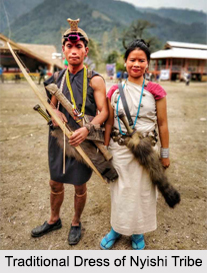
Traditional Dress of Nyishi Tribe
Traditional Dress of Nyishi Tribe is worn during festivals and social gathering. Men wear a cane helmet surmounted with the beak of the great Indian H...
Pasi Community
Pasi is an aboriginal race of India and are mainly distributed over the northern region of the country. The traditional occupation of Pasi is the extr...

Bhojas
Bhojas have been described as a very important tribe in the Aitareya Brahmana. Historical records have said that the Bhojas were settled towards the s...
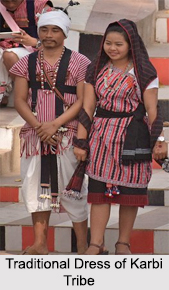
Traditional Dress of Karbi Tribe
Traditional Dress of Karbi Tribe can be easily recognized by the artistic designs inherited from their forefathers. Karbis have their own traditional...
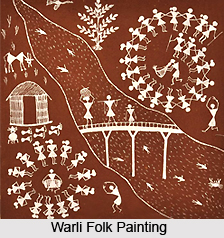
Indian Folk and Tribal Arts
Indian folk and tribal art are the exclusive handiwork of the section of people who belong to different social groups and it is richly enriched with a...
Related articles in Tribes of India

Sentinelese Tribe
Sentinelese tribal community is one of the most isolated and secluded tribes that are found in the whole world.
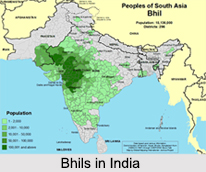
Bhil Tribe
The people of the Bhil tribe are the most widely distributed tribal groups in India.
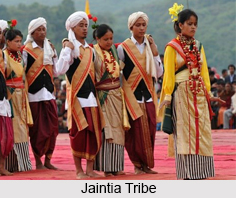
Jaintia Tribe
Jaintia Tribes are located in the Jaintia Hills of Meghalaya. They are also called the Pnars. They are famous for weaving of carpet, making of musical...
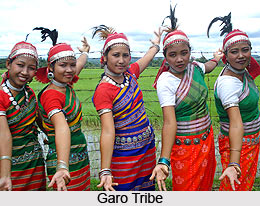
Garo Tribes
Garo Tribes are one of the matrilineal tribes of North-East India who reside in the Garo hills of Meghalaya. Historically, the tribe originated in Tib...
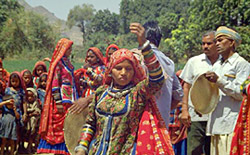
Garasia Tribe
The Garasia tribal community holds a significant position within Indian culture, renowned for their distinctive way of life and rich cultural heritage...