The Lohara is a tribal community, settled in the state of West Bengal. The word Lohara is derived from the word loha, meaning iron, as they were traditionally blacksmiths. In 1891, Risley stated that Lohra was a synonym for Lohar and Asur. According to him, the Lohar are a large and heterogenous conglomeration, where the tribal population is made up of several different tribes and castes.
Apart from West Bengal, the Lohara occupy parts of Jharkhand like Singhbhum, Hazaribag, Palamu, Ranchi and Santhal Pargana. There are also the Loharas of the Chotanagpur plateau in Bihar. It is a discrete community and one of the early inhabitants of this area.
Occupation of the Lohara Tribe
The Lohara tribal communities earn their livelihood by getting employed in different occupations. Some of them are shepherds, many of them rear cattle and have developed the expertise of weaving exquisite baskets. Iron smelters also are found in Lohara society. With the touch of their skillful hands, beautiful iron products can be carved out from the raw and hot iron bars. Special tools are also used by these Lohara artisans for carving. The houses in which these Lohara tribes live in too bear the reflection of their artistic acumen. Some of them, however, practice the typical occupation of any other Indian tribe, namely, cultivation.
Food of the Lohara Tribe
The staple food of the Lohara Tribe is rice. They also consume wheat and maize. As part of their non-vegetarian diet they consume beef, pork and carrion. Their food is cooked using mustard, dori or jethangi oil. They also survive on rice beer (haria) and distilled liquor (daru).
Language of the Lohara Tribe
The Lohara Tribe communicates in Sadri. They are also conversant with Hindi. They use the Devenagari scripts.
Cultural Tradition of the Lohara Tribe
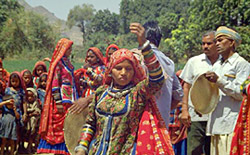
Both males and females of Lohara tribes perform dance forms wearing their conventional attires. Singing songs in accompaniment of wonderful musical instruments add stupor to the whole of merrymaking. Art work is done using conventional `handloom weaving` tools and beautiful wall paintings are also exhibited at the time of festivals. Their tongue is similar to that of all the other tribes of this region. The costumes of this tribal community are similar to the other tribal communities of this region. The male folks of this community wear ganji, kurta and dhoti, whereas the females of this community wear saree, blouse and salwar-kameez-dupatta.
Rituals and Festivals Celebrated by the Lohara Tribe
The Lohara tribes of West Bengal have a plethora of festivals. Some of the festivals are either feted at individual homes or they are feted as community fetes. All the religious festivals are commemoration of worship of various folk deities. The reason for worshipping these deities is to appease them and seek their blessings. Rituals and social ceremonies are also no less in numbers. Rituals of Lohara tribes mainly center on conservation of nature and also booties, which actually support their livelihood. Festive mood gets heightened with incorporation of beautiful dance forms and joyful songs.
Related Articles:
Tribes of West Bengal
Indian Tribal People
Munda Tribe
Garo Tribes
Mal Pahariya Tribe
Paharia Tribe
Bhutia Tribe
Chero Tribe
Mru Tribe
Kora Tribe
Ho Tribe
Mahli Tribe
Oraon Tribe
Bhuiya Tribe
Lohara Tribe
Lohara Tribes of West Bengal are known for their festival, festivities, dance, music and exquisite art works.