 Chenchu tribes occupy a major position in the list of the tribes of India and are scattered in different parts of India especially in Orissa. Chenchu tribes are also known by the names of Chenswar, Choncharu, Chenchwar and Chenchukoolam. Apart from Orissa, these tribes are also found in Tamil Nadu, Andhra Pradesh, and Karnataka.
A myth is popular amongst the Chenchu tribes regarding their origination. Lord Mallikarjuna, a personification of Lord Shiva fell in love with a Chenchu girl called `Chenchu Laxmi` and got married later. They are believed to be the ancestors of the Chenchu tribes of the later period. In ancient scriptures like Puranas, temple records and Chronicles, the mention has been made about these couple.
It is obvious that following the norm of the maximum of Indian tribes of the hilly provinces, these Chenchu tribes too have developed expertise in hunting as well as food gathering. Instances are not rare when one can find a group of Chenchu tribes set on a venture in the dense forest region for gathering food materials or just to hunt wild animals. The common preys are animals like boar and deer.
However, due to the stringent laws of forest conversation, these Chenchu tribes have to remain contented with tiny animals namely lizards, rabbits and wild birds. Bows, arrows, small knife are the usual weapons that these Chenchu tribes always carry with them, especially when they go out for hunting. However, these Chenchu tribes have not taken up the occupation of farming. Moreover, they also collect and sell foods and jungle products like beedi leaf, fruits, honey, tubers, roots, green leaves, gum, tamarind, mohua flower etc. Chenchu meal is quite simple comprising of gruel prepared from jowar or maize, and also boiled or cooked jungle tubers. They blend tamarind fruit with tamarind ash. Moreover the people of these tribal communities have learnt various small arts and craftsmanship.
Interestingly, these ably built Chenchu tribes have kept intact all their traditional customs and remained unaffected of the modern influences. Although few of the children of the Chenchu tribes have been sent to schools, these Chenchu tribes are yet to find place in the `mainstream` educational system.
In the midst of the nature`s bounty, the village of the Chenchu reflects the culture and traditional exuberance. Penta is the name of a village of a Chenchu tribe. Each penta comprises of quite a few huts that are separated from each and other and are then clubbed together on the basis of the structure of kinship. For example, the close relatives reside in close proximity, while the distant relatives stay far away.
The Chenchu tribes of India speak in a language of the same name and this language belongs to the Dravidian language group. This language is also known by the name of Chenchwar, Chenswar, Chenchucoolam, or Choncharu. Apart from this language they also converse in Telugu.
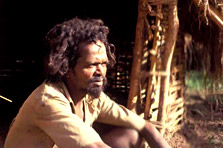
The physical characteristics of the Chenchus include flat nose, short height, long head with well defined eyebrows. Their faces are broad and hair is curly. Generally the elderly person the Chenchu village has been bestowed upon the power of maintaining the social harmony and integrity of the people of the village or any individual family. He is called `Peddamanishi`.
Being a huge exogamous group, these Chenchu tribes are sub divided into several clans. Just like a traditional Hindu, these Chenchu tribes too follow the system of gotras, which constitutes the bloodline and descent of member of clan. There are twenty-six gotras found among the Chenchu tribes, each clan being identified by their gotra name. Marriage forms a significant institution in the Chenchu tribal society. It is called `Pelli`, and usually held through negotiation of elders or also as per the choice of the couples.
The way the marriage ceremony is being held is also very unique following all the conventional rites in the presence of village elders and people. However the Chenchu tribes are not permitted to marry any one within the gotra or clan but they can marry members from other Chenchu clans. After marriage, the Chenchu wife becomes a part of the gotra of her husband. Only on special cases like infidelity, divorce is being granted to a Chenchu tribe. Widow re-marriages are also prevalent amongst the Chenchu tribes.
Apart from these, Chenchu tribes have got a treasure house of festivals and societal rituals, thus highlighting various aspects of their culture amongst various deities that are being worshipped, Lord Eshwara, better known as `Lingamayya`, and Shakti or `Maisamma` or `Peddamma` are significant. Worship of these deities is usually held in the months of July and Augusts or `Sravan`. Bhagaban taru, Garelamai Sama, Potsamma, Gangamma are their deities whom they revere. They also worship Hindu gods like Lord Hanuman.
Due to the conservative nature of these Chenchu tribes, most of these Chenchu tribes are yet to adapt to the modern trends of the modern day world. Still today these Chenchu tribes have retained their original life style and habitation.