
“God reveals Himself in the form which His devotee loves most. His love for the devotee knows no bounds.†– Ramakrishna Paramahansa
The concept of Ishvara in Hinduism is one of those eternal truths that have haunted the human soul for ages. Strictly speaking this concept has its origin in the monotheistic school of thought. Hinduism or Hindu Dharma is a religious tradition, primarily embraced by the Indo-Aryans, during the inception of Indian Civilisation. It has a Sanskrit name called Sanatan Dharma, which means “eternal lawâ€. Whilst Bhagavad Gita states that Ishvara is the source of everything in the voice of Lord Krishna, later Hindu schools of thought believed and worshipped a personal form of god. However, what these schools of thought have always emphasised in the oneness of Ishwara.
The Hindus are said to adopt polytheism, monotheism, and pantheism as well as belief in demons, heroes, and ancestors. The cults of Lord Shiva and Shakti may have come down from the Indus people. Worship of trees, animals and rivers, and other cults associated with fertility ritual, may have had the same origin, while the dark powers of the underworld, who are dreaded and propitiated, may be due to aboriginal sources. The Vedic Aryans contributed the higher gods comparable to the Olympians of the Greeks, like the Sky and the Earth, the Sun and the Fire. The Hindu religion deals with these different lines of thought and fuses them into a whole by means of its philosophical synthesis. The expression of reality cannot be fully expressed in terms of logic and language. It defies all description. The seer is as certain of the objective reality he apprehends as he is of the inadequacy of thought to express it. Ishvara com¬prehended is no God, but an artificial construction of the human minds. Individuality, whether human or divine, can only be accepted as given fact and not de¬scribed. It is not wholly transparent to logic. The eternal being of God cannot be described by categories.
The Sanskrit word Ishvara implies Lord or King. Indeed Ishvara in Hinduism is the Supreme Ruler, the Transcendental Being of the Cosmos:
“There is nothing superior to Me...†“I am beyond the transient and I am higher even than the eternal …â€
Ishvara is considered as the Awesome Creator, Preserver and Dissolver of anything and everything around. Bhagavad Gita, the priceless Discourse on Divinity, attests this sublime reality in Krishna"s Revelation:
“My higher nature knows:
It is the Life, great-armed one,
By which this world is maintained.
Beings spring from it,
All of them, be assured,
Of the whole world I am
The origin and dissolution too.
On Me all this (universe) is strung,
Like heaps of pearls on a string.â€
[vii.5-7]- Bhagavad Gita
An attitude of reticence is adopted regarding the question of the nature of the Supreme Being. Those who know it tell it not; those who tell it know it not. The real is the wholly other, the utterly transcendent, the mysterious being which awakens in human mind a sense of awe and wonder, dread and desire. It not only fascinates the mind but produces a sense of abasement in mind. Whatever is true of empirical being is denied of the Real.
In spiritual life the law holds that only like can know like. Human mind can only know what is akin to them. What the mystics call the "basis" or "ground" of the soul is not satisfied by the transitory or the tem¬poral, by the sensuous or the intellectual. Naturally, the power by which man acquires the knowledge of Ishvara is not logical thought, but spirit, for spirit can only be spiritually discerned. While the real is utterly transcendent to the empirical individual, it is immanent in the ultimate part of our nature. The revelation of Ishvara and man"s contemplation are two aspects of one and the same experience. Brahman is Atman. He is the "antaryamin", the inner controller. He is not only the incommunicable mystery standing for ever in his own perfect light, bliss, and peace, but also is here in us, upholding, sustaining human beings. Religion arises out of the experience of the human spirit which feels its kinship and continuity with the Divine other. A purely immanent deity cannot be an object of worship and adoration; a purely transcendent one does not allow of any worship or adoration.
Hindu thinkers are not content with postulating a being unrelated to humanity, who is merely the Beyond, so far as the empirical world is con¬cerned. From the beginnings of Hindu history, attempts are made to bring Ishvara closer to the needs of man. Though it is impossible to describe the ultim¬ate reality, it is quite possible to indicate by means of symbols aspects of it, though the symbolic description is not a substitute for the experience of Ishvara. The Rig Veda has it: “All this is the person, that which is past and that which is future.†It is the matrix of the entire being. The Vaishnava thinkers and the Shaiva Siddhantins make of the Supreme, the fulfillment of human nature. He is knowledge that will enlighten the ignorant, strength for the weak, mercy for the guilty, patience for the sufferer, comfort for the comfortless. As a whole, the Supreme is not this or that personal form but is the being that is responsible for all that was, is, and shall be. His temple is every world, every star that spins in the firmament. No element can contain him for he is all elements. Your life and mine are enveloped by him. Worship is the acknowledgement of the magnificence of this supreme reality.
There are accounts of the ultimate Reality as both Absolute and God, Brahman, and Ishvara. To the worshipper, the personal God is the highest. No one can worship what is known as imperfect. Even the idol of the idolater stands for perfection, though he may toss it aside the moment he detects its imperfection. Brahman resides both within and outside Prakriti. The word “Prakriti†has a wide connotation in Hindu Dharma. It is the “material-natureâ€, equated with the Creative Energy of Shakti, which “sends forth the host of beingsâ€-“Jiva†or all living beings. It covers matter, creation and nature. Ishvara is the Generator of all energy, including the life-energy of Prakriti. Prakriti sprouts from Him, but is not the Whole of Him- “mayadhyakshena prakrith suyate sa-characharam.†“This material nature is working under my (Ishvara"s) direction.â€
Taking the help of Prakriti, Brahman manifests itself in all existence, in every creation. When Ishvara decides to assume His Incarnations or Avataras, like Krishna, He instills Brahman under the cover of Prakriti, although Ishvara is Unborn and Eternal.
Maya, associated with Prakriti, is the non-manifest Primal Power of Ishvara, which cast a worldly illusion. Everything being bound by Maya, the Prakriti, which is a shadow of the Absolute Ishvara, and not the Ishwara Himself, seems real. Prakriti is Trigunatmika or consisting of the three Gunas- Sattva i.e. Purity or Knowledge, Raja or Passion and Over-Ambition, and Tama, meaning, Harmful Ignorance. It is according to the Divine Will that under the influence of Maya, the ordinary man, succumbs to desire or Vasanas, lust, greed and anger and is chained to the egotistical consciousness of the self. Jiva mistakenly identifies itself with the body, shaped from Prakriti, and remains shackled to the material attachments, such as property, people that surround him. Hence, that a tree hence is scrutinized to be composed of living cells, or a substance is made of atoms, is Maya, because the seed that sprouted into the tree contains the Brahma of Ishvara, which is the Actual Truth. Ishvara maneuvered the illusory curtain of Maya, for instigating the questing mind to unravel the unexplored mystery. Krishna, in Gita has showed a track of graduating into Ishvara- “The merging with the Brahman, Creator and Absolute is achieved through meditation techniques of transferring one"s consciousness into the state of “no-I†through the mechanism of “total reciprocity.â€
Ishvara is: “Himself as in all beings, And all beings in himselfâ€- Bhagavad Gita. This idea of Divine Immanence connects to the Advaita or Monotheistic School of Hinduism. There is only One Nirakaar, Akal and Alakh Ishvara (i.e. One Formless, Timeless and Imperceptible God). All beings are projection of the Almighty. The pioneer of the Advaita Philosophy, Adi Sankaracharya, propagated that “Brahma satya jagat mithya, jivo brahmaiva naparah -Brahman is the only truth, the world is illusion, and there is ultimately no difference between the Brahman and the individual self or (Atman)â€. The Adwaitas caters to the concept of Nirguna Brahman, i.e. the Brahman beyond attributes.
The Vishishtadwaita School, on the other hand, revolves around the principal belief that Brahman is Saguna or invested with Kalyan Gunas or Good Qualities of both sentient and insentient modes- Asesha Chit-Achit Prakaaram Brahmaikameva Tatvam. The three key principles of this school are: Thathva which is the illuminating knowledge of the three real entities namely, Jiva or Chit Brahman (the sentient); Jagath or Achit Brahman (the insentient) and Ishvara or Parabrahman
As per Hinduism, though Ishvara is formless, he yet informs and sustains countless forms. He is not small and partial, or remote and ineffable. He is not merely the God of Israel or of Christendom but the crown and fulfillment of all men and all women, of life and death, of joy and sorrow. No outward form can wholly contain the inward reality, though every form brings out an aspect of it. Ishvara is perceived in His Comic-Spirit as Brahmana. Brahman is the Omnipresent Divine Essence, for matter, energy, time and space for everything within and beyond the Universe. Therefore, Lord Krishna explains “….Into Brahman I plant the seed giving birth to all living beings...â€
Ishvara in Vedas is seen as Antarvyapi and Bahurvyapi, which means that God is the Paratatman of all Atmans or the Innermost self of all beings, and God is the habitat of the entire Creation. “He is without any form, yet dwells inside and outside all things with form and shape; Yet He is entirely free of error, faultless and pure.†Vishishtadvaita demonstrates Ishvara as the Sculptor of Adrishta or Fates, and the Highest Authority of Morality. Ishwara always judge performances with the scale measuring degree of Nyay and Anyay or right and wrong. Vedas exhibit that there is definitely a nexus between deeds and consequences, illustrated in the theory of Karma, or any action, mental or physical. Karma conditions Adrishta, or Fate. Whether one will enjoy the fruits of Karma or suffer the mistakes, is determined by Karma. Hinduism is largely based on the law that Karma is Dharma or Action is Religion. Ishvara bestows one with boon for Sukarma or good work, and punishes the offender, or the non-repentant sinner.
Rig Veda, too, is vocal about the evolution of Hiranyagarbha, the Primordial Being, spawned from Brahman. Hiranyagarbha resemble Lord Brahma, the Creator in the Trimurti or the Holy Hindu Trinity of Brahma, Vishnu and Shiva, concertedly executing as the Active Principle of the Universe.
Dvaita School rests on an Atantya-Bheda Darsana or Philosophy of Duality or Difference. Madhavacharya, the chief exponent stated that there is a difference or Bheda between the Ishvara and the Jivatman (self).It opposes the identification of Atman with Brahma. The multiplicity of Jivas and Prakriti make for a Dependant Reality or Asvatantra Tatva. “All beings are rooted…†in Ishvara, the Svatantra Tatva or Independent Reality. Jivas and Prakriti are completely dependent on Brahman for their emergence as beings.
Duality or variation persists in five kinds: between Self and Brahman; matter and Brahman; one self and another self (dual or split personality); Selves and matter; and matter and matter. The five-fold differences are clarified in the Parama-Shruti .It elaborates about the difference between “Jiva†and “Ishwaraâ€; between “jaDa†(insentient) and Ishvara; between Jivas and jaDa; among several Jivas; and among many jaDas.
In all religions, from the lowest to the highest, man is in contact with an in¬visible environment and attempts to express his view of the Divine by means of images. The animist of the Atharva Veda, who believes that nature is full of spirits, is religious to the extent that he is convinced of the Divine presence and interpenetration in the world and nature. The polytheist is right to the extent that the Divine is to be treated on the analogy of human consciousness rather than any other empirical thing. The gods of the Vedas resemble the Supreme no more than shadows resemble the sun, but, even as the shadows indicate where the sun is, the Vedic deities point to the direction in which the Supreme reality lies. All forms are directing their steps towards the one Ishvara, though along different paths. The real is one, though it is expressed in different names, which are determined by climate, history, and temperament. If each one follows his own path with sincerity and devotion he will surely reach the one God, Ishvara. God, infinite and omnipresent, nevertheless, in his condescension, projects himself in the form of an image so that his simpler worshippers may feel nearer to him.
For the Vaishnavites, the worshippers of Vishnu, the god has in the past taken material form, in order to save the world from impending disaster. His incarnations (avataras), especially those as Lord Rama and Lord Krishna have given the Hindus their most exuberant and vital mythology, legend, and folklore. Rama"s henchman, the gigantic monkey, Lord Hanuman, is still among the most popular of the lesser gods of Hinduism.
Lord Krishna is a divinity of a rare completeness and catholicity, meeting almost every human need. He says, “...Brahman, immortal and imperishable, is based on Me.†The all-pervasive spread of Brahman is asserted by the Mundaka Upanishad, “That Brahman is in front and in back, in the north, south, east, and west, and also overhead and below. In other words, that supreme Brahman effulgence spreads throughout both the material and spiritual skies.†The god of all gods, Shiva, the divine dancer and the divine ascetic, represents the eternal power through which the universe evolves.
Ishvara is, thus, the Perennial Pleasure, the “Knowledge†among the Knowledgeable, the Brightest of the Lights, the Immutable, Virat (Huge), living in the tiniest and in the invisible. He remains a forever-enthralling enigma for the soul that endeavors to sense and feel His Immensity. Immortal is the perpetual desire of the pious soul, which plunges into the achievement of the Pure Consciousness of Ishvara:
Death To Immortality
Asato ma sad gamaya.
Tamaso ma jyotir gamaya.
Mrtyor ma amrtam gamaya.
Lead me from the unreal to the Real.
Lead me from darkness unto Light.
Lead me from death to Immortality.
Hence, it would not be wrong to say that the Supreme is both the Absolute and God. The impersonal and the personal conceptions are not to be regarded as rival claimants to the exclusive truth. They are the different ways in which the single comprehensive pattern reveals itself to the spirit of man. One and the same "Being" is conceived now as the object of philo¬sophical inquiry or "jnana", now as an object of devotion or "upasana". The conception of ultimate reality and that of a personal God are reconciled in religious experience, though the reconciliation cannot be easily effected in the region of thought. Man cannot help thinking of the Supreme under the analogy of self-consciousness and yet the Supreme is the absolutely simple, unchang¬ing, free, spiritual reality in which the soul finds its home, its rest, and its completion.
Ishvara In Hinduism
Ishvara in Hinduism is presented as the omnipresent and omnipotent who has the manifestation of form and formless.
Recently updated articles in Religion in India

Chasa Caste
Chasa caste is a prominent agrarian community native to Odisha. Traditionally associated with cultivation and farming, Chasas have historically played...
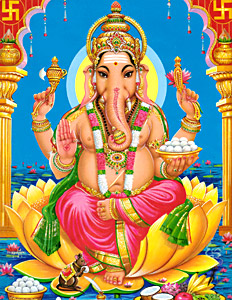
Vigneswara, A Form of Lord Ganesha
Lord Vigneswara is another form of Lord Ganesha or Vinayaka, prominently worshipped as the God of intelligence and good luck in the Indian subcontinen...
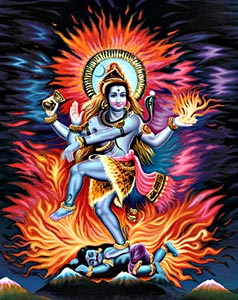
Maheswara
Maheswara, meaning “the Great Lord,” is a revered name of Lord Shiva in Hindu tradition. It represents Shiva’s supreme authority over creation, preser...
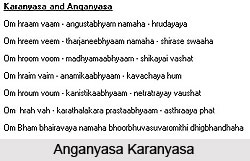
Anganyasa and Karanyasa
Anganyasa and Karanyasa are preparatory rituals in Hindu worship that sanctify the body and hands through the recitation of sacred mantras and symboli...
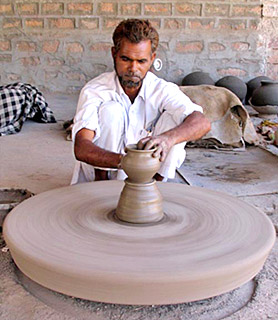
Kumbhakar / Kumhar Caste
Kumbhakar or Kumhar caste is a traditional artisan community in India known for pottery making. Derived from Sanskrit word Kumbhakar, meaning potter,...
Related articles in Religion in India

Religion in Indus Valley Civilization
Religion in Indus Valley Civilisation included Hinduism, Buddhism and Jainism. Details about the religion in Indus Valley Civilization have been gathe...

Iyer Brahmin
Iyer Brahmins are originally from Tamil Nadu of South India. They are known for their adherence to Advaita philosophy and Smarta traditions. Tradition...

Kumbhakar / Kumhar Caste
Kumbhakar or Kumhar caste is a traditional artisan community in India known for pottery making. Derived from Sanskrit word Kumbhakar, meaning potter,...

Gujjars in Mughal Era
Gujjars in the Mughal era enjoyed great power. Further their power increased with the decline of Aurangzeb, Mughal emperor.

Gotra in Hinduism
In Hinduism, gotra refers to a lineage system tracing descent from ancient sages, primarily through the paternal line. Originating from Vedic traditio...