Tiruppavai, Devotional Poems in Tamil Literature - Informative & researched article on Tiruppavai, Devotional Poems in Tamil Literature
 Indianetzone: Largest Free Encyclopedia of India with thousand of articlesIndian Literature


in  
 Art & Culture|Entertainment|Health|Reference|Sports|Society|Travel
Forum  | Free E-magazine  | RSS Feeds  
Indian Literature : Indian Literature |History of Indian Literature |Sanskrit Literature |Indian English Literature |Regional Indian Literature |Indian Comics |Indian Poetry |Indian Literary Personalities |Indian Epic Poetry |Renaissance in Indian Literature |Indian Novels |Indian Literary Organisations |Indian Literary Movements |Contemporary Indian Literature |Medieval Indian Literature |Ancient Indian Literature |Themes In Indian Literature |Genres in Indian Literature |Influencing Factors On Indian Literature |Forms of Indian Literature |Religious Influence on Indian Literature |Modern Indian Literature |Vedas
Home > Reference > Indian Literature > Regional Indian Literature > Tamil Literature > Tiruppavai
Tiruppavai, Devotional Poems in Tamil Literature
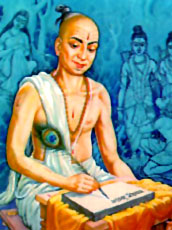
Tiruppavai or Thiruppavai is a collection of 30 stanzas composed by Antal (Andal) in honour and praise of Lord Vishnu in Tamil language. It is a part of Divya Prabandha.

 The Tiruppavai, also known as Thiruppavai, is a compilation of 30 Paasuram or stanzas in Tamil language, composed by Antal (Andal) in honour and praise of Lord Vishnu, known as Perumal in Tamil. It is comprised as a part of Divya Prabandha, which is a work of the 12 Alvars (devotees of Lord Vishnu). Tiruppavai is one of the most significant works of Tamil literature. The Tiruppavai collection belongs to the Pavai genre of hymns and songs. Pavai is a unique custom in Tamil Nadu, where the Pavai vow is observed in the Tamil month of Margazhi, initially by unmarried maidens who pray to the goddess Pavai, related to goddess Parvati, for an idyllic married life. The Paasurams of Tiruppavai are sung by Sri Vaishnavas throughout the year in their residences as well as in the temples. This Tamil tradition gets special importance particularly during Margazhi as each day of this Tamil month is named from one of the 30 verses of Tiruppavai. There are also references to this vow in Paripatal, a Tamil poetic anthology from the late Sangam age.

The verses and hymns composed by Antal consist of the basic principles of Vaishnavism which are strictly followed during the month of Marghazhi. Vaishnavas chant these hymns in order to attain prosperity, peace and divine grace. Antal adopts the appearance of a cowherd in the 30 verses. She appears focused on performing a specific religious vow to marry Lord Vishnu, thus acquire the Lord`s eternal companionship and inviting all her female friends to support and join the author. Near the climax, it is revealed that Antal actually did not perform a religious ritual; but simply just prayed to be granted the service of Lord Vishnu for infinity. She desires for unending happiness and service of the Lord.

Content of Tiruppavai
The initial 5 stanzas give an introduction to the key subject matter, its principle and objective. According to Antal, every devotee should give up the luxuries and comforts during that particular month and thus maintain a pure, rigorous ascetic life style for the worship of the lord. Honest prayers to Lord Vishnu would fetch plentiful rain and thus affluence. The rains would promise the grand fertility and the greenery accompanied with bountiful affluence from the Almighty. It is also important to offering fresh flowers to Lord Krishna as it would redress sins committed previously and even the sins that might be committed in future. In the next 10 stanzas, Antal narrates the value of community participation. She requests her friends to join her and collect flowers. The poet also explains the ambience at the village, the twittering of birds, vibrant blossoms, the melodic sound of churning butter, herds of cattle with tinkling bells and the sounding of the conch that reverberates from the temple.

Antal visits every house, awakens her friends and invites them to join her for a bath in a pond located nearby. She also sings and lauds the various incarnations of Lord Vishnu. The next 5 stanzas mentions about her visit to the temple along with her friends. She wishes to make Suprabhata gently to wake up Vishnu. She and her friends pacify the guards of the temple, enter the premises of the temple and chant prayers praising the parents of Lord Krishna. The group pleads them to wake up Lord Krishna and Balarama. Then Antal and her friends approach Neela Devi, the companion of the Lord, to have a Darshan (view).

The final 9 stanzas are about the magnificence of Lord Vishnu. After acquiring his blessings, Antal mentions about her demands; milk for the Vrata (fasting), white conch, flowers, lamp, abundance of ghee and butter and precious costume and jewellery. The concluding stanza identifies the author as the adopted daughter of Periyalvar, who made this compilation of 30 stanzas or Paasurams. It also mentions that those who recite the verses with love and devotion will obtain the blessings of Lord Vishnu.
(Last Updated on : 30/01/2013)
 
 
Subramaniam Bharati Subramanya Bharathi Vedanayagam Pillai
Dr U.Ve. Swaminatha Iyer Kamban Medieval Tamil Literature
Purananuru- Sangam Literary Work of India Ahananuru- Sangam Literary Work of India Tiruvalluvar
Sangam Literature of Tamil Nadu Ottakuttar Tolkappiyam
Sekkizhar Musicological Literature of South India Chintamani
Kural Sangam Age in Tamil Literature Post-Sangam Age in Tamil literature
Vijayanagar and Nayak Age in Tamil Literature Modern Era in Tamil literature Poetry in Twentieth Century Tamil Literature
Vedanayaka Sastri Folk Literature in Tamil Constanzo Beschi
Maraimalai Adigal Tirukkural Prathapa Mudaliar Charithram
Jeyamohan Kalki Krishnamurthy C. Viruthachalam
S. Ramakrishnan Charu Nivedita Bharathidasan
Meenakshi Sundaram Pillai Forms of Poetry in Tamil Literature History of Tamil Literature
Prose in Tamil Literature Ettuttokai Kalittokai
Arruppatai Tirumurukaruppatai Porunararruppatai
Cirupanarruppatai Malaipatukatam Mullaippattu
Kurincippattu Pattinappalai Netunalvatai
Maturaikkanci Ethical Tamil Literature Epics in Tamil Literature
Muttollayiram Pattupattu Folk Songs in Tamil Literature
Influence of Bhakti Movement on Tamil Literature Tirumular Karaikkal Ammaiyar
Campantar Tirunavukkaracar Cuntarar
Nambiyandar Nambi Manickavasagar Gandaraditya Chola
Periyalvar Antal Tirumankai Alvar
Nammalvar Nantik Kalampakam Tiruppalliyelucci
Tattuvarayar Kovai Tiruppavai
Madhurakavi Alvar Parani Kalinkattupparani
Ula Thirumalisai Alvar Bhoothath Alvar
Thondaradippodi Alvar Thiruppaan Alvar Poigai Alvar
Peyalvar Nathamuni Ottakoothar
Kambar Nakkeerar Iraiyanar Akapporul
Agattiyam Patirruppattu Tirutakkatevar
Akananuru Auvaiyar Nikantukals
Nambi Akapporul Religious Works in Tamil Literature Tancaivanan Kovai
Patinenmelkanakku Perumpan Arruppatai Porunar Arruppatai
Puranas in Tamil Literature Talapuranams Astappirapantam
Thiruppugazh Arunakiriyar Pattinattar
Bharatam Nalavenpa Ativiraramar
Kalamekam Irattaippulavar Antakakkavi Viraraghava Mudaliyar
Kumarakuruparar Civappirakacar Civanana Munivar
Cantalihika Cuvamikal Citampara Cuvamikal Tayumanavar
Catakams Alakarkillaivitututu Patikkacup Pulavar
Nalla Pillai Mmatcicuntaram Pillai Tantavarayar
Ramalinkar Cuvamikal Kopalakirusna Parati Capapati Mudaliar
Velayuta Mudaliar Tantapani Cuvamikal Tamil Islamic Literature
Umaru Pulavar Panaikkulam Abdul Majid Tamil Christian Literature
Viramamunivar G. U. Pope Krisna Pillai
Plays in Tamil literature Novelists in Tamil Literature V.V.S. Iyer
K.P. Rajakopalan Batlagundu Subramanian Ramaiya T. Janakiraman
K. Alakiricami Cuntara Ramacami Vindan
Jeyakantan K. V. Jakannatan Curiyanarayana Sastriyar
Pinnattur Narayanacami Iyer Annamalai Reddiar R. Rakava Iyengar
V.O. Citamparam Pillai Caminata Iyer Maraimalai Atikal
T. V. Kaliyanacuntarar Biography in Tamil literature K. Namaccivaya Mudaliar
Paratiyar Paratitacan Kavimani Tecikavinayakam Pillai
Children’s Literature in Tamil Namakkal Kavinar V. Ramalinkam Pillai Murukeca Pakavatar
Recently Updated Articles in Indian Literature
Nabanita Dev Sen
Nabanita Dev Sen is the Bengali writer whose indisputable feminist writing depicts the ongoing surge of sovereign female writers.
Chandrakumar Agarwala
Chandrakumar Agarwala is the figure whose works have provided a gamut of literary exploration amidst the domain of Assamese Literature.
Ananda Chandra Agarwala
Ananda Chandra Agarwalais one of the pillars of Assamese literature whose works positioned him in a place where he was destined to be.
Satyavrat Shastri
Satyavrat Shastri is the Sanskrit scholar, writer, grammarian and poet whose contribution to Indian literature has been great and far flung.
Renaissance in Modern Marathi Literature
Renaissance in Modern Marathi Literature helped in determining the structure and base of the literary tradition of Marathi language. Renaissance movement in Modern Marathi Literature is defined as the cultural awakening in the different categories of literary writings.
E-mail this Article | Post a Comment
Forum
Forum on Indian Literature
Free E-magazine
Subscribe to Free E-Magazine on Reference
 
 
Tiruppavai, Devotional Poems in Tamil Literature - Informative & researched article on Tiruppavai, Devotional Poems in Tamil Literature
Sitemap
Contact Us   |   RSS Feeds
Copyright © 2008 Jupiter Infomedia Ltd. All rights reserved including the right to reproduce the contents in whole or in part in any form or medium without the express written permission of
Jupiter Infomedia Ltd.