
Army Ordnance Corps is responsible for the procurement, manufacture, supply of all munitions of war, clothing, equipment and all general stores except fuel and rations. In the earlier period the Ordnance service was an off-shoot of the Train of Artillery and was later termed as the Military Train and Magazine Establishment. It was closely associated with the artillery in that its staff consisted entirely of gunners. The officers so selected had to serve for tenure in the Ordnance and the other personnel were first taken on probation for a short period and then posted permanently. In 1796 the service was re-constituted as the Ordnance Department. With the abolition of the Indian artillery after 1857 the Royal Artillery took over the provision of men for the Department. In each Presidency there was the Inspector General of Ordnance and Magazines besides a number of manufacturing centres and depots for the storage and distribution of munitions for the troops. There were ten factories for the manufacture of guns, carriages and other vehicles, gun ammunition and gun-powder. Small arms and ammunition were manufactured in the arsenals or brought from England.
History of Army Ordnance Corps
The history of the Army Ordnance Corps can be traced back to the `Military Trains and Magazine Establishment", in the British East India Company`s Artillery. On 8th of April 1885 a `Board of Ordnance`, was constituted in Bengal presidency, which for the first time formed an organisation that could effectively control all the stores of the Company`s Army. The official history of the Army Ordnance Corps can thus be said to begin from this date. As a consequence of the `Special Ordnance Commission - 1885` and `Army in India Commission - 1879` set up post the First War of Independence in 1857, on 1st of April 1884 the Ordnance establishments in the three Presidencies were amalgamated into one department called the `Ordnance Department in India`.
The department was under the immediate executive control of the Director General of Ordnance who was the official advisor to the Government of India and the Commander-in-Chief on all Ordnance matters. During the later part of the 19th century the department was further re-organised. At the end of the First World War the Indian Ordnance Department was re-organised and on 18th of July, 1922 the Ordnance Corps took shape as a self contained body having the status of a department and designated as the `Indian Army Ordnance Corps`. With effect from 1st of April 1939, the Indian Army Ordnance Corps was made responsible for the entire technical maintenance of the Indian army in field.
With the increase in the demand for a large variety of ordnance stores and the consequent increase in the size of the department it was further re-organised in 1912 into three different but allied units for manufacture, storage and inspection. For this purpose three sections were created - factory, stores and inspection. Each of these was placed under a separate Director who was responsible directly to the Director General of Ordnance. This distribution of responsibilities was a step in the right direction and stood the test of war that followed soon after. An ordnance officer was also placed on the staff of each of the commands. This was done with a view to closely relate the demands of the users to the manufacturing agencies. An Indian Munitions Board was formed during the war. This was responsible for the control of ordnance factories, supply of Ordnance direct to the arsenals and depots overseas. The manufacture and supply of clothing, so far the responsibility of the army service corps was now taken over by the Munitions Board.
After the war the Munitions Board was abolished and the Indian Stores Department took its place. The Ordnance Department was divided into the Indian Ordnance Department and the Indian Army Ordnance Corps. The Director General of Ordnance in India was appointed the head of the Indian. The various factories were placed directly under his control. Military officers were replaced progressively by civilians and the factories were organised more on commercial and industrial lines. The Indian Army Ordnance Corps was administered by the Director of Equipment and Ordnance Stores under the direct control of the Quarter Master General in India.
Responsibilities of Army Ordnance Corps
The logistics function of the Army Ordnance Corps involves the mechanics of provisioning and procuring of all stores required to raise and maintain an efficient and effective fighting army. The aim of Army Ordnance Corps is to make available all kinds of stores to all units of the army at the right time, in right quantity, at the right place and right cost. Further, the inventory range covers every conceivable requirement of the soldier from clothing to weapons, from a needle to a tank and also all munitions except fuel, fodder and medicines. The inventory management functions involve provisioning, procurement, receipt, accounting, storage, issue, transportation and disposal of all clothing, equipment, weapons, vehicles, ammunition and spares of all kinds. Ammunition management is another important function of Army Ordnance Corps.
Munitions of war are now manufactured by the various depots and factories established all over India. When ready for use these are then transferred to the various holding depots.
Army Ordnance Corps
Army Ordnance Corps is an important administrative service of the Indian Army. Army Ordnance Corps took the shape of a self contained body on 18th of July, 1922.
Recently updated articles in Indian Administration
Functions of Ministry of Home Affairs
The Ministry of Home Affairs oversees internal security, law and order, and border management in India. It coordinates with states, administers Union...
Padma Shri Awards
Padma Shri Award is a civilian award given in India to people who have made outstanding achievements in their respective fields. Some of these awardee...
Padma Bhushan Award
Padma Bhushan Award has been given to eminent personalities in India for their remarkable achievements in their respective fields of expertise. Some o...
Padma Vibhushan Award
Padma Vibhushan Award is a civilian award, presented to people for excellence in their respective fields. This award was established on 2nd of January...
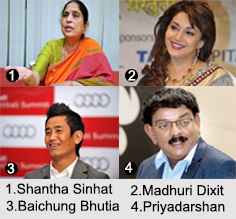
Padma Shri Awardees (2020-2029)
Padma Shri Awardees are people who have received Padma Shri, the fourth highest civilian award in India.
Related articles in Indian Administration

Administration of Chera Dynasty
Administration of Chera Dynasty bears some mentioning in the epic Shilappadikaram. There were four divisions of the total Chera kingdom.
Nayaka Administration
Nayaka Administration was one of the major consolidating factors of the Vijaynagar kingdom in the 16th century. The Nayakas ruled as feudal landlords...
Village Administration in Ancient India
Village has been the pivot of administration in ancient India. As the states were small it enhanced the importance of the village.
Land System in Ancient India
Private Ownership of land was not uncommon in ancient India. As per the system King was considered as the owner of the land.
Samiti in Ancient India
Samiti was an assembly in ancient India that assisted the King. It is equivalent to modern Lower house or Lok Sabha.