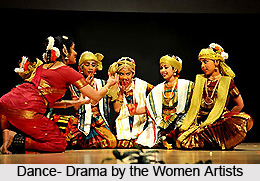
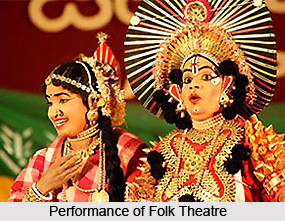
Once began as an art form, theatre in India gradually stood apart as an emblematic form of artistic expression. With its history deeply seated with folk drama forms like Kabigan, Kirtan dance and Baul songs, Chhau, Gajan, Jatra and Paalaagaan.
Indian theatre slowly became a rich artistic illustration. Indian theatre companies and groups started exemplifying the tears - fears - pain and agony of the common people whilst bringing forth a realistic approach in Indian theatre.
The major Indian theatre companies then aided in carrying Indian drama to the next level of maturity whilst illustrating the modish aspects of Indian Natya Dharmi in the most vibrant way. Gone are the days of Ramlila, the elucidation of the epic plays was also missing. History of Indian theatre has always been rather realistic, dealing with the social, economical and above all the daily life of the Indians. Indian theatre companies were then not interested in staging the translated plays. Even the essence of colonialism somewhat faded away. Their main aim was then to portray a whole new India in a lot different way.
India was then struggling for independence and Indian drama was chosen as one of the best medium to illustrate the pain. Indian theatre companies then mainly focused on manifesting the trauma of the oppressed souls whilst portraying the agonies of the then India. Organising regular shows and even carrying the concept of drama as a media to the Indian intelligentsia was ideally being done by the Indian theatre companies. The only focus was then India`s independence and theatre was indeed treated as the most accessible media to reach the mass whilst illustrating the gruesome effects of British cruelty. The need for establishing professional theatre companies to illustrate the concept thus gave rise to professional theatre conductors like Girish Ghosh, Dwijendra Lal Roy, Sisir Bhaduri, Ardhendu Mushtafi and others.
The post independence theatre form in India became lot more realistic whilst befitting the socio political and economic scenario of Independent India. Indian theatre companies then became the representatives of the common people whilst illustrating their daily life, their voices in the form of Indian theatre. Major theatre groups were formed. One such theatre group was the "Ninasam". It was the year 1945 when Subbanna, one of the acclaimed Kannada dramatist and writer along with his friend laid the seed of Ninasam as the organization to carry Indian theatre to the next level of mature ness. That was just the beginning of a new history and within no time Ninasam stood apart as one of the Major Indian theatre companies and groups to not only stage modern theatres but also to encourage the classical film culture. Nestled at the village of Heggodu in Sagar Taluk of the Shivamogga district in the Indian state of Karnataka, Ninasam till date happens to be one of the major groups and companies dedicated to the development and growth of Indian Natya.
The year 1945 was indeed important in the timeline of Indian theatre. Indians people theatre association or the IPTA was established for the greater objective of building social consciousness and at the same time to support the national integration amidst the artistry of Indian theatre. IPTA as an "apex body" aided in changing the age old concepts of Indian theatre. The aim was to revive the rich cultural heritage of India and slowly IPTA stood apart as the leading theatre association of India. IPTA is still reckoned as one of the major Indian theatre companies and is also one of the oldest associations of performing art in India.
The Indian theatre companies echoed the sounds of modern theatre in India whilst scaffolding the best plays all across India. Indian theatre, which first made its presence felt as a typical form of entertainment, thus gradually became a distinctive form of expression whilst portraying the novel concept of Indian natya.