Introduction
Arts in India represent life in Indian subcontinent which is primarily influenced by traditions, religion and philosophy. Hence, Indian art can be defined as theological, hieratic and even traditional. Indian art of all periods is close to life, not only to the life of the gods but to all creatures on earth. Besides this, naturalism is predominantly witnessed in Indian art. From the very beginning of the civilisation, art in India has been shaped by several factors, such as, foreign influences, cultural influences, changing dynasties, etc. In spite of such diversified influences, a unity is distinguishable. While discussing about its traditional aspect it must be noted that Indian art also encompasses the social, ethical and metaphysical notions.
Influences on Arts in India
While delving into the history of Indian art, it can be ascertained that even religious texts have praised the vocation of an artist. The texts of Buddhism and Hinduism specifically state that the making of images leads to heaven. Hence in India an artist has always been looked up as an individual who is an indispensable member of the society. Another feature that makes Indian art stand out is its spontaneity. Whether it is a sculpture or a painting, its source of inspiration lie in nature. Modern Indian art, too, revolves around religion and ancient philosophies where magical symbolism and tradition played significant parts. However, with time contemporary Indian art has been influenced by several factors and hence, several radical forms of expressions have been witnessed in this domain.
Features of Arts in India
In Indian art, world is regarded as an appearance of god. In fact, the divine is considered to be present both in man and nature. According to the Indian belief man`s preoccupation with practical ends and the understanding of practical behaviour over-emphasizes the material world. It is the aim of all the Indian religions -Hindu, Buddhist, and Jain - to break from these barriers in order to comprehend divinity directly. The methods of attaining the desired union with the divinity are infinite, and of these the one most important for art is the method of idolatry or the systematic creation of forms and symbols to represent the numerous invisible powers and mysteries of the supernatural world. The technique that grew up as a result of this necessity to express the unknowable qualities of the divine was both symbolic and anthropomorphic. Hence, the divine was given the human form but this symbol was perfect in proportion so that it can represent the omnipotence of the Indian gods.
Architecture in India

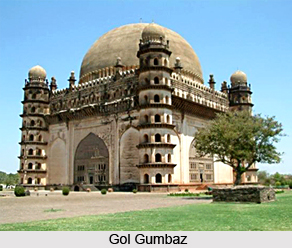
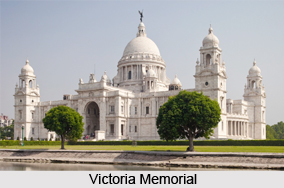
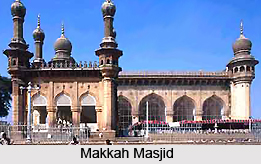
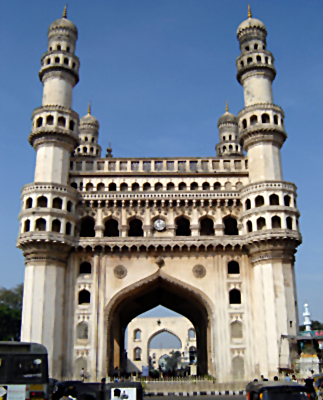
Besides its native styles, Indian art and architecture also comprise the different styles that arrived in India because of invasions. The invaders brought with them their own traditions and with the passage of time these influenced the Indian way of life as well. Undoubtedly, it was the Islamic art that made a huge impression. Some of India`s most beautiful heritage is derived from the Muslims who invaded India over the centuries. Whether it was dome shaped buildings, the forts or the Mughal Paintings, the influence was apparent. However, under the Mughal reign, Indian architecture found a new shape in the Indo-Islamic architecture. Following this idiom, several structures, like the Red Fort, Taj Mahal and several other monuments were constructed across the subcontinent. Temple art in India is, thus, rich and exuberant. Whether the temples followed the Dravidian or Nagara idioms, the mammoth temple structures, chiselled with figurines of gods and goddesses, spellbound the beholder. Often carved out of stones, the temple architectures and sculptures display the remarkable craftsmanship of the bygone days.
Painting in India
Painting, an indispensable part of art in India, is known for its diverse styles and varieties. Various schools of painting like that of Rajputs, Gwalior, Bengal, are unique genres with their individual features and glory. Apart from these a particular type, better known as ephemeral art has also gained popularity. Body painting, floral art and Rangoli belonging to this category, also find a place of prominence in the arena of whole of Indian art.
Sculpture in India
Indian art is also a storehouse of sculptured art. Stone crafting is highly popular in India. The Maurya, the Gandhara, the Gupta, the Chalukya, the Chola, the Vijayanagar, the Orissa, the Hoysala, the Mogul, the Indo-Muslim art of the Deccan are noteworthy. The rock-cut caves of Ajanta and Ellora and of Udayagiri; the Chalukyan temple of Virupaksha, the Chola temple of the Nayakas at Madurai, the Indo-Aryan temples at Bhubaneshwar, Puri and Konark, the Sun temple of Modhera, Gujarat and the Chandela temples of Khajuraho: these ageless edifices present an endless variety of exquisite stone carvings. Traditional motifs such as standing Deepalakshmis, courting apsaras, lotus blossoms are all adoptive as ornamental table lamps, ash-trays, or stone flower vases. Indian art is, thus, represented by its exuberance of cultural heritage and tradition as exemplified by its excess of artworks, monuments, forts and exquisite paintings.
Performing Arts in India
Performing arts also comprises an integral part of Indian art. Each region had its exclusivity in developing unique styles and forms. They are mostly associated with religious rituals and social functions. The Chhau (pronounced Cho) dance is executed in parts of West Bengal. The remarkable feature of this dance drama is the artistic use of masks and costumes, supplemented by the right tempo of music. Yakshagana, roughly translated as `Celebration of the Celestials` thrives to be a form of theatre including song, dance and drama which is extremely popular in Malenadu, Uttara and Dakshina Kannada districts of the Karnataka State. Puppet theatre too, embellished the Indian art form and it is widely practiced in regions of Rajasthan, West Bengal etc.
Mime Art in India

Mime is another exquisite art of India in which the artist depicts a story through varied body movements without the use of speech. It can also be categorized as a theatrical medium or performing art through which beautiful themes can be conveyed. Mime art represents the spellbinding ways in which a white faced silent figure emote diverse attributes of life through a way of entertainment.
Photography in India
Photography is one of the most cherished arts of India which is based on capturing the beauty, attributes, scenarios and underlying connotations of the world in pictures. In today`s world, photography has attained a heightened expression through the use of advanced technologies and instruments. Framing moments, life and nature through photography has emerged as a prominent professional as well as leisure activity in India.
Art in India has evolved with time and has found expression in different forms. However, the essence and influence of culture and tradition on Indian art remains undeniable.