
Ranna, along with Pampa and Ponna, was one of the three literary geniuses of Kannada literature. He was born in 949 CE at Muduvolalu (Mudhol) in the Bagalkot District of Karnataka. His ancestors were members of the Vaishya caste, from Balegara community (bangle sellers) of Jains. Ranna originally used to sell bangles. Ranna was inclined towards education, and took to learning leaving the family work to his brothers. Very soon he became a master of Sanskrit literature, Prakrit literature and Kannada literature. Gradually, Ranna made his way to the imperial court of Tailpa (973-997 A.D) and his son Sathyashraya (997-1009 A.D).
Literary Works of Ranna
Ranna wrote most of his works on a Jain theme. His most well-known works have been Parashuramacharitha, Ajitha Purana and Sahasa Bhima Vijaya or Gadaa Yudda. The first two are not yet come to light and the fame of Ranna as a poet rests on the other two, which are now extant. A fragment of a lexical work called Ranna-Kanda is also available.
The work the `Ajitha Purana`, completed in 993 AD, was about the traditional history of the second Jain Tirthankara. This is one of the shortest Jaina Puranas in the Kannada language. It recounts the stories of only two previous births of the Jina. It is about a prince who realizes how transitory life is by merely holding a few grey hairs to his cheek. He consequently renounces his life and goes on to meditate and live the life of an ascetic. He is reborn in the next life as the saint Ajithanatha. This is the first part of the work and shows the great talents of Ranna as a poet. The next part is the story of Sagara, the second Chakravarti of Jainism. Though initially reluctant to give up worldly pleasures, he eventually gave in after much persuasion by Maniketu and the death of his 60,000 sons when he realized his helplessness in the face of death. He finally took to a life of penance and found release.
The famous work, `Sahasra-Bhima-Vijayam` was written by Ranna. It was better known as Gada Yuddha around 1000 A.D, which was based on the Mahabharata of Vyasa. It is one of his greatest works which has secured him a permanent place in the history of Kannada literature. It is the story of the final fight between Bhima and Duryodhana towards the evening of the Kurukshetra war. The usual trend of identifying one`s patron with the hero of an epic is followed here by him too, when he sees his patron Iriva Bedanga Satyasharya as Bhima, the hero of the poem. Ranna has built up his work of ten chapters on the basis of the thirteenth chapter of the Pampa Bharatha. Ranna`s mind was essentially dramatic in quality, vigorous action; powerful dialogue, living characterization and emotional fire are some of its elements. The Gada-Yuddha contains with in itself a complete and most powerful drama. The poet mainly intended to glorify Bhima-Satyashraya-and he succeeded in it. He also managed to take the character of `Duryodhana`, the tragic hero to a great height without lowering the status of `Bhima`, one of the strongest `Pandava Putra`.
Ranna later became a poet in the court of Chakravarthi Tailapa II and also continued during the rule of his successor Satyasraya in the Western Chalukya court. He was also rewarded with the title of `Kavi Chakravarti`, which means `Emperor of Poets`. Ranna`s literature writings were all in `Halegannada`, which is an older version of Kannada language. Ranna wrote the first extant lexicon in Kannada named Ranna Kanda.
Ranna
Ranna was one of the literary greats of Kannada literature. He was a Jain poet who, along with Pampa and Ponna, comprised the three gems of Kannada Literature.
Recently updated articles in Indian Literature
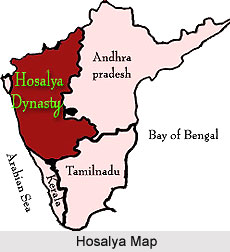
Gadyakarnamrita
Gadyakarnamrita is a 13th-century Sanskrit literary work written mainly in prose. It describes the ninety-day battle at Srirangam between the Hoysala...
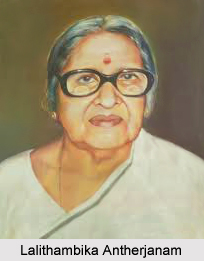
Women Writers in Malayalam Literature
Women writers in Malayalam literature have worked incessantly to make a place for their literary works. In the earlier periods, they were completely o...
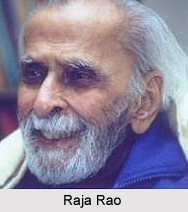
Comrade Kirillov, Novel by Raja Rao
Comrade Kirillov, a distinctive creation of Raja Rao, is presented as a brief yet incisive novelette that offers an ironic portrayal of the self-contr...
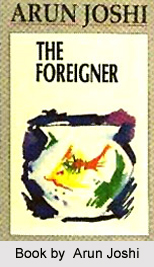
The Foreigner, Novel by Arun Joshi
“The Foreigner” is a book authored by Arun Joshi and published by Vision. It is an illustrious creation in the entire career of Arun Joshi, the famous...
Short Story in Telugu Literature
Short Story in twentieth century Telugu Literature was extremely popular and growing in and developing in a major way. Their popularity was greatly fa...
Related articles in Indian Literature
Mythological Themes in Indian Literature
Mythological themes in Indian literature have been integral to every ancient and contemporary writer and their path to f
Literature During Gupta Age
It is during the Gupta Age literature in the form of poetry, epos and drama gained a colossal importance.
Literature of Aravidu Dynasty
Sanskrit and Telugu were the popular literary medium of communication during Aravidu dynasty.
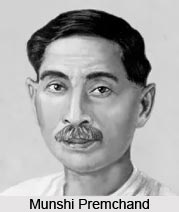
Munshi Premchand
Munshi Premchand was a legendary Indian writer notable for his modern Hindustani literature. A writer of a very high caliber, Premchand`s writings hav...
Sanskrit Poets
The names of some of the Sanskrit Poets are Bharavi, Devarshi Ramanath Shastri, Jayadeva and Srinivas Rath.