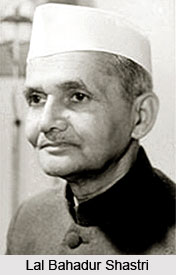
 The primary functions of the Indian bureaucracy are to maintain the law and order and collect the revenue. The British ruled India through a bureaucratic system. The fear of confusion and disintegration of the new Indian state at Independence, occasioned by the partition of the country, communal hostility, and the problems involved in integrating the princely states into the Indian Union caused the leadership of independent India to rely profoundly on the existing bureaucratic apparatus and to put aside any ideas of modification. At the highest levels of government in India, in fact, senior officers of the Indian Administrative Service (IAS), in particular those in the Prime Minister`s Secretariat created under Prime Minister Lal Bahadur Shastri, have at times become more significant than Cabinet ministers. Mrs. Indira Gandhi principally relied upon a few senior officers in her Secretariat to carry out her political bidding as well as to provide her with policy recommendation.
The post Independence configuration of political bureaucratic relationships has as a result been fundamentally transformed in the direction of a patrimonial regime in which the political leadership selects officers who are personally trustworthy, who serve their narrow political interests, and who expect mutual preferment in return. The highest levels of the state administration, as well as of the central government, are staffed by IAS officers. Below the elite all India services, there are a number of layers of bureaucracy in both the central and provincial governments, as well as the higher state civil services as well as vast armies of clerks, peons, and messengers at the lower levels. The pay and emoluments of government servants comprise a major drain on state revenues and resources to such an extent that they constitute a leading cause of the deficit in resources needed to augment public sector capital investment in the economy. The decision to retain the IAS system of bureaucratic control was related also with the decision of the Constituent Assembly of India in favour of a predominantly centralised system of government with federal features. The proponents of an alternative, "Gandhian" tradition have succeeded from time to time in having institutional reforms enacted to introduce measures of decentralisation. In fact, however, the planning process, including the enunciation of goals, the allotment of resources, and the systems of bureaucratic control and accountability everywhere in India have remained extremely centralised.
Both at the top and the bottom, the Indian administrative system that has evolved since Independence departs considerably from "Weberian" criteria of a rational legal system. The mechanisms, ties, and attachments that make the system work are based rather on personal and social obligations to patrons and clients, kin and caste fellows, on informal connections, and on illegal fee-for-service cash payments. Although they are subordinate at the highest levels to the most influential political leaders and at the lower levels to powerful local politicians, the higher grades of the Indian bureaucracy dominate routine decision making and, in the frequent absence of ministerial leadership, general policy making in both the central and state governments.