Introduction
 Tinsukia District is located in the upper region of Assam with its headquarters at Tinsukia. This administrative district of Assam is bounded by Arunachal Pradesh in east-south, by Dibrugarh District in south-west and by Dhemaji District in the north, which is separated from Tinsukia District by Brahmaputra River. Major towns in Tinsukia District are Tinsukia, Digboi, Margherita, Doomdooma and Makum.
History of Tinsukia District
 History of Tinsukia District consists of vast historical accounts of the empire of the North East. The ancient name of the Tinsukia district was Bangmara. As per the history of Tinsukia District, this region was originally known as Changmai Pathar. Tinsukia was the capital of Muttack Kingdom. King Sarbananda Singha built Bangmara city with the help of his minister Gopinath Barbaruah. Bangmara city was built in the middle of the Tinsukia city. Historical evidences of Tinsukia District suggest that as per the direction of King Sarbananda Singha, Godha Baruah dug a triangular shaped pond in Bangmara city, which is known as "Tinikunia Pukhari". In the year 1884, Dibru-Sadiya rail line was constructed and a station was setup near the "Tinikunia Pukhari" which was named as Tinsukia. Since then the city is popularly known as Tinsukia.
The Muttack Kingdom occupied a distinct place in the history of Tinsukia District. The Muttacks transformed the history of the Ahom Kingdom by leading the historic Moamareeya Rebellion. This event was described as the first socio-political movement in the history of Tinsukia District. According to the map prepared by Captain Hamilton Vetch in 1841, a large portion of present Dibrugarh District and Tinsukia District had been identified as "Bengmara Country of Moamareeya Tribe" with its capital at Bengmara (present Tinsukia). Further, in the history of Tinsukia District, Bengmara city was later popularly known as Muttack city of Soumar.
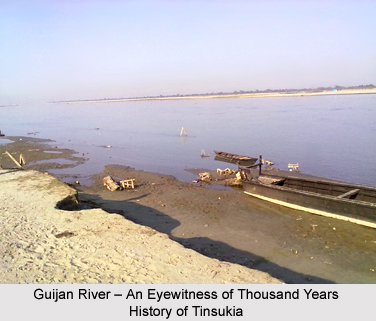
The First King of Muttack Kingdom was Swargadeo Sarbananda Singha. Sarbananada Singha established his capital at Rangagarah situated in the bank of Guijan River. Swargadeo Sarbananda Singha was considered as an able administrator. History of Tinsukia District specifically mentions his determination, spirit and love for freedom. In 1791 AD, he transferred his capital to Bengmara. Several tanks were dug in the days of Sarbananda Singha namely Chauldhuwa Pukhari, Kadamoni Pukhari, Da Dharua Pukhari, Mahdhuwa Pukhari, Bator Pukhari, Logoni Pukhari, Na-Pukhari, Devi Pukhari, Kumbhi Pukhari, Rupahi Pukhari, etc. Apart from these ponds there are many ancient roads constructed in different parts of the Muttack territory. Godha-Borbaruah road, Rangagarah road, Rajgor road and Hatiali road were main roads within the territory.
In the year 1823, British East India Company first discovered Tea Plant in Sadiya and the first Tea Plantation was started in Chabua near Tinsukia. The name Chabua comes from "Chah-Buwa" (Tea Plantation). Other important events that took place under the British regime are following:
* In the year 1876 Coal was found near Ledo and Margherita
* In the year 1882 Crude Oil was struck in Digboi and country`s first oil well was built at Digboi Oil Town in 1889 and the refinery which was later built at Digboi was the first refinery in Asia and third in the world.
* History of Tinsukia District also recollects that the establishment of Railway and Trading Company in the region was a major turning point in its economic development.
* Adarsha Prathamic Vidyalaya, first educational institute of Tinsukia, was established in the year 1897. Later after the independence in the year 1947, Tinsukia District was declared as the 23rd administrative district of Assam on 1st October 1989 with three sub divisions - Margherita (Sadar), Tinsukia, and Sadiya.
Geography of Tinsukia District
Geography of Tinsukia District includes several rivers and reserve forests. The major rivers flowing through the district are Brahmaputra River, Lohit River, Buri Dehing River and Dibru River. The major Reserve Forests of this district are Dibru-Saikhowa National Park, Tarani Reserve Forest, Buridehing Reserve Forest, Duarmara Reserve Forest, Lokhipathar Reserve Forest, Kakojan Reserve Forest, Tokowani Reserve Forest, Phillobari Reserve Forest, etc.
Culture of Tinsukia District
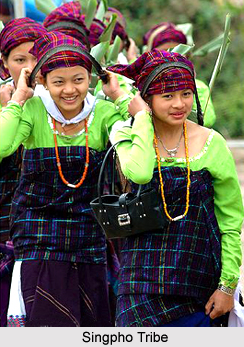 Culture of Tinsukia District speaks about the lively and colorful traditions of the people residing in this district. The tribal communities dwelling in this district of Assam have their indigenous cultures and heritages. Culture of Tinsukia District comprises several fairs and festivals that are celebrated with high enthusiasm and splendour. The traditional dresses, dance forms and music of the local people have their own charm. Shapawang Yawng Manau Poi, Bihu, Ali-Aye-Ligang, Tuluni and Saghi festival, etc. are some of the significant festivals observed in Tinsukia District.
Shapawang Yawng Manau Poi is the most important folk dance festival of the Singpho Tribe. This festival is celebrated on the 14th of February every year. According to the customs of Singphos, they are the descendents of `Shapawng Yawng`. Tingli Yawang, son of Shapwng Yawng, in order to get blessings of his father Shapawng Yawng and the creator of the world `Mathum Matha` celebrated `Manau Poi`. It was considered as a gesture of praising Gods. Later, the festival came to be known as "Shapawang Yawng Manau Poi" in the memory of their ancestor "Shapawng Tawng`. The celebrations of Shapawang Yawng Manau Poi begin by putting up `Shadung` which is regarded as the symbol of this festival. It is followed by the performance of several dance forms to proclaim praise, unity and prosperity. At the end of the unity dance, `Padeng Manau` the war winning dance, `Shut Manau` the celebration dance and "Kumran Manau`, the farewell dance are performed by the people.
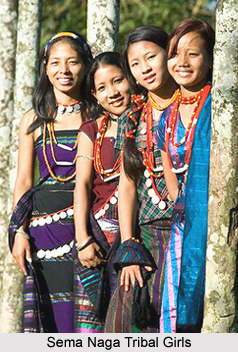 Tuluni festival is an important part of the culture of Tinsukia District. It is the most important festival of the Sema Naga tribe. Tuluni is celebrated on 8th of July every year. This festival is observed for healthy growth of the crop. On the main festive day, all the people of the village enjoy sumptuous meals.
Saghi is also one of the famous festivals of the Sema Naga tribes, like the Tuluni festival. Saghi signifies the abundant harvest of crops. It is generally celebrated in the month of August when the paddy seeds are ripe and farmers begin to reap the harvest. For the celebrations of Saghi festival, people start the preparations beforehand. The villagers would organize in groups and work in the fields to earn wages, so that they could celebrate the festival in a befitting manner. Community feast is also arranged on the occasion where animals are slaughtered for meat. After the feast is over people enjoy folk songs and dances.
Another popular occasion observed by the people of Tinsukia District is Ali-Aye-Ligang. It is celebrated by the Mishing Tribe generally at the end of February. This festival is celebrated for welcoming the Lord Indra ,rain God before starting cultivation. People sing, dance and makes merry with immense joy and enthusiasm. People also go for community fishing and hunting in the beginning. Bihu festival of Sadiya, a small town of this district, is quite different from the Bihu celebrations in other places of Assam. The celebration of Bohag Bihu gets underway only after the puja by the Deori-Chutiyas in Buraburi Temple generally on 1st Wednesday of Bohag month. Bihu Urua is a traditional way of bidding farewell to the grandeur Bihu celebrations. On last Thursday of the Bohag month people gathers at Kukurmora field and observe Bihu Urua with huge fervor. With burning of effigies the entire Bihu celebration comes to an end in Sadiya.
Thus, it is true that diverse forms of cultures and traditions can be found in Tinsukia District.
Economy of Tinsukia District
Tinsukia District is a principal commercial centre of the state. It is mainly an industrial district and the economy of Tinsukia District includes several prominent districts. Some of the industries of this district are IOC (AOD) at Dogboi (Oldest Refinery of Asia), Coal India Ltd. at Margherita, Coal field at Ledo, Bordoloi and Tipong, Oil India Ltd. having Oil Fields in and around Digboi, Makum areas, Bottling Plant at Goponari, Hindustan Liver Ltd. Cosmetic Industry and more. Tinsukia District produces generous amount of tea, oranges and rice.
Tourism in Tinsukia District
 Tourism in Tinsukia District means endless enjoyment and pleasure. This region offers a number of places of tourist interest. All these tourism options of Tinsukia District give the travellers an enriching and fulfilling experience.
There is no dearth of tourist attractions in this district of Assam. Here, the tourists can experience complete peace and tranquillity. It is said that the lush green valleys and scenic splendour of this area covering the geographical areas of Tinsukia District cast spell on visitors. Dehing Patkai festival has been one of the biggest attractions for the tourists. This festival is organized with the aim to highlight the tourist potentialities of the catchments areas of the river Dehing and the foothills of Patkai Hills Or Purvanchal Ranges. Tinsukia is the ideal stopover for tourist visiting Dehing Patkai region. This commercial town of Assam is situated 500 km away from Guwahati.
Pilgrimage Tourism in Tinsukia District : The Lord Shiva Dham and Marut Nandan Kanan Park are some of the added points of attraction for visitors. Tinsukia is well connected to the rest of the country by rail and road. One popular pilgrimage tourism option of this district is `Bell Temple`. This temple of Lord Shiva, symbolized by a huge banyan tree, is situated at a distance of 17 km from Tinsukia. It is believed that people may get their wishes fulfilled by offering a bell at this temple. Believers hang the bells to the branches of the banyan tree and this is how the temple got its unique name.
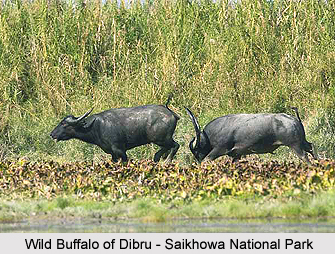
Nature Tourism in Tinsukia District : Dibru-Saikhowa National Park: Dibru-Saikhowa National Park is a part of one of the prominent biodiversity hotspots of the world, located almost 13 km away from Tinsukia. This national park is famous for the presence of feral horses. It is partly wetland, partly grassland and dense forests. It is the home of the globally endangered White Winged Wood Duck, Slow Loris, Gangetic Dolphin, Water Buffalo, Elephant, etc.
 Bherjan-Borjan-Padumoni Wildlife Sanctuary: This wildlife sanctuary is at a distance of about 6 km from Tinsukia. It is famous for different species of primates including rare Hoolock Gibbon.
Rukmini Island: A beach island covering an area of around 3.25 sq km is situated in the midst of Brahmaputra River. It is a safe place for many indigenous and migratory birds. The best attractions of this beach island are the long sandy beaches, sand banks for sunbaths and parasailing. The place is an ideal holiday destination.
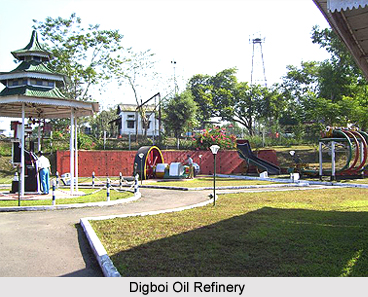
Leisure Tourism in Tinsukia District : Digboi Refinery: The first oil town of Asia, where oil well was drilled commercially in September 1889. A refinery was commissioned in December 1901, first of its kind in Asia and it was only refinery till the country`s independence and now it is the oldest operating oil refinery in the world. Moreover, Digboi also has the distinction of establishing the first oil museum in India. The 18-hole Golf Course is an added attraction in Digboi Oil Town. This golf course is known for its scenic beauty. Further, a visit to the nearby Digboi War Cemetery will be a unique experience.
Margherita: One of the sub-divisional headquarters of Tinsukia District, Margherita is described as the Coal Queen of Assam. The splendour of the mystic Patkai ranges on one side and the river Burhi-Dehing flowing across the lush green tea gardens Margherita is considered as nature"s paradise. Margherita is also famous for plywood products and the first plywood factory was established here in the year 1924. Here, watching the process of making tea and a visit to a plywood factory will be a pleasant experience. Another attraction is the picturesque Margherita Golf Course.
All these sightseeing options of Tinsukia District will surely give a memorable experience to its visitors.