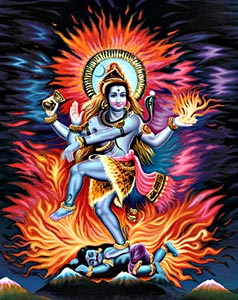
Incarnations of Lord Shiva, the almighty has been taken for the benefit of the universe. Lord Shiva is a prominent Hindu deity, and one aspect of Trimurti. In Shaiva tradition of Hinduism, Shiva is seen as the Supreme God. Shiva is mainly worshipped in its abstract form of Shiva Linga. Lord Shiva is usually represented as immersed in high meditation or dancing the Tandava upon the demon Maya. The various incarnations of Lord Shiva appeared in the world for good. Each of the incarnations of Lord Shiva had a specific purpose and the ultimate motive of welfare of humankind.
The various incarnations of Lord Shiva are given below:
Bhairava: Bhairava is one of the incarnations of Lord Shiva and is often represented with a third eye, long teeth and hair of flames. This incarnation is seen wearing a garland of skulls. Bhairava holds a snake and trident in his left arm and holds a noose and a cup in his right arm. He is seen standing with his vehicle, a dog, behind him.
 Allama Prabhu: Allama Prabhu was among the Vira Shaiva, a less popular incarnation of Lord Shiva. He was believed to be a Brahmin who acted very closely with the elder Basava either as a primary instigator, or subsequent assistant. Later he became Basava"s spiritual adviser. Allama Prabhu was involved in the revolution at Kalyanapuri in which the Bijala Raja was slain and a new religion was established.
Khandoba: Khandoba is one of the incarnations of Lord Shiva and can be often seen with the elements such as a sword, drum, trident and bowl. The vehicle of Khandoba is a horse and he may be seen associated with a dog. According to one of the legends, the God made himself known to a number of cowherds who were resting in a field but went away again when one of his most pious worshippers approached. Thus, the devotee was disappointed very much and the elders of the village became suspicious about the significance of a Linga that was found on the spot where Khandoba appeared.
 Nandi Avatar: Lord Shiva is worshipped in the form of Nandi in many parts of India. The Nandi avatar of Lord Shiva is seen as the protector of the herds. He is depicted as bull faced with four hands. The two hands holding axe and antelope while the other two are joined.
Gajasura Murti: As Gajasura- Murti, he is depicted as dancing on the head of an elephant demon. This demon was interrupting the rituals of a number of Brahmans who were worshipping Shiva Lingam. Then Shiva stepped forward from the lingam, chopped off the demon"s head, and wrapped his skin around him like a cloak.
Tripurantaka Murti: Here, Lord Shiva is the hero who was the only one able to destroy the three cities of the Asuras when they had gained much power.
Kalari Murti: Shiva gave a son to a childless rishi, though he would die at the age of 16 years. On his 16th birthday, he was completing sacred lingam ritual and Lord Yama comes at this time. Shiva becomes enraged about this interruption and he sprang from the lingam, chased Yama away and granted Markandeya eternal life. This aspect of Shiva has been illustrated as Kalari Murti.
Uma Maheswar Murti: Goddess Parvati is the female manifestation of Lord Shiva. She is always depicted with him, either standing next to him, or sitting on his knee while the God embraces her. In unison they symbolise two-fold nature of the One Absolute.
Apart from these, there are various other incarnations of Lord Shiva including Shveta, Sutara, Madana, Suhotra, Kankana, Lokaksi, Jaigisavya, Dadivaha, Rishabha, Bhrgu, Ugra, Atri, Bali, Gautama, Vedashiras, Gokarna, Shikandaka, Jatamali, Attahasa, Daruka, Langali, Mahayama, Muni, Suli, Pindamunishvara, Sahishnu, Somashara and Nakulishvara.