Epic Cosmology
|
Epic Cosmology, philosophy of Mahabharata, is a combination of Vedanta and Samkhya that emphasises on supreme soul or Purusottama
|
|
|
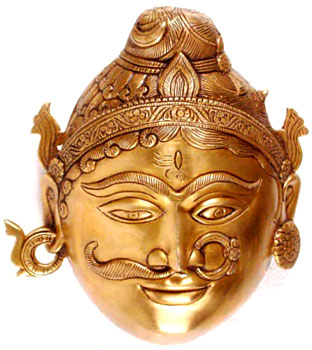 Epic Cosmology is essentially the cosmology of the Mahabharata. Epic Cosmology regards that the world is a development from Brahman. The main focus of the cosmology is that from Brahman was created the god Brahma, who sprang forth from a golden egg, which forms the body of all creatures. The conception of the cosmic egg survives. Nature is other than the purusa, though the latter is conceived as cosmic. Both Purusha and prakrti are derived from one principle. It is also mentioned that all activity rests in prakrti and the Purusha never acts, and if it considers itself as active it is deluded. The idea is also found that though creation and destruction are the work of prakrti, still prakrti is only an emanation from Purusa, into which it resolves itself from time to time. Epic Cosmology is essentially the cosmology of the Mahabharata. Epic Cosmology regards that the world is a development from Brahman. The main focus of the cosmology is that from Brahman was created the god Brahma, who sprang forth from a golden egg, which forms the body of all creatures. The conception of the cosmic egg survives. Nature is other than the purusa, though the latter is conceived as cosmic. Both Purusha and prakrti are derived from one principle. It is also mentioned that all activity rests in prakrti and the Purusha never acts, and if it considers itself as active it is deluded. The idea is also found that though creation and destruction are the work of prakrti, still prakrti is only an emanation from Purusa, into which it resolves itself from time to time.
The Samkhya enumeration of the elements is accepted by the Mahabharata. The Mahabharata adds a twenty-sixth element called Ishwara. The Mahabharata assumes the doctrine of the Gunas. The constituents of prakrti are the three qualities of sattva (goodness), rajas (passion), and tamas (darkness). They are present throughout all things, though in different degrees. Beings are classified into gods, men and beasts according to the quality that predominates in an individual.
Tamas is the quality of inertia which aims at the satisfaction of the senses. Rajas are the emotional energy exciting desires. Sattva is the intelligent side of man. It promotes stability of character and fosters goodness. No man is devoid of these qualities. It has been said that the gunas are born in gunas and are dissolved in them.
Mahabharata accepts the five senses of hearing, touch, sight, taste and smell, answering to the five elements which include the earth, water, fire, air and akasa. The contact of sense with object is not enough to produce perception. The feeling has to be conveyed by the Manas, to buddhi and then to the soul. Seeing cannot take place by the eye alone without the aid of mind. Buddhi is the deciding factor, since manas is only a transmitting agent. According to the Samkhya Philosophy some believed that the nature of soul was an immovable passive spectator of prakrti, the source of action and change, sensation and thought. The atomic character of soul is also mentioned with approval. In addition to the individual souls, it believed in a supreme soul, or Purusottama. The Upanishad theory is of course present. The Atman is called Ksetrajna when bound in body, and Paramatman when freed from it and the gunas.
It can be said that the epic philosophy or the epic cosmology is not a transition between the idealism of the Vedanta and the realism of the Samkhya. Rather both are assumed in it. Though the Samkhya had not in the epic developed many of its characteristic features, still the essentials were all there.
|
|
|
|





