Pyaz Pakoda
|
Pyaz Pakoda is widely consumed in almost all parts of India as snacks.
|
|
|
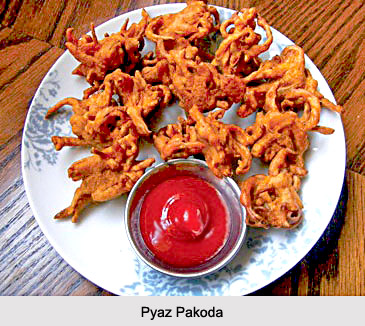 Pakoda is very well known for the salty and hot taste. Pyaz pakoda is spicy and fragrant with cumin, has a lovely crunchy texture on the outside and are soft inside. They are also wonderful when made with shallots. Pakoda is very well known for the salty and hot taste. Pyaz pakoda is spicy and fragrant with cumin, has a lovely crunchy texture on the outside and are soft inside. They are also wonderful when made with shallots.
Ingredients of Pyaz Pakoda
For the batter:
155 g unsifted chickpea flour (besan)
2 tbsp peanut or corn oil or melted vegetable lard
1 tsp ground cumin
1½ tbsp salt
1-2 green chilli peppers, seeded and finely chopped
125 ml warm water (32-38°C/90-100°F)
2 medium-sized onions
Peanut or corn oil, enough to fill a kadhai, a large casserole to a depth of 5 cm
Method of preparing Pyaz Pakoda
Stir the flour in cumin, salt, and chili peppers and then add water in a thin stream, constantly beating the mixture with an electric beater, wire whisk, or with hands. The batter should be very thick and smooth. To make the batter in a food processor or in an electric blender, all the ingredients are put into the container of the machine and processed until thoroughly blended and smooth. Then the mixture is transferred to a bowl.
The batter is beaten vigorously for 10 minutes or until it turns pale, light and fluffy. Then the bowl is covered and the batter is left to rest in a warm place. This resting is essential because, in addition to fermenting the batter, it lightens it to the almost foamy consis¬tency that is necessary if the fritter is to be spongy.
While the batter is resting, peel the onions and thinly slice them. When ready to fry, add the sliced onions to the batter and mixed thoroughly. The mixture will look coarse and lumpy.
Then pour oil in a kadhai or frying pan and heat until very hot but not smoking. After that drop the onion batter mixture gently in 2-tbsp amounts, into the oil and make about 6-8 fritters at a time. While frying, the temperature is kept on seam. This will allow the fritters to cook thoroughly before browning. Also the slow frying enables the fritters to develop a crackling crisp texture. They are fried with stirring and turning until they are golden brown all over (about 10 minutes). Then take out the fritters with a slotted spoon, and drained on kitchen paper. After the pakodas are prepared, serve hot or warm, accompanied by Pudina Chutney.
There is no appetizer more authentically Indian than these crisp, fragrant fritters. These pakoda can precede almost any main course. They also make an ideal accompaniment to afternoon high tea.
|
|
|
|





