





 Muddiman Committee was appointed by the Government of India at the beginning of 1924. It was established for making an investigation into the working of the constitution as set up in 1921 under the India Act of 1919. The committee was set up due to the growing political unrest on the dyarchy issue of the Constitution. The committee was also known as the Reforms Enquiry Committee. It had Sir Alexander Muddiman as the chairman, who served as the then Home Member of the Government of India. Muddiman Committee was appointed by the Government of India at the beginning of 1924. It was established for making an investigation into the working of the constitution as set up in 1921 under the India Act of 1919. The committee was set up due to the growing political unrest on the dyarchy issue of the Constitution. The committee was also known as the Reforms Enquiry Committee. It had Sir Alexander Muddiman as the chairman, who served as the then Home Member of the Government of India.
The terms of reference to the Committee were as follows: Muddiman Committee presented its report in December 1924. In the report, majority of the members suggested only minor changes in the structure of the Constitution. On the other hand, the minority, consisting entirely of non-official Indians, condemned the dyarchy and advocated for its immediate abolition. The members also laid down for the democratisation of the constitution. A resolution was pressed in the Imperial legislature for the revision of the constitution to secure for India full self-governing Dominion status, after the committee started its operation. Muddiman Committee completed its work between August and December 1924. The Committee submitted its report in September 1925. The Committee had signed two reports on 3rd December 1924. The Minority Report was signed by Sir Tej Bahadur Sapru, Sir Sivaswami Iyer, Jinnah and Dr Paranjpye. The main difference which existed between the Majority and Minority Reports was in the recommendation for the appointment of a Royal Commission. According to Minority Reports, only such a course of action would secure stability in the Government and the willing co-operation of the people. The reports were published in March 1925. However, Lord Reading's Government rejected the recommendation for the appointment of a Royal Commission. Conversely, Lord Reading gave his consent regarding the proposal for summoning Round Table Conference of Indian leaders. 
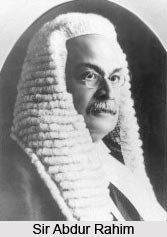
During that period, the political condition in Bengal was of grave concern because of the terrorist movement. In addition to that the Government of India was concerned to conciliate Chittaranjan Das and to bring about some settlement with him. C.R. Das, thus, extended his cooperation in his speech at the Faridpur session of the Bengal Provincial Congress Committee and extended the hand of friendship. The views expressed by the Government of Bengal upon the working of the reforms stated that the obstacle, which is the root of all the difficulty in working the transitional Constitution, is the Indian conception of government. Many members of the Bengal Council had taken pledge to make the constitution unworkable. There were differences of views; the majority of the educated classes in Bengal desired provincial autonomy as early as possible. Sir Abdur Rahim and AK Fazlul Huq put forth two views. Rahim stated that any step of a traditional or reactionary tendency would go in the opposition to unanimous Indian opinion. On the other hand, Huq did not support the idea that dyarchy should be worked out. According to him, the western representative institution was not suitable to Indian conditions. However, Muddiman Committee did not submit a unanimous report. The majority expressed that the existing constitution was working in most provinces and was affording political experience. Moreover, detailed recommendations were made for improving machinery of government. The minority view expressed that dyarchy had absolutely failed and could not succeed at all. They believed that a fundamental change in the constitution would bring about an improvement in the Indian Society. |
| ||||||||||||||||||||||||||||

