


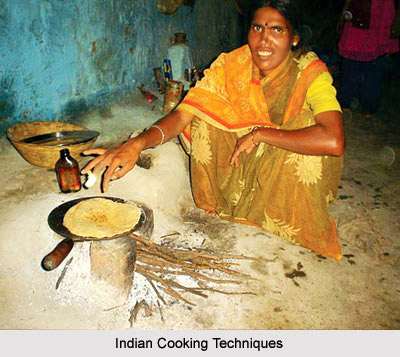
 Indian cooking techniques include various kinds of cooking processes that are derived from the dynasties that reigned India since the ancient period. Through the ages Indian has managed to create a fusion of cooking styles of different countries and very liberally included them in their own and gradually made them Indianized with a touch of Indian flavour of spices. Indian cooking techniques include various kinds of cooking processes that are derived from the dynasties that reigned India since the ancient period. Through the ages Indian has managed to create a fusion of cooking styles of different countries and very liberally included them in their own and gradually made them Indianized with a touch of Indian flavour of spices.
Indian cooking is more of an art than a science. It is highly personali¬sed, reflecting individual tastes. It allows the cook to exercise the full range of her or his creative ingenuity. This is because the foundation of Indian cooking rests not so much on special techniques or expensive ingredients as on the flavourings - specifically, spices and herbs. Their uses in different permutations and combinations give Indian cooking its distinct character. Just as no two pieces of creative work are alike, so the same dish prepared by different cooks exhibits as many individualized flavours as it has interpreters. Since ages, India has developed the cooking techniques of Mughal traditions and since their ruling period this style had been added to the Indian cooking techniques. Mughal cooking is known for its delicate flavourings and superb silky sauces that have been adopted by the Indians. Ingredients such as yogurt, cream, fruit and nut butters are often incorporated into the food to mellow and velvetize the sauces. The dishes are generally flavoured with mild but highly fragrant spices such as cinnamon, cardamom, mace, nutmeg and clove. There is also extensive use of saffron, especially in the rice pilafs. In present day recipes, these ingredients are extensively used to give the Indian dishes a Shahi touch of taste, flavour and colour. The influence of Mughal cooking predominated in the North, especially in Delhi and the areas surrounding it, which are today known as Punjab, Kashmir and Uttar Pradesh. Mughal cooking also flourishes in Hyderabad, a city in the southern state of Andra Pradesh. It is distinctly different because of regional influences, but is considered just as refined and sophisticated. Moreover, all through the centuries, even before the coming of the Mughals, different cooking styles existed, each highly distinctive and lovely. All these styles flourish today in various parts of the country and each holds a special place in Indian cuisine. Apart from the class flavour and appearance, the taste of Indian dishes depends upon the individual touch. These personal touches are what make all the differ¬ence and understandably are zealously guarded secrets among Indian cooks. Knowledge of how to use spices and herbs is the key that will unlock the secrets of the enticing flavours and tantalizing aromas in Indian cooking. Knowing the quantities required is only the first step. Indian cooking techniques are the intermixing of some basic principles that were solely in India; include ‘Bhapa’ (steaming), ‘Bhunao’ or ‘Kasha’, ‘Dum’, ‘Talna’ (frying), ‘Sambaar’ (tampering), ‘Sekhna’ (pan roasting)etc. The preparation of Indian food involves developing a sense of how the spices and herbs behave with the other ingredients in a dish. Some herbs and spices are used as aromatics, some lend colouring while others function as souring agents. There are spices that give a hot taste to the food and others that thicken or tenderize a dish. |
| |||



Indian Cooking Techniques
| Indian Cooking Techniques are a combination of some methods that are required to master. |
| ||||||||||||||||||||||||||||

