The paths of Bhavas lead to the ultimate goal of `moksha` in the Indian Yogic philosophy. Literally the word `Bhava` stands for feeling or attitude. In context of Yogic studies, Bhava indicates a complementary attitude for a given technique or concept. These Bhavas, thus, play a very important role in the path of Yoga. Regular and repeated practice of these techniques slowly enhances the accompanying `Bhava` in one`s personality. The Yogic practices like Dharma, Jnana and other classifications are also based on the four Bhavas.
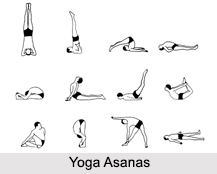
Dharma Bhavas is the attitude when the individual gets deeply engrossed in religious thoughts and practices. Unlike the commonly believed implication of `religion`, the word Dharma also means Duty. At every point in life, one needs to understand his or her duty. It is necessary for an individual to comprehend the priorities in life and then act accordingly. It is said that one, who is always on the path of Dharma, is saved from all sorts of pains and sufferings. Yoga is also believed to outline a hierarchy of duties; one`s first duty is to self, then family and friends, place of work, society and finally, humanity in general. Often people tend to neglect this hierarchy, for example over-working without looking after the family and so on. Neglecting this hierarchy, leads to several disagreements and problems at the intra and inter-personal level. All meditative yoga asanas belong to the Dharma Bhava conception.
Another significant bhava is the Jnana Bhava. It is the feeling when a person reaches the stage of ultimate knowledge. In Yoga, `Jnana` refers to awareness and knowledge. According to ancient Indian philosophy, all that an individual needs to know and understand for a meaningful life is actually present within the self. However, `Maya` or illusion keeps pulling people into the external world. Thus they remain busy with the outside world, looking for a purpose and meaning. This leads to a state of confusion and frustration. Jnana Bhava in Yoga can be instrumental in solving such problems. Jnana begins with awareness about self, at all levels- physical, mental, emotional and spiritual. The components of Jnana Bhava are complete concentration, co-ordination, training of senses, breath awareness, control, balance and so on. Yoga asanas involving upward and sideward stretches, asanas for extremities of the body and `pranayams` adhere to the conception of Jnana Bhava.
Vairagya Bhavas is widely understood as renunciation. This Bhava actually refers to detachment. For a householder, fulfilling his duties towards his own family is very important and renunciation does not necessarily mean detachment. Vairagya Bhava actually leads a householder to a state of being `in the world but not of the world`. The elements of Vairagya Bhava are humility, objectivity, reducing the ego, `let-go` attitude, surrender and so on. The forward bending yoga asanas, head-low postures and asanas involving twist of the spinal cord have been classified under the conception of Vairagya Bhava.
Aiswarya Bhava is the stage when the individual has already accomplished the earlier three Bhavas, namely Dharma, Jnana and Vairagya. Aiswarya Bhava depicts the feeling of achievement, satisfaction, knowledge yet being humble. All these elements are helpful in boosting one`s confidence level. In fact, the confidence that the person may not have attained during the first three Bhavas, he obtains it at this stage. This Bhava is difficult to understand theoretically, but is easier to experience through determination and faith. The components of Aishwarya are confidence, self-reliance, sense of achievement and so on. The Kriyas and all the yoga asanas involving backward bending of the spine aid in achieving Aiswarya Bhava.
These Bhavas that people come across in the Yogic path train them to achieve higher levels of spirituality, following strict discipline and order in life.