|
 Architecture of Jammu and Kashmir comprises architecture of Srinagar, Kashmir, Jammu and Ladakh which are different from each other. Over all the architecture of Jammu and Kashmir is an interesting combination of holy shrines, mosques, gardens and museums. There is a curious intermingling of both Islamic, Buddhist and Hindu architecture in Jammu and Kashmir. The architectures of Jammu and Kashmir bear the splendour of the kingdoms that have ruled the valley. There has been an amalgamation of culture in Jammu and Kashmir. The architectural skill of the Mughals and the elaborate detailing of the Hindu architecture have all contributed to the awe inspiring nature of Jammu and Kashmir architecture. Under emperor Ashoka, Kashmir also flourished under the impact of Buddhist culture. Architecture of Jammu and Kashmir comprises architecture of Srinagar, Kashmir, Jammu and Ladakh which are different from each other. Over all the architecture of Jammu and Kashmir is an interesting combination of holy shrines, mosques, gardens and museums. There is a curious intermingling of both Islamic, Buddhist and Hindu architecture in Jammu and Kashmir. The architectures of Jammu and Kashmir bear the splendour of the kingdoms that have ruled the valley. There has been an amalgamation of culture in Jammu and Kashmir. The architectural skill of the Mughals and the elaborate detailing of the Hindu architecture have all contributed to the awe inspiring nature of Jammu and Kashmir architecture. Under emperor Ashoka, Kashmir also flourished under the impact of Buddhist culture.
In Jammu and Kashmir there is blend of several cultures which have had an impact on its architecture. During the 3rd century BC when Emperor Ashokareigned over India, Kashmir came under his rule and Buddhist culture flourished. During the 4th century, BC, Alexander brought along the Hellenic culture. Perhaps Hellenic culture also influenced the architecture of the era, but no buildings of that period remain. A glimpse of it can be seen in temples built during the Hindu era, especially in the corridors surrounding the Hindu temples of Buniyar and Martand. Hindu architecture of Jammu and Kashmir was marked by the stone structures. During the fourteenth century, Islam spread and mosques were being built all over. The mosques were made of wood with a steeple covering them, instead of a dome. This wooded mosque is an exclusive architecture of Jammu and Kashmir and only few are found in Kerala. This is because Muslims adopted the traditional architectural style used for Hindu temples even though they changed the building material. Another characteristic feature of that era is the gardens, built in 1586, by Emperor Akbar when he ruled over Kashmir and visited it every summer.
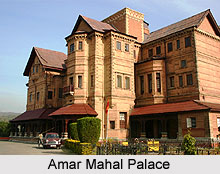
 The temples, mosques and gardens of Jammu and Kashmir are mostly centered in Srinagar. The Mughal gardens like the Shalimar garden, Nishatbagh, Nila Nag bagh and the Begamabad bagh are all architectures of Srinagar. Apart from the picturesque garden the phase of the classical architecture of Kashmir is represented by the Brahmanical buildings dating from the eighth to the thirteenth century A.D. Of these structures the most impressive is certainly the sun-temple at Martand, which appears to have served as a model for all later Brahmanical shrines. It was built by King Lalitaditya in the middle of the eighth century A.D. The Vishnu temple of Buniar is another example of Hindu temple architecture. Islamic architecture of Srinagar is perceived in the Jami Masjid Friday mosque of Srinagar. The Jami Masjid is the most magnificent and fascinating of all wooden mosques in Kashmir. The architectural style of this mosque is adopted from the Hindu temples of Kashmir. In Jammuthe Amar Mahal palace is a fascinating piece of architecture. The structure of the palace is irregular in plan, it has gabled roofs, projecting in many directions and a colonnade made of wood, on the first floor. The temples, mosques and gardens of Jammu and Kashmir are mostly centered in Srinagar. The Mughal gardens like the Shalimar garden, Nishatbagh, Nila Nag bagh and the Begamabad bagh are all architectures of Srinagar. Apart from the picturesque garden the phase of the classical architecture of Kashmir is represented by the Brahmanical buildings dating from the eighth to the thirteenth century A.D. Of these structures the most impressive is certainly the sun-temple at Martand, which appears to have served as a model for all later Brahmanical shrines. It was built by King Lalitaditya in the middle of the eighth century A.D. The Vishnu temple of Buniar is another example of Hindu temple architecture. Islamic architecture of Srinagar is perceived in the Jami Masjid Friday mosque of Srinagar. The Jami Masjid is the most magnificent and fascinating of all wooden mosques in Kashmir. The architectural style of this mosque is adopted from the Hindu temples of Kashmir. In Jammuthe Amar Mahal palace is a fascinating piece of architecture. The structure of the palace is irregular in plan, it has gabled roofs, projecting in many directions and a colonnade made of wood, on the first floor.
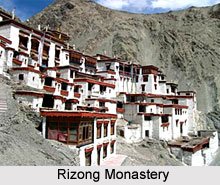
Ladakh in Jammu and Kashmir, on the other hand, is noteworthy for its monasteries. Buddhism had a strong influence in this region. The Lamayuru monastery stands on bleak, rocky mountain cape, very typical of Ladakh. The multi storied structure with various spaces like temples, assembly halls and cells for the monks, is precariously perched on the steep slope. The fairly light buildings are built with a wooden framework, earthen walls and willow for floors. The Rizong monastery and the Themisgang monastery are the other Buddhist architecture. Cave temples are also a principal architecture of Ladakh in Jammu and Kashmir. In Leh there are some monasteries and palaces which enhance the architectural richness of Jammu and Kashmir.
Architecture in Jammu and Kashmir is thus an amalgamation of Hindu, Islamic and Buddhist style of architecture. The Hindu temples, the Buddhist monasteries and the Mughal gardens make Jammu and Kashmir one of the most coveted destination on the world map.
|





