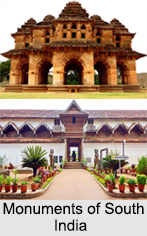
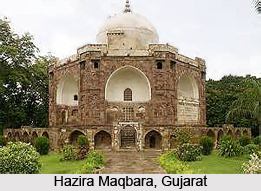
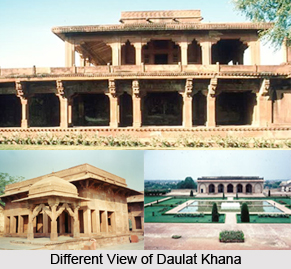
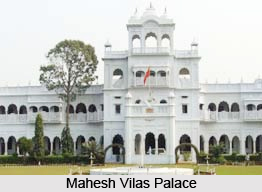
 Deccan architecture is an amalgamation of Indo Islamic and Dravidian architecture. The greatest monument of Dravidian architecture in the ancient period in Deccan is the Kailashanath temple at Ellora. Indo Islamic architecture in Deccan flourished after the invasion of the Delhi sultanates in the medieval period and constitutes of the tombs of the Qutb Shahi Rulers of Golconda and the Charminar at Hyderabad among others.
The Kailashanath temple at Ellora is one of the most remarkable architecture of the Deccan in the ancient period. This temple dedicated to Lord Shiva was constructed under the Rashtrakuta dynasty in the eighth century. It can be considered to be an architectural replica of the sacred Mount Kailasa. The vital plan of the Kail¬asa temple proper is that of a cella preceded by a airy hall with pillared mandapas extending as transepts to east and west. In front of the porch on the main axis is a shrine for Shiva`s bull Nandi. The external embellishment of all these structures and of the Nandi porch preceding the main com¬plex comprises niches enclosing statues of deities and engaged columns of the Dravidian order.
The monuments of Malwa also represent the architecture of the Deccan. In the medieval period these monuments were constructed under the Tughlaq, Lodhi dynasty and Khilji dynasty. The major architectures of this period are forts, Masjid and mausoleums. The Jami Masjid and the tomb of Hoshang shah in Mandu are among the most noteworthy monuments. The Jami Masjid built in the fourteenth century is a majestic building which stands on a five meters elevated platform. It is a true example of the Deccan style of architecture. There are cells with arched openings on the pedestal on either side of the main structure. There is a gigantic domed covered entrance which projects from the centre. The prayer hall with its pillars and arches is also surmounted by three similar domes. The centre position is ornamented with a scroll of Arabic quotations from the Quran. There is also an influence of Hindu art which is perceived in the brackets. A square courtyard surrounds the mosque which has open facades of eleven arches on each side.
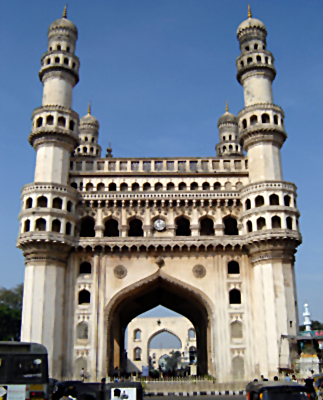
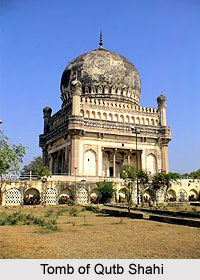
The Gol Gumbaz is a mausoleum of Muhammad Adil shah and has one of the largest domes in the world. There is a whispering gallery at the base of the dome. The Gol Gumbaz has an octagonal seven storeyed turrets that projects at an angle and the bracket cornice below the fortifications. Three recessed arches divide the exterior of each of the walls. The tombs of Qutb shahi rulers of Golconda are the other splendid specimens of Deccan architecture. The mausoleums are either square or octagonal in shape and some of them are double- storeyed. The chambers of the tombs have low ceilings. The slender minarets, huge arches, balconies, and the bulbous domes with rows of petals at the base are the exclusive architectural features of the tombs. Verses from the Quran are inscribed in the walls. The Charminar in Hyderabad is an impressive architecture of the Deccan. It is a square structure which represents a gateway and has supercilious arches on all the four sides. There are four three storeyed minar which stands at the four corners of the monument.
Thus, architecture in the Deccan consists of the indigenous Dravidian style as well as the architecture of the Muslim invaders.