 Colour symbolism in Indian sarees has been playing a major part in Indian life since Vedic times. The Sanskrit word for caste, `varna`, literally means colour, and certain colours are traditionally associated with different castes. This caste-colour association has also been reflected in traditional clothes, something which is still adhered to today.
The four varnas described in the ancient era, consist of the Brahmins or the priestly caste, Kshatriyas or the warrior caste including most kings, Vaisyas or traders, merchants, scribes and Sudras or farmers, serfs, artisans, including weavers, manual labourers, as well as the ritually impure groups like manual labourers, tanners, indigo dyers who were completely outside and below the Hindu caste system. The tribals or the `adivasis`, Muslims and foreigners were also outside the caste system but generally had better status than the untouchables. The colours of sarees play a vital role in Indian sarees as the colour defines the supremacy of castes in Indian caste distinction.
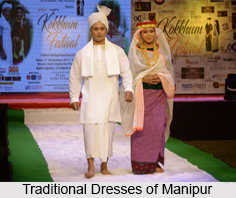
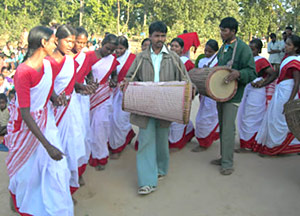
As per the colour symbolism, white was considered to be the predominant colour for the clothing of upper classes like Brahmins since the ancient ages. According to their perception, any form of dyeing was regarded as impure, although in the `colour belt` of the west and south, traditional Brahmin sarees were often dyed bright colours. The Jain sect, the Svetambaras (literally, `white cloth`) also always wore white clothing. Today, colour has become a more dominant factor in women`s clothing, and white is often only worn on ritual occasions, such as in special pujas. In India, basically among Hindu religion, white is considered as the colour of mourning and the widows in north India traditionally wear white sarees without any coloured embellishments.
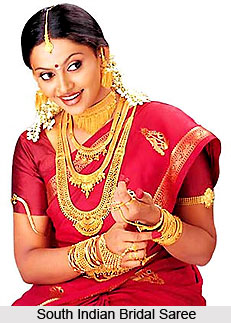
The colour symbolism asserts that the colour red is associated with the Kshatriyas. In recent times, red is used in marriages as this colour is the important colour that is a must in the closet of the bride. The brides of almost all castes wear sarees of red colour during weddings in the north and by Brahmin brides in the south. Red is also regarded as auspicious because it has several emotional and fertility-related qualities, making it a suitable colour for brides and young married women. Keeping in mind the colour symbolism of Indian sarees, the artisans create sarees and designs. The colour combinations and traditional saree designs are also based on the colour symbolism. As per this concept, the Vaisyas were once traditionally associated with the colour green. Though the Hindu tradition considers green as the colour of Vaisyas but today it usually has Islamic connotations, being popular among Muslim groups. In some areas of the central Deccan and the south, a green wedding saree is sometimes worn, often in place of the yellow saree worn during certain marriage rituals. The name for green is often the same for the colour yellow, such as `pitambara`.
Blue colour was banished for the Sudras, and high-caste Hindus avoided this colour due to the fact that the fermentation process used to create indigo was regarded by the Hindus as ritually impure. Among caste Hindus, blue and black were both considered inauspicious colours. These colours reflect sorrow and ill omen. Since the mid-nineteenth century, this concept was somehow withered and blue with black embellishments were used in white sarees. These sarees have been worn by older married women, especially in the east. In the west, blue was commonly worn by many tribal and low-caste groups, as it was seen as protection against the evil eye. Today, blue is a widely worn colour, and many older women and widows tend to wear modern sarees with muted tones of blue, black and even green, rather than the more traditional pure white saree.
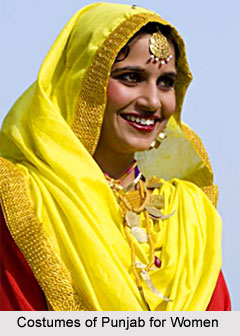
Another most commonly used colour in Indian sarees is yellow which is traditionally regarded as the colour of religion and asceticism. The colour symbolism defines saffron yellow or orange as the colour of Sadhus and other individuals who have relinquished their caste and family to lead a spiritual life aimed at releasing themselves from the endless round of rebirths. On the first day of the Hindu wedding ceremony in the eastern region, the bride is washed in turmeric to ritually purify her, during and after which she wears a yellow saree according to the tradition. Yellow sarees are also commonly worn during the climax of the Tamil and Telugu wedding ceremony among non-Brahmin communities.
 Yellow saree is also traditionally worn for seven days after the birth of a child, when the mother conducts various pujas. In general, yellow is seen as an auspicious colour that still has religious connotations among the Hindu. The orange robes of East Asian Buddhist monks are derived from the same tradition where yellow is regarded as an auspicious colour.
As the colour symbolism has a long history in India so it is certainly not an overstatement to say that even the dying technique used for colouring cloth in modern India has been influenced by the dying techniques used in ancient days. Archaeological facts revealed that madder had been used in Mohenjodaro as a dying agent. Pomegranate rind and turmeric are indigenous to India, and were once largely used as colouring agent. The indigo dyeing is believed to have been known as early as Vedic times, along with dyeing techniques using safflower (mabaaranjana), madder (manjisthaa), turmeric (baridraa) and perhaps lac. After this period, increasing numbers of dye types and colours continued to be added to the written repertoire in later Sanskrit and other literature.
Colour symbolism in Indian sarees has been developed due to the rich tradition of Hinduism. Though the most ancient concepts of colour are now lessened and somehow faded but the basic concepts are still intact in the usage of colour.