The period within 1300 C.E. to 1650, was an age of incessant and ceaseless alterations in the political state of affairs of Tamil Nadu. The Tamil country was under constant invasions by the armies of the Delhi Sultanate, coupled with consequent defeat of the Pandya kingdom. The collapse of the Delhi Sultanate sparked off the ascension of the Bahmani Sultans in the Deccan. Vijayanagar Empire rose from the ashes of the kingdoms of Hoysalas and Chalukyas, eventually conquering the whole of south India. The Vijayanagar kings then had nominated regional governors to rule over various territories of their realm and Tamil Nadu was subsequently ruled by the Madurai Nayaks, Thanjavur Nayaks and Gingee Nayaks. This period, thus referred to as the Vijayanagar and Nayak age in Tamil literature, had witnessed an enormous output of philosophical works, commentaries, epics and devotional verses. A number of monasteries (Mathas) were established by the umpteen Hindu sects and these began to play a pivotal role in schooling the mass. Numerous authors belonged to either the Saiva or the Vaishnava sects. The Vijayanagar kings and their Nayak governors were fervent Hindus and as such, patronised these mathas. Even though the kings and the governors of the Vijayanagar Empire spoke Telugu, yet, they had furthered the growth of Tamil literature, as no kind of slowing down in the literary output during this period can be evidenced.
On the contrary, Vijayanagar and Nayak age in Tamil literature harnessed hefty output in works pertaining to philosophy and religion, such as the Sivananabodam by Meykandar. At the culmination of the fourteenth century, Svarupananda Desikar penned two anthologies based on the philosophy of Advaita, the Sivaprakasapperundirattu. Arunagirinatha, who survived in Tiruvannamalai in the 14th century, had authored Tiruppugal. These poems are dedicated to the god Muruga, containing approximately 1360 verses of exceptional cadence and set to exceptional metres. Madai Tiruvengadunathar, an official in the court of the Madurai Nayak, had authored Meynanavilakkam, based upon the Advaita Vedanta. Sivaprakasar, during the early 17th century, had penned a number of works on the Saiva philosophy. Outstanding within this collection is the Nanneri, dealing with moral teachings.
A considerable portion of the religious and philosophical Tamil literature of Vijayanagara and Nayaka age took the form of Puranas or narrative epics. A number of these were further scripted dedicated to the umpteen deities of the temples in Tamil Nadu and are referred to as Sthala Puranas, based on legend and myths. One of the most important of the epics was the Mahabharatam by Villiputturar. He was the individual to have translated Vyasa`s epic into Tamil and named it Villibharatam. Kanthapuranam, dedicated to the god Murugan, was authored by Kacchiappa Sivachariyar, who lived during the fifteenth century under patronage of the Vijayanagar kings and their Nayak governors. The work Kanthapuranam was based largely on the Sanskrit Skanda purana. Varatungarama Pandya, a Pandya king from this period, was a littérateur of substantial value and penned Paditrruppattanthathi. He also had interpreted the erotic book known as Kokkoha from Sanskrit into Tamil language.
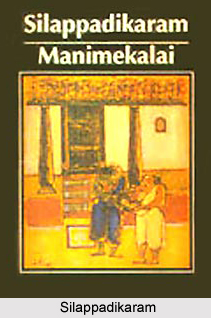
This period, i.e., Tamil literature from the Vijayanagar and Nayak age, was also a period of numerous commentaries of antique Tamil works. Adiyarkunallar had written an annotation based upon Cilappatikaram (one of the five epics of ancient Tamil literature). Senavaraiyar wrote a commentary on the Tolkappiyam (a treatise on the grammar of the Tamil language and the earliest extant work of Tamil literature). Then arrived, the legend himself, Parimelalagar, whose commentary on the Tirukural is still considered one of the best obtainable in the Tamil array of literary elements. Other celebrated commentators such as Perasiriyar and Naccinarikiniyar had composed commentaries on the various works of Sangam literature. The first ever Tamil dictionary was undertaken by Mandalapurusha, who had compiled the lexicon Nigandu Cudamani. Thayumanavar, who existed during the early 18th century, is renowned for a number of short poems of philosophical character.
The 17th century, enlisted within the Vijayanagara and Nayak age in Tamil literature, also witnessed for the very first time, literary works impacted by Islam and Christianity. The population of Muslims and Christians were swelling up in Tamil Nadu with the tremendous influences of the Delhi Sultanate and the ever-escalading European missionaries. Syed Khader, also acknowledged in Tamil as Sithaakkathi, lived during the seventeenth century and was an ardent patron of all Tamil poets. He had licensed the development of a biography on the Islamic prophet Muhammad. Another work dealing with the Islamic faith was Muhaidin Puranam (1845 AD) by Mohammad Ibrahim. Omar, acknowledged in Tamil as Umarupulavar, wrote Seerapuranam on the life of Muhammad. Costanzo Giuseppe Beschi (1680-1746), better admired as Veeramamunivar, had composed the first ever dictionary in Tamil. His Chathurakarathi was the first to enlist the Tamil words in alphabetical order. Veeramamunivar is also remembered for his Christian theological epic Thembavani based upon the life and teachings of Jesus Christ.