|
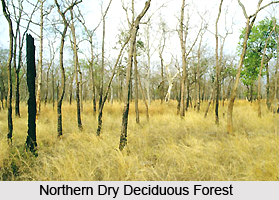 The Northern dry deciduous forests in India are located in the east-central part of the country and cover a huge area of 58,300 square kilometers. They form a tropical dry broadleaf forest ecoregion that extends across portions of the states like Andhra Pradesh, Chhattisgarh, Orissa, and Jharkhand. The region also extends north and south in the dry western rain shadow of the Eastern Ghats range that block the moisture-laden monsoon winds from the Bay of Bengal to the east. The forests are surrounded by the more humid Eastern Highlands moist deciduous forests ecoregion. The Northern dry deciduous forests in India are located in the east-central part of the country and cover a huge area of 58,300 square kilometers. They form a tropical dry broadleaf forest ecoregion that extends across portions of the states like Andhra Pradesh, Chhattisgarh, Orissa, and Jharkhand. The region also extends north and south in the dry western rain shadow of the Eastern Ghats range that block the moisture-laden monsoon winds from the Bay of Bengal to the east. The forests are surrounded by the more humid Eastern Highlands moist deciduous forests ecoregion.
The Northern dry deciduous forests in India are neither exceptionally species-rich nor they contain high numbers of endemic species. However, they do harbour several large vertebrates that include the largest and most charismatic carnivore, Tiger. The ecoregion also represents the northernmost extent of dry deciduous forests in India. The geological history of the forests dates back to the Cretaceous, when it was part of southern Gondwanaland. Most of the Northern dry deciduous forests in India are open scrub influenced by human activities. The original vegetation type in the forests was Sal-dominated and multistoried. However, that vegetation has been replaced by Teak-dominated vegetation that favours drier conditions.
 The natural vegetation in the Northern dry deciduous forests in India is made up of associations of the species like Anogeissus latifolia, Dalbergia latifolia, Pterocarpus marsupium, Stereospermum suaveolens, Spondias pinnata, Cleistanthus collinus, Acacia lenticularis, Flacourtia indica, Boswellia serrata, Butea monosperma, Sterculia urens, Cochlospermum religiosum, and Euphorbia nivulia, etc. Apart from these species, gregarious patches of Dendrocalamus strictus also tend to occur in moister areas in these forests. As Cleistanthus collinus can release substances toxic to other species, the mono-specific stands can also occur in some places, in these forests. The natural vegetation in the Northern dry deciduous forests in India is made up of associations of the species like Anogeissus latifolia, Dalbergia latifolia, Pterocarpus marsupium, Stereospermum suaveolens, Spondias pinnata, Cleistanthus collinus, Acacia lenticularis, Flacourtia indica, Boswellia serrata, Butea monosperma, Sterculia urens, Cochlospermum religiosum, and Euphorbia nivulia, etc. Apart from these species, gregarious patches of Dendrocalamus strictus also tend to occur in moister areas in these forests. As Cleistanthus collinus can release substances toxic to other species, the mono-specific stands can also occur in some places, in these forests.
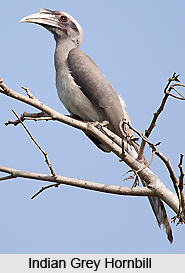
The Northern dry deciduous forests in India also do not harbour large numbers of endemic species, like most of the other dry forests in the Deccan Plateau. The forests are also not quite exceptionally rich in biodiversity. The forests are home to a total of sixty-eight known mammal fauna species and none of them is considered as eco-regional endemic species. However, there are some threatened species found in the forests including the Tiger, Wild Dog, Sloth Bear, and Chousingha (IUCN 2000). Apart from the mammal fauna species, the Northern dry deciduous forests in India also provide habitat to 261 bird species in which none is endemic. The important bird species include the Chousinghas, the Small Indian Antelopes, the Indian Grey Hornbill and Oriental Pied-Hornbill, etc. The Indian Grey Hornbill and Oriental Pied-Hornbill that need tall, mature trees for nesting and can be used as focal species for conservation management are quite commonly found in these forests.
|





