Hindi-Literature in Pre-Independence India produced some rather important documents that articulated writers` active political involvement at a time of rising Indian nationalism against British colonialism. The works exhibit a unification of culture and politics, in which culture became the basis on which was waged the complex struggle for India`s freedom. Writers began to carve out an imagined Indian identity, visualizing a nation free of foreign domination and one in which democracy and brotherhood would prevail. Their search manifested itself in numerous ways: patriotic stories that idealized and glorified India`s past, stories urging Hindu-Muslim unity, and stories that exposed and recognized problems relating, among other things, to the exploitation and abuse of peasants, labor, and other marginalized classes under colonial rule. Hindi literature in pre-Independent India thus evidenced all these various factors.

The earliest
Hindi language literary works in this stream were seen as early as 1912 in
Maithili Sharan Gupt`s (1886-1964) poem "Bharat Bharati" ("The Voice of India," 1912). Gupta`s poem contains songs that glorify India`s past, condemn contemporary socio-political conditions, and suggest a way to a better future on the basis of Hindu-Muslim amity. Emphasis on Hindu-Muslim unity through literature came in the wake of rising Hindu-Muslim animosities around the turn of the century.
The communal divide had been set in motion in the nineteenth century, in part, by the debate over the status of Hindi and Urdu as two separate languages. J. B. Gilchrist initiated this separation in the middle of the nineteenth century when he engaged a group of writers at the Fort William College at
Kolkata to write Hindustani prose. Hindustani prose was channeled into two distinct styles. One included Hindi without the use of Persianized words, and the other style involved the use of an Urdu that remained as close as possible to Persian. Such conscious segregation of the two languages made the differences between Urdu and Hindi sharper and became a strong basis for communal divisions between Hindus and Muslims during the nineteenth and twentieth centuries.
As Hindu and Muslim nationalists sought mass support from their respective communities through the propagation of the two languages, the debate intensified. The Hindu leadership stressed the need for popularizing Hindi to serve as a link for interregional communication and rally mass support against imperialism. Efforts to propagate the idea of Hindi as the national language were soon undertaken by organizations such as the
Brahmo Samaj and the
Arya Samaj, which actively promoted Hindi in North India. Pro-Hindi activism also constituted the introduction of Hindi newspapers in Bengal in the nineteenth century and the introduction of Hindi in law courts and schools in
Bihar around 1900 (Das Gupta 1970, 83). Within the Hindi area, many organizations devoted to the cause of Hindi were formed. Of these, the Nagari Prachar Sabha in
Varanasi in 1893 and the Hindi Sahitya Sammelan, founded in
Allahabad in 1910, became the most significant organizations for propagating the use of Hindi. These organizations promoted the Devanagari script and advocated a style that incorporated Sanskrit vocabulary while consciously removing Persian and Arabic words. Mahavir Prasad Dvivedi, the chief proponent of Hindi poetry at the turn of the century and editor of Saraswati, encouraged the use of Sanskrit meters in poetry. His own efforts to propagate this style included invitations to poets to write verse in Hindi, which he corrected before publishing in the journal, and he encouraged young poets to imitate his own lyrics published in Saraswati. With the publication of this new style of verse in Saraswati between 1909 and 1910 by scholars such as Kamta Prasad Guru (1875-1947), author of the first authoritative Hindi grammar, and Ram Chandra Shukla (1884-1941), professor of Hindi in Varanasi and historian of Hindi literature, Hindi poetry received further impetus.

Emphasis on the revival of a Sanskritized Hindi from the orthodox section of the Hindi revivalists led to the development of a highly literate Hindi at the turn of the century and gave a setback to Khadi boli,
Braj Bhasha, and Awadhi dialects of Hindustani. Before the language controversy arose, these forms of Hindi or Hindustani were used by Hindus and Muslims alike. For example,
Tulsidas`s works Ramcharit Manas and Kavitavali were composed in
Awadhi language and Braj Bhasha, respectively. However, after the espousal of Hindi, which initiated the purging of Perso-Arabic words from the language, Braj Bhasha was considered unsuitable for poetry. A revised form of Khadi boli that used Sanskrit instead of Persian vocabulary was employed for Hindi verse. Ayodhya Singh Hariaudh, at this time, wrote his epic poems Priyapravas and Vaidei Banvas in a Hindi that was highly Sanskritized. Others, such as
Ramdhari Singh Dinkar and Shyam Narayan Pandey also utilized Sanskrit meters as opposed to the dohas, padas, and kavittas (poetic forms) of medieval poetry.
Thus, by the first decade of the twentieth century, the language politics motivated by nationalist sympathies largely changed the character of Hindi literature from Hindustani, the standard language, to a highly literate and Sanskritized Hindi. During this period, Hindi received further impetus through Saraswati, edited by Shyamsunder Das, which became the most influential literary journal in the first two decades of the twentieth century. Writings in Hindi were encouraged through competitions for which prizes were awarded. By 1916, the number of journals in Hindi in the
Uttar Pradesh region had far surpassed the number in Urdu.

Accompanying this change from Hindustani to a literate Hindi was a celebration of the past glory of India, as well as a privileging of
Hinduism. Hindu intellectuals who advocated Hindi and believed in the glorious Hindu past argued that only the reform of Hindu society on the basis of tyag (asceticism) and patriotism could bring about self-government. The revival of a Hindu past was linked to the idea of the vedic "golden age," an idea that had acquired prominence in the late nineteenth century in Bengal as a way of countering British colonialism and had manifested itself in the writings of renowned novelists such as
Bankim Chandra Chatterjee. Evoking images of a "golden Hindu age" was the writers` way of resisting the colonial threat and reminding themselves and their readers of the need to recover what India had lost to its colonisers. Soon it manifested itself in Hindi literature as well. While preaching the ultimate unity of all religions, intellectuals and proponents of Hindi insisted on the superiority of Hinduism and refused any compromise with Muslims or Christians. Self-government, or swaraj, meant the rule of a Hindu majority. Hence, a body of literature poured forth evoking the myth of a glorious Indian past dominated by Hindu kings and philosophers, and a Hindu identity was represented as an "Indian" identity. For example, Shyam Narayan Pandey`s epics Haldighati and Jauhar depicted the heroism of
Rajputs in resisting the invasions of the Turks and the Mughals. Stories of the greatness of Hindu gods were evoked through mythological tales from the
Ramayana and the
Mahabharata. Similarly, in Bhagavad Purana, Makhan Lal Chaturvedi attempted to reawaken a similar sense of duty in the Indian public as the characters in the
Bhagavad Gita possessed.
In the field of drama, too, this trend became visible, especially in the historical plays of writers such as
Jaishankar Prasad, Badrinath Bhatt, Makhanlal Chaturvedi, Bechan Sharma Ugra, and Govind Vallabh Pant. Called the most significant playwright of the twentieth century by Dashrath Ojha, Prasad`s historical dramas Ashoka (1912), Ajatshatru (1922), Chandragupta (1931), and Skandagupta Vikramaditya (1928) dwell on the courage of Hindu kings from ancient India. Shyam Sunder Simian`s historical plays, such as Chanakya Mohan, Haldighati, Padmini, and Kunal, also recuperated themes from history. Plays such as Makhanlal Chaturvedi`s Krishnarjun Yuddha, Govind Vallabh Pant`s Varmala, and Badrinath Bhatt`s Kuruvan Dahan, Durgavati, and Chandrakala Bhanukar continued to evoke images of a perfect Hindu society.
Hindu texts were also revived by Hindi nataka mandalis (play companies) to counter the Urdu movement. For example, Sri Ramlila Nataka Mandali presented Madhav Shukla`s Sita Swamvara based on Tulsidas`s Ramcharit Manas,
Mahabharata, and Maharana Pratap and plays that satirized Urdu. These performances received immense popularity at the Hindi Sahitya Sammelan conferences at Allahabad and
Lucknow.
Thus the Hindi literature in the pre-Independent era was focused on trying to bring about a revival of India`s past glory in order to unite the people and make them stand against the evils of foreign domination.

 The emergence of Hindi literature can be traced back to as early as the 7th or 8th centuries. The dialect that has been chosen as the official language of India comprises of the Khari boli (Modern Standard Hindi) in the Devanagari script. Other dialects of Hindi include: Brajbhasa, Bundeli, Awadhi, Marwari, Maithili and Bhojpuri. The true aura of the Hindi literature was first appropriated in its poetry form and was essentially oral. The earliest works were composed for the purpose of singing or reciting and were thus transmitted for many generations, prior penning them down. Prose was a much later introduction to the Hindi literary scene. The first work of prose in Hindi is generally agreed upon as being the fantasy novel Chandrakanta by Devaki Nandan Khatri.

 Hindi literature in the post-Independent period entered a new phase with the end of the freedom struggle and India`s Independence from colonial rule in 1947. Independence was accompanied by the subcontinent`s partition into India and Pakistan. Because of the violence that accompanied this geographical division, freedom generated rather mixed feelings. The jubilation of Independence soon changed into a mood of gloom as millions of people on both sides of the border were distressed by the agitation of communalism, alienation, and despair. The assassination of
  The Adhunik kal or the Modern Period in Hindi literature commenced in the middle of the 19th century. The most decisive evolution of this period was the germination of Khari boli prose and abundant use of this standard Hindi dialect in poetry instead of Braj bhasha. Modern Hindi literature has been divided into four phases, comprising: the age of Bharatendu or the Renaissance (1868-1893), Dwivedi Yug (1893-1918), Chhayavada Yug (1918-1937) and the Contemporary Period (1937 onwards).
 Kamayani was considered the most exalted point of this school of thought and Prasad, Nirala, Pant and Mahadevi best represented Chhayavada yug in the Adhunik kal of Hindi literature. After the downfall of this movement, the leftist ideology began to raise its head in a chronological sense, which found voice in two opposing styles of Hindi poetry. One was Progressivism and Prayogavada or later referred to as Nai Kavita. The former was an effort of translating Marx`s philosophy of Social realism into art. The most notable figure of this movement was Sumitranandan Pant. The latter had religiously made efforts to safeguard artistic freedom and brought in a new poetic content and talent, which reflected modern perceptivity. The pioneers of this trend were Aggeya, Girija Kumar, Mathur and Dharamvir Bharati. A third style called Personal Lyrics also had made an appearance, aiming at free and spontaneous human expressions with
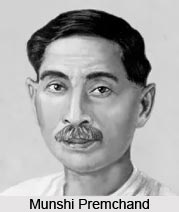
  The period of incessant and contemporary growth in the Adhunik kal of Hindi literature is represented by Jayshankar Prasad (Chaya, Akash Deep), Rai Krishna Das and Mahadevi Varma. Munshi Premchand (1880-1936) was the greatest loyalist in the field of fiction. His immortal works in fiction comprise: Sevasadana, Premasrama, Nirmala, Kayakalpa, Rangabhumi, Ghaban and Godan. His last novel Godan has been translated in all the possible languages of India. Other important fictional Hindi writers of the contemporary period comprise: Jainendra Kumar (Sunita and Tyagapatra, Sukhada, Vivarta), Phanishwar Nath Renu (Maila Anchal), Satchinanda Vatsyayan (Sekhar Ek Jivani), Dharamvir Bharati (Suraj Ka Satvan Ghoda), Yash Pal (Dada-comrade, Desh Drohi, Divya and Manusya Ke Rupa), Jagdamba Prasad Dikshit (Murdaghar) and Rahi Masoom Raza (Adha Gaon). Dr. Nagendra and Dr. Namwar Singh are the most respectable names in the arena of literary criticism. Upendranath `Ashk`, Jagdish Chandra Mathur (Konark), Lakshminarayan Lal (Sukha Sarovar) and Mohan Rakesh (Asadha Ka Ek Din, Lahraon Ke Rajahamsa and Adhe-Adhure) are renowned modern playwrights in Hindi.
 Influences on Modern Hindi Literature can be best understood by placing it against the backdrop of the socio-political conditions of Indian society in the twentieth century. The Indian nation witnessed important political changes during the period under consideration: from a colony of the British Empire it became an independent nation in 1947. The violence of colonialism, however bore heavily on the shaping of the nation. The struggle for independence from British colonial rule underwent a number of ups and downs before the arrival of freedom in 1947. Independence came with a price that was paid by the nation`s division into India and Pakistan. During the period of de-colonization since independence, the nation has undergone severe upheavals in the form of external aggressions, such as wars with Pakistan and China, and internal aggressions such as communal violence. This kind of a political upheaval both under British rule and after independence has played a definite role in the shaping of Hindi literature.
 Impact of national unity and reform on Hindi Literature can be seen in the works of the era. The influence of these various factors can be best understood by looking at the various events that took place at the time. In 1906 the Hindu-Muslim conflict culminated in the partition of Bengal. British rulers at this time played on the communal divisions. The passed the
  The socio-political message of mass unity intensified as
  Progressive Realism in Hindi Literature was compounded by a number of factors, prime among them being the atmosphere during the nationalist struggle.
  One of the notable works of the period, Kamayani by Jaishankar Prasad, a perfect amalgamation of knowledge, action & desires of life represented the spirit of Renaissance. Nirala`s style of verse in Anaamika & Parimal induced revolution in his time & accented his protest against the social exploitation. An amalgamation of the Vedanta philosophy with nationalism & mysticism was the chief feature of the works of the period. Saroj Smriti of Nirala was one of the magnificent works of the era. Lokayatan Pallavni by Sumitranandan Pant featured his progressive, philosophical & social outlook. A new tradition - Rahasyavad was introduced in Hindi Literature by Mahadevi Varma, with a different stance about the Lord of Universe. Deepsikha & Yama by Mahadevi Varma bear the specimen of ardent feminism. Mamta, Samudragupta, Dhruvaswani, Veena, Uchchavas, Granthi, Pallava, Gunjan etc were the principal works of the period.
 Women writers in Hindi Literature carved out their own spaces in order to address issues such as marriage, divorce, sexuality, and women`s education, that is, issues that directly affect women`s lives. Although male writers such as
  A number of stories written by women foreground the problems pertaining to marriage. The Indian social system allows little choice to women in the matter of selecting their husbands. For the most part, parents make decisions about matrimony and, in accordance with the Shastras, gift the girl to the groom`s family through a ritual called kanyaadan (giving of the bride), accompanied by a dowry that serves as a reimbursment to her husband`s family. Unfortunately, the practice of giving dowry has resulted in the commoditization of women and encourages, at the same time, mismatched marriages because of poverty. While rich men claim an untold price for their sons, the poor are forced to sell their daughters to men because of economic helplessness. Rajni Pannikar speaks out against this situation in her novels. Because of her family`s inability to give dowry, the heroine of Do Ladkiyan remains unmarried. On the night of her wedding, the vows cannot be taken because the prospective groom and his father angrily disrupt the ceremony upon realizing that no dowry will be provided. Helpless, she takes up a job to solve her family`s financial difficulties. In the meantime, she meets the wealthy Mr. Kanaudia, who wants to make her his private secretary. In exchange, he offers her a car, a bungalow, and other facilities. She accepts his terms only to later realize his sexual intentions toward her. Kanaudia views her as no more than a female body for his sexual exploits. Pannikar`s attempt is to enlighten us about the regressive aspects of a rigid and tradition-bound system.
 Chhayavad in Hindi literature was a trend in the 1920s and the 1930s when there was seen the profusion of a literature that exhibited a romanticism and mysticism, especially in poetry. Chhaya, which literally translates as "a reflection, an image in a mirror," emerged as a revolt against Khadi boli poetry, which had replaced Braj poetry by the beginning of the twentieth century. As a result of the efforts of the Orthodox Hindus to propagate the use of