


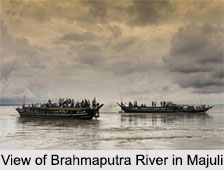
 Majuli, also called Majoli, is a river island located on the Brahmaputra River in the state of Assam. It is the first island in India to have been made a district in the year 2016. It is currently listed as the world’s largest river island in the Guinness Book of World Records. Due to erosion Majuli now covers 352 sq. km. area as measured in 2014. It was formed due to the course changes of Brahmaputra River, especially its tributaries, mainly the Lohit. Majuli is the abode of the neo-Vaishnavite culture. Majuli, also called Majoli, is a river island located on the Brahmaputra River in the state of Assam. It is the first island in India to have been made a district in the year 2016. It is currently listed as the world’s largest river island in the Guinness Book of World Records. Due to erosion Majuli now covers 352 sq. km. area as measured in 2014. It was formed due to the course changes of Brahmaputra River, especially its tributaries, mainly the Lohit. Majuli is the abode of the neo-Vaishnavite culture.
History of Majuli Majuli earlier was known as Ratnapur, which was the capital of the powerful Chutia Kingdom. Due to frequent earthquakes from 1661 to 1696 catastrophic flood took place in 1750, which has been mentioned in historical texts. As a result of this flood, Brahmaputra discharged southward into the Burhidihing's lower channel and Majuli island was formed. Economy of Majuli Agriculture is the base of economy of majuli along with Paddy being the chief crop of it. Almost 100 varieties of Paddy are grown here. Some people are also associated with fishing. Dairying, pottery, handloom and boat making are some other important economic activities of this region. Among these, Handloom is one of the major occupations, which includes half of the population of the villages of Majuli. For being a non-commercial occupation, it has many people of Majuli occupied with it.
 Festivals of Majuli Festivals of Majuli
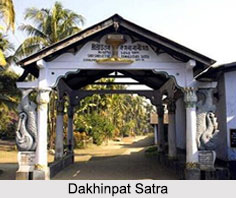
Ali Aye Ligang is the prime festival of Majuli, which takes place during mid-February for five days. Local dishes like Purang Apin, Apong, preparations of pork, fish and chicken are served during the festival. Majuli Festival is a state-run festival to showcase the dance, music and cuisines of Majuli. Handloom and handicrafts products are also exhibited for sale in this festival. Some other festivals of Majuli are Raas Purnima, Holi, Paal Namm and Christmas. Neo Vaishnavite Culture of Majuli Majuli has been the hub of neo Vaishnavite Cult of Assam, which was initiated in 15th century by the Assamese saint Srimanta Sankardeva and his disciple Madhadeva. The saint built several Satras or monasteries to represent the Assamese culture. Later, other 65 Satras were built in Majuli. The prime surviving Satras are Dakhinpat Satra, Garamurh Satra, Auniati Satra, Kamalabari Satra, Narashingha Satra, Benegenaati Satra, Shamaguri Satra and Bihimpur Satra. Tourism in Majuli Tourism in Majuli includes several spots and activities, which are:
 Visiting Information on Majuli Visiting Information on Majuli
The best time to visit Majuli is from October to March. It is 320 km away from Guwahati. Nearest airport to Majuli is Rowriah (Jorhat), which is well connected to Kolkata and Guwahati. Mariani and Guwahati Railway Station are the nearest railheads to reach the region. Majuli can also be reached by road. One has to catch a bus from Guwahati or Dibrugarh to reach Jorhat from where it will take 45 minutes to Nimatighat to cross the river. |
| |||



Majuli
| Majuli is a river island on Brahmaputra River, Assam, which became the first island in 2016 to have been made a district in India. Majuli is the hub of Assamese neo-Vaishnavite culture, initiated around 15th century. |
| ||||||||||||||||||||||||||||

