West Indian Languages
|
West Indian languages distinguish themselves with rurality and urbanity drawing the primary lines of speech.
|
|
|
 West India is defined by the states comprising Maharashtra, Goa, Rajasthan and Gujarat and the Union territories of Dadra and Nagar Haveli and Daman and Diu. The western section of India is basically a dry and parched geographical terrain, that is at times topped by the Western Ghats under the Aravalli Range. Yet, leaving all the Indian regions aside with their lush green beauty, this dry golden sand and rocky landmass possesses an attraction and magnetism of their own. The occasional break in such sweeping dryness and caustic atmosphere is reverberated by the oasis of lakes and more lakes, mirroring the complete transparency and hand of God. However, west India is not just a definition of being dry land masses or secluded mountainous regions with lakes, palaces, forts or ancient temples; west India can also securely be called as the economic epitome of the country, with Mumbai serving up practically every fiscal statement to the Indian administration. This very dichotomy in day-to-day life of urbanity contrasted with ancientness and rurality, is perhaps the most distinct in west Indian languages and vocabulary, with metropolitan phenomenon acting in the urban instances and exactly the opposite in case of village populace. West India is defined by the states comprising Maharashtra, Goa, Rajasthan and Gujarat and the Union territories of Dadra and Nagar Haveli and Daman and Diu. The western section of India is basically a dry and parched geographical terrain, that is at times topped by the Western Ghats under the Aravalli Range. Yet, leaving all the Indian regions aside with their lush green beauty, this dry golden sand and rocky landmass possesses an attraction and magnetism of their own. The occasional break in such sweeping dryness and caustic atmosphere is reverberated by the oasis of lakes and more lakes, mirroring the complete transparency and hand of God. However, west India is not just a definition of being dry land masses or secluded mountainous regions with lakes, palaces, forts or ancient temples; west India can also securely be called as the economic epitome of the country, with Mumbai serving up practically every fiscal statement to the Indian administration. This very dichotomy in day-to-day life of urbanity contrasted with ancientness and rurality, is perhaps the most distinct in west Indian languages and vocabulary, with metropolitan phenomenon acting in the urban instances and exactly the opposite in case of village populace.
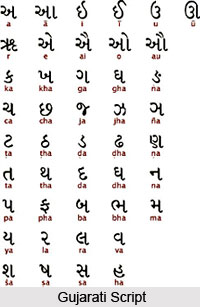
West Indian languages can be classed into a unified and equalised structure that is wholly manifested in languages like Marathi and Gujarati, besides the dominance of several dialects of Hindi and Konkani. Rajasthanis speak local dialects of Hindi, although the Khari boli dialect is employed for media and education. Owing to the majority of population in places like Goa and Dadra and Nagar Haveli following Christianity, Anglo-Indians are also in the habit to make English a much utilised language.
In an overall estimate, 83.66 percent of the population of west India is Hindu, followed by a count of 10.12 percent Muslim, 4 percent Buddhist, with Christians in Goa and Maharashtra counterbalancing the majority of the remainder. Amongst the west Indian languages, Marathi with approximately 73 million speakers, is the most extensively spoken language, followed by Gujarati with approximately 46 million speakers and Konkani 2.5 million speakers. All these languages essentially come under the Indo-Aryan language family. Maintaining parity other parts of India, an intense level of multilingualism is witnessed with English and Hindi being spoken as additional languages in urban areas.
|
|
|
|





