|
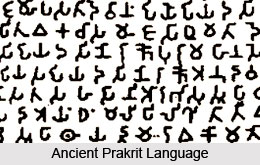
Prakrit language, according to one interpretation is variously translated as being "original, natural, artless, normal, ordinary, usual", and is also interpreted as indicating the "vernacular". As opposed to samskrta, (representing Sanskrit in the international alphabetical translational domain) that is represented by the literal and religious orthodoxy, both adjectives elliptically (referring to figure of speech, denoting suppression of particular words or phrases in sentences) absolutely refer to vak or "speech". According to yet another analysis, Prakrit language has been "derived from an original", i.e. (derived from Sanskrit) connecting to the extensive family of the Indic languages and dialects spoken in ancient India. With advancement, the Prakrits became literary languages, principally patronised by kings delineating the Kshatriya caste, but were regarded as out-and-out illegitimate by the Brahmin dogmatics and orthodoxy. The earliest surviving usage of Prakrit is the corpus of inscriptions of emperor Ashoka. While the various Prakrit languages are linked with umpteen patron dynasties, with varying religions and their differing literary traditions, none of them did at any time represent an informal "mother tongue" in any area of India.
In this regard of Prakrit language, there exists some disputation concerning the meaning of the Sanskrit term prakrta. Some authentic researchers are of the view that it has been deduced from prakrti (nature). In other words, Prakrit is represented as the natural language as opposed to Sanskrit, redefining the then society of cultured or refined language. Then again, suggestions arise that prakrti stands for `basis` and the term indicates that the language is descended from the cardinal basis, that is, Sanskrit. Other scholars are of the view that prakrti signified the common mass and thus was the language wholly employed by them. In Sanskrit plays, for instance, the dialogue delivery of characters belonging to the lower stratum of society was always in Prakrit.
Sanskrit serving as an out-and-out language of the learned and scholarly, was always a chosen favourite for literary works. Despite everything else, while Prakrit was generally the language of the commonplace quintessential man and primarily oral in tradition, there existed quite a number of substantial books written in this language. Instances like Gunadhya`s Baddakaha or Brhatkatha (possibly 1st or 2nd century A.D.), Hal`s Gahasattasai or Gathasaptashati (possibly 2nd or 3rd century A.D.) and Bakpatiraj`s Gaudbaho or Gaudabadh (8th century), serve as the best and most intellectual sections for Prakrit language. The period of the tremendous rise, further rise and predominance of Prakrit is generally acknowledged as being from the 6th - 5th centuries B.C. to the 11th century A.D.
Prakrit language is as a piece of foremost information, an absolute `native term`, pointing sharply towards "vernaculars", as opposed to Sanskrit. A set of contemporary scholars espouse this classification by encompassing all Middle Indo-Aryan languages under the category of "Prakrits". On the other hand, others accentuate and highlight the autonomous germination of Prakrit languages, often removed from the history of Sanskrit by wide segmentations of caste, religion and geography.
Prakrit language, since ancient times had witnessed sufficient metamorphosis, with transition of time making it get divided into substantial sections. The three `Dramatic Prakrits` comprising Sauraseni, Magadhi, Maharashtri, as well as Jain Prakrit, each embody and symbolise a divergent tradition of literature, encompassed within the history of India. Other Prakrits are accounted and stated in old historical sources, but are no longer utilised to go verbal (for instance the Paisaci language).
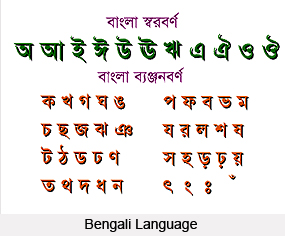
Prakrit language, had in its early metamorphosis and evolution, assumed five principal forms, comprising: Maharastri, Shauraseni, Magadhi, Ardhamagadhi and Paishachi. Amongst this cluster, Maharastri is looked at as the most important. Originally acknowledged as Daksinatya, it became well admired as Maharastri, as it quintessentially represented the language of Maharashtra. The use of this language can be witnessed in Hal`s Gahasattasai, Bakpatiraj`s Gaudabaho and in the dialogue and songs of low-classed characters in Sanskrit plays. Some basic individualities of Maharastri Prakrit comprise the loss of consonants and the transposition of the letter h for the s of Sanskrit. Shauraseni comes next in line of importance, concerning varieties in Prakrit language. Sauraseni made its presence felt in the whole of Mathura, being named after Shursen, the king of Mathura. Its principal characteristics include the replacement of d and th for Sanskrit t, and dh for Sanskrit h. Ordinary women and uninformed men generally verse in this language in Sanskrit plays. Magadhi Prakrit delineated the language of the eastern half of the Gangetic valley. The utilisation of this language can be noticed in the dialogue delivery of subaltern characters in Sanskrit plays. Magadhi Prakrit`s oldest form is witnessed in Ashvaghosh`s plays, Kalidasa`s Abhijnanashakuntalam and Shudraka`s Mrchchhakatikam. Some distinguishing features of this language comprise the use of a single sh, the replacement of l for r, y for j, d/d for t and the loss of middle consonants. Bangla and other contemporary eastern Indian languages actually owe their evolution to Magadhi Prakrit.
The use of Ardhamagadhi was hugely popular among Jains and was employed in an extensive manner, to pen their scriptures. This is why it is also popular as Jainaprakrta. Significant features of this language are the use of ae/o in preference to a, the use of only a single s and the loss of middle consonants. Going by another view of Prakrit language, Ardhamagadhi ("half Magadhi"), is also regarded as an antiquated form of Magadhi. This very `half Magadhi` is often presently conceived to be the classic form of Prakrit, whereas others are considered sequestered versions. For this precise reason, courses imparting "Prakrit" often teach Ardhamagadhi.
Paisachi under Prakrit language variation and styles, was conceived by a school of thought to be the language of the demons and its principal nerve-centre was the north-western region of India. Gunadhya`s Brhatkatha was composed in this precise language. Some of its features include the replacement of n for n, k for g, kh for gh and ch for j. Even additional features of Prakrit comprise the transposition of ng for m at the end of a word, conjunctive consonants being compounded excepting at the beginning of a word and the complete deprivation of dual forms.
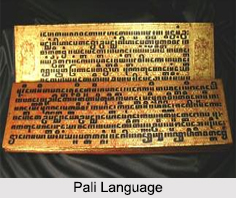
Pali (the authentic language of Theravada Buddhism) is generally inclined to be addressed as a special exemption, since classical (Sanskrit) grammars do not consider it as a Prakrit in and of itself, most probably for sectarian rather than linguistic grounds.
As can be comprehended from above, Prakrit language had its own derivatives, coupled with divisional literature structures. However, the term Prakrit did have its own origin, hidden within some secret text. According to the dictionary of Monier Monier-Williams (the man who had studied, documented and instructed Asian languages in England, including compiling one of the most widely-utilised Sanskrit-English dictionaries.), the most frequently used meanings of the Sanskrit term prakrta, from which the present "prakrit" has been deduced, encompass "original, natural, normal". The term has further been deduced from prakrti, or, "making or placing before or at first, the original or natural form or condition of anything, original or primary substance". Going by linguistic expressions, this has always been employed in contrast with samskrta, or being "refined".
In effect, every learner of Sanskrit is strictly imparted that sophistication and fine-tuning of Sanskrit (to invalidate much of middle-Indic influence from the standard language) was essentially a process sweeping across umpteen generations (accepted traditional theories state them to be more than a thousand years) until it was deemed comprehensive and faultless.
A group of scholars confine and curtail the Prakrits to the languages employed by Hindu and Jain writers; yet again, others encompass the Buddhist languages, such as Pali and Buddhist Hybrid Sanskrit, together with the inscriptional Prakrits. Besides these mentioned, other Prakrits embrace the Gandhari and Paisaci, which is wholly acknowledged through grammarians` commentaries. The contemporary languages of northern India had germinated from the Prakrits, after the intermediary phase of the Apabhramsa language.
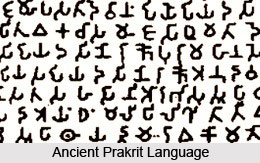
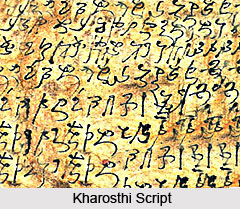
There were three stages in the evolution of Prakrit: ancient or oral Prakrit, literary Prakrit and Apabhramsa-Abahattha. The first stage existed from the 5th-6th century B.C. to the 1st century A.D. During this period Prakrit was used mainly orally, except for some rock and copperplate inscriptions. Ashoka`s inscriptions, for example, were written in Prakrit. This is why it is also known as the script for inscriptions. The second stage lasted from the 1st to the 6th century A.D. During this period, different forms of Prakrit were used to write books as well as the dialogues of low characters in Sanskrit plays. The third stage flourished from the 6th to the 11th century A.D. This was followed by the appearance of various modern languages. But Prakrit continued to be used alongside the newer languages until the 15th century.
The utilisation of Prakrit language for purposes of penning significant texts can be identified by the 5th century, when secular books as well works associated with the Jain religion were composed. The cardinal scripture of the Jains, Agamshastra or Siddhanta (Ayarangasutta, Suyakadangasutta etc), bearing the words of the Jain sage, Mahavira, was composed before the termination of the 5th century. Commentaries on Agamsastra such as Nijjutti, Chunni, Paumchariam (Jain Ramayana) and Harivangshapurana (Jain Mahabharata), as well as miscellaneous biographies of Jain acharyas (preceptors) and tirthankars (monks) were also scripted approximately around this time.
Secular Prakrit literature, compiling the salient points of Prakrit language, entirely reflected the lives of the common mass. This literature can be further sub-divided into five classes, comprising: dialogue and lyrics in Sanskrit plays, epics, moral poems, historical poems and narrative poems based upon legends. The very foremost literary usage of Prakrit can be witnessed in Sanskrit plays. The playwrights were of the habit to employ Prakrit for the songs and dialogue of lowly characters; various and assorted forms of Prakrit were utilised for diverse characters. Hence, it can be known from inscriptions and writings that most women spoke Sauraseni, as did children and clowns. Women were of the habit to sing in Maharastri. In present times, umpteen kinds of servants, fishermen and people belonging to low caste address in Magadhi. The usage of language according to the standing and position of a character enhanced the genuineness and realness of the story. The Sanskrit plays of Kalidasa as well as Bengali composers espoused this practice. Umpteen love lyrics in Bharata`s Natyashastra, Kalidasa`s Vikramorvasiya and Sudraka`s Mrchchhakatikam were framed in the Prakrit language, as were several lyrics, later amassed into Gahasattasai and Bajjalavagga (c 11th century).
Rhyming narrative poems, identified as doha or dohakos, were also framed and penned in Apabhramsa (a term used by Sanskrit grammarians after Patanjali to designate dialects of North India that departed from the norm of Sanskrit grammar. The term in Sanskrit literally stands for "corrupt" or "non-grammatical language", and hence Prakrit language absolutely comes under this category). Later on, this rhyming form was adopted in Bangla and other modern-day languages. The dohakos, which rendered didacticses for the performance of devotional rites, greatly had shaped and determined the birth of Bangla.
Noteworthy amongst epics in Prakrit language comprise: Prabar Sen`s Ravanbaho or Ravanbadh (5th-6th century), Bakpatiraj`s Gaudbaho or Gaudabadh (8th century), Puspadanta`s (10th century) Jasaharchariu and Naykumarchariu or Nagkumarcharita, Gunchandra Gani`s Mahavirchariya or Mahavircharita (11th century), Kouhal`s Lilavaikaha or Lilavatikatha and Hemchandra`s Kumarpalchariya or Kumarpalcharita (12th century). Ravanbadh delineates the slaying of Ravana and Gaudbaho the slaying of the king of Gauda. Yashodharchariu recounts the chronicle of King Yasodhar, as Naykumarchariu recounts the chronicle of the Jain acharya Nagkumar. Mahavirchariya primarily serves as the biography of Mahavira and Kumarpalchariya a biography of Raja Kumarpal of Anhilbad. Lilavaikaha recites the love story of the Sri Lankan Princess Lilavati.
Jindatta Suri`s Chachchari, Upadeshrasayanras and Kalsvarupkulkam encompass hymns, that extol the guru Jinballabh Suri, including a number of didactic poems. Considered eminent on the list of historical poems in Prakrit language comprise the epics Gaudabaho, Lilavaikaha and Kumarpalchariya, each assimilating umpteen historical facts. Jinprabha Suri`s Tirthakalpa might just also be encompassed in the genre of historical poems, due to it bearing the names of numerous kings.
Kathanak are poems based upon folktales scripted in Prakrit language. The first of such books can be witnessed in Bhabadev Suri`s Kalkacharya Kathanak, compiled in a concoction of prose and verse. Some other books in this genre include Shrishchandra`s Kathakos (12th century), Somchandra`s Kathamahabodhi (15th century) and Gunadya`s Baddakaha. Baddakaha had tremendously influenced not only Prakrit language, but also Sanskrit narrative literature, like Somdev`s Kathasaritsagar, Ksemendra`s Brhatkathamanjari and Buddhasvami`s Brhatkatha.
An assortment of prose works were also scripted in Prakrit language, such as narratives, plays, grammar books, dictionaries, books on prosody, astrology and philosophy. Some authoritative books in this genre include Basudevhindi by Sanghadas and Dharmasen Gani and Haribhadra Suri`s Samaraichchakaha (Samaradityakatha). However, plays in Prakrit did not develop as beneficially as the other genres in ancient Indian literature and language. However, some Prakrit plays worth citing comprise Rajshekhar`s Karpurmanjari (10th century), Rudradas` Chandralekha (17th century) and Bishveshvar`s Srngarmanjari (18th century).
History of Prakrit language and consequentially its grammar is considered to date back to several centuries. However, writings of a group of grammarians such as Shakalya, Kohal, Bamanacharya and Samantabhadra have failed to survive to this present age. But succeeding works like Bararuchi`s Prakrtprakash, Hemchandra`s Shabdanushasan, Trivikram`s Prakrta Byakaran and Markendeya`s Prakrtsarbasva deserve a singular position in history of Prakrit language. In this context, Hemchandra indeed does occupy an exceptional place in penning Prakrit grammar. There does not exist numerous options in dictionaries in Prakrit grammatical structure. The only two dictionaries worth a special mention include Dhanapal`s Paiyalachchhi-Nammala (10th century) and Hemchandra`s Deshi-Nammala (12th century). The second book mirrors a compilation of local and regional words of anonymous origin.
However weak was Prakrit language`s evolution when its basic grammar and texts are considered, Prakrit prosody was pretty much developed since its inception. It is not unanticipated, thus, that there existed a number of books in Prakrit on prosody, the most important being Pingal`s Prakrtpaingal, which encompasses discussions of both Prakrit and Apabhramsa metres. The influence of Prakrit metres on the growth and evolution of Bangla poetry, was more pronounced as opposed to that of Sanskrit. Most philosophical works in Prakrit language are dedicated to Jain philosophy. Three celebrated philosophical works of the 1st to 2nd centuries comprise Prabachansar, Niyamsar and Panchastikayasar. The well-acclaimed Jain philosopher Siddhanta Chakravarty is also known to have scripted five books.

Besides such astounding and promising information on Prakrit language, there also exists quite a number of books on astrology, the most notable being Jainacharya Durgadev`s Rista Samuchchay. Durgadev also had penned two other books on astrology, named Arghakanda and Mantramahodadhi.
|