 In recent times, oral diseases have gained an importance and are considered as a major health problem worldwide. Oral cancer, dental caries, and periodontal diseases are among the most important global oral health problems. Although new treatments and technologies for dealing with them are plentiful, nonetheless more and more patients are now looking for simpler, gentler therapies for improving the quality of life and avoiding iatrogenic problems. Often these chronic problems can be treated in Unani system without any side effects.
Concept of Unani Medicine
The Unani or Greek system of medicine is believed to have been introduced by Hippocrates which was later extensively developed by Arab doctors. The main theory of the Unani medicine is based on the concept that perfect balance between the elements (arkhan), humours (akhlat) and temperament (mizaj) is necessary for good health. Every individual has inherent powers of self-preservation, called quwat-e-modabira. The four humours present in the human body are dum (blood and other red body fluids), balgham (phlegm and other colourless fluids), safra (yellow fluids like bile) and saoda (black bile and other black fluids). The excessiveness of these humours determines an individual`s temperament or mizaj which again could be of four kinds: damvi (sanguine or plethoric), safravi (choleric or bilious), balghami (cold or phlegmatic) and saodavi (melancholic).
History of Unani Medicine
Unani physicians in India succeeded in retaining its traditional strength and also benefitting from contemporary scientific development over the years. During second half of the twentieth century, with the support of government of India, the system developed institutionalized quality education, state of the art research and an extensive network of hospitals and dispensaries for meeting the healthcare needs of the people. Hakim Ajmal Khan (1868-1927 AD) pioneered research in Unani Medicine with modern scientific parameters in the 1920s. This lead to the significant discovery of alkaloids viz., Ajmaline, Ajmalinine, Ajmalicine, Isoajmaline, Neoajmaline and Serpentine from a native plant Rauwolfia serpentina, used extensively in Unani system of Medicine.
During the British rule, Unani Medicine suffered a setback and its development was hampered due to withdrawal of governmental patronage. But since the system enjoyed faith among the masses, it continued to be practiced. It was mainly due to patronage received from the Sharifi family in Delhi, the Azizi family in Lucknow and the Nizam of Hyderabad that Unani Medicine survived during the British period. An outstanding physician and scholar of Unani Medicine Hakim Ajmal Khan, was one of the foremost freedom fighters in the country. He established an Ayurvedic and Unani Tibbia College for teaching and research in Ayurveda and Unani respectively along with Hindustani Dawakhana, a pharmaceutical company for manufacturing of Ayurvedic and Unani medicine in Delhi in 1916. Mahatma Gandhi inaugurated the college on February 13, 1921. Unani medicine in India originated with the coming of Arabs. Historical evidences speak that this medicine was used by the Delhi Sultan, the Khiljis, the Tughlaqs and the Mughal Emperors. During the 13th and 17th Century Unani Medication was practised profusely in India which was used to treat smallpox and measles.
Process of Unani Treatment
Unani medicine mainly diagnoses the pulse (nabz) besides an examination of the urine (bowel) and stool (baraz). While examining the pulse, numerous aspects are looked for, like volume, tension, blood volume, pattern of movement, rest, rhythm, irregularity and so on. Treatment is done for simple diseases and it is mainly through diet in the initial stages, followed by the administration of a single drug, failing which compound preparations may be administered. Each drug is placed under four categories, based on potency and efficacy.
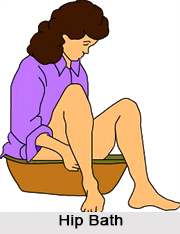
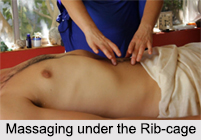
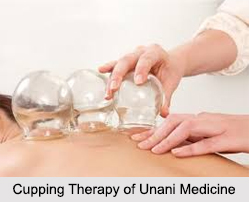 There are four treatment therapies employed in Unani medicine in India including regimental therapy venasection, diuresis, Turkish bath, massage, purging, exercise, pharmaco-therapy, use of herbal, animal and mineral drugs, surgery, and diet therapy which speaks about quantity and quality of food.
Classical diagnosis in Unani system is based on examination of pulse, stool and urine in addition to routine physical check-up. There are three modes of treatment in Unani system:
Regimental therapy (Ilajbil tadbeer) – Use of exercise, climate change, massage, venesection, leaching, cupping, diet therapy etc.
Pharmacotherapy (Ilajbil dava) – use of drugs of plant, animal and mineral origin, either alone or in combination.
Surgery (Ilajbil Yad) – Surgical intervention in treatment as last resort.
After diagnosing the disease, treatment follows a pattern:
Izalae Sabab (elimination of cause)
Tadeele Akhlat (normalization of humors)
Tadeele Aza (normalization of tissues/organs)
Elements of Unani Medicine
Unani formulations have been successfully tested over a period of time and have been used effectively for treating various diseases since time immemorial. Various herbs and natural ingredients with anti-inflammatory, anti-microbial, antiulcer genic, antioxidant and wound healing properties have been used for their pharmacological applications. In this section we have reviewed various studies undertaken in recent time to provide a scientific reason to some of the widely used Unani medicines and also have looked into the multitude prospects and perspectives of Unani system of medicine in management of orofacial diseases.
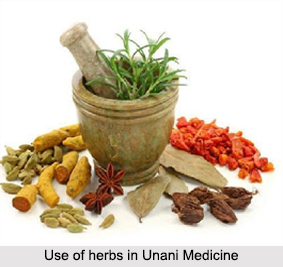
Many Unani physicians advocate use of herbal formulations in their Usool-e-Ilaj (Unani principles for treatment) for the prevention and management of dental health. Herbs which are advocated in Unani system like Miswak (Salvadora Persica), Haldi (Curcuma longa), Anar (Punicagranatum), Aqarqarha (Anacyclus pyrethrum), Suddab (Rutagraveolens), Amla (Emblica Officinalis), Aqaqia (Acacia nilotica), Shahad (Honey), Lehsun (allium sativum), Aspaghol (Plantagoovata Forsk), Babuna (Matricariachamomilla Linn.), Clove (syzygiumaromaticum) etc. are found to be useful in treatment of orofacial diseases. Similarly, Unani formulations like Sunune Zard, Sunune Mulook, Sunune Mujalli, Buzidan, Majoon Suranjan, Majoon Azaraqi, Habbe Gule Aak etc. have been shown effective anti-bacterial, anti-inflammatory and analgesic effect and are used in the treatment of orofacial diseases.
Whereas for diabetes, several bitter and astringent items such as stones of the jamoon fruit, phalsa fruit, bitter gourd juice, tender neem shoots, bilva leaves and cotton seed kernels are prescribed by the Unani practitioners in India. Urad, a black gram is enclosed in the Sanskrit literature and also in the Brhadaranyaka Samhita among the `ten food-grains`. Urad is thought to be indigenous to India, and shares a common ancestor with mung. The pulse has been found around 1500 BC in archaeological excavations at Navdatoli and Daulatapur. Historical literature indicates a wide range of usage.