





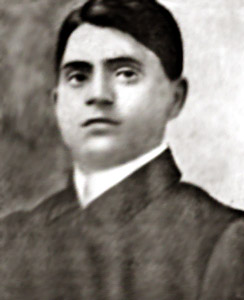
 Jatindranath Mukherjee, the dauntless Indian freedom fighter had done much and witnessed much in his short span of lifetime to take his 'motherland' towards a new direction. Since his tender age, Bagha Jatin (as Jatindranath Mukherjee was hugely admired) had earned the repute of fearing at nothing; he even had the courage to stand up against the British tyranny and cruelty. Profoundly inspired by his mother, Sharatshashi and other saintly thinkers of the times like Swami Vivekananda and Aurobindo Ghosh, Jatindranath was determined to travel the path of revolution to achieve freedom, to achieve swaraj. Trudging through almost every possible course, Bagha Jatin through his dauntless and tremendous acts against the English had become known far and wide. As such, revolutionary activities of Jatindranath Mukherjee gradually began to be viewed in a new light, making other revolutionaries think him as their ally. And Jatindranath was forever eager to help others, with unity presiding forever. As times passed, Jatindranath started to experiment with desperate revolutionary activities, leading him to take cover in hinterlands. Jatindranath Mukherjee, the dauntless Indian freedom fighter had done much and witnessed much in his short span of lifetime to take his 'motherland' towards a new direction. Since his tender age, Bagha Jatin (as Jatindranath Mukherjee was hugely admired) had earned the repute of fearing at nothing; he even had the courage to stand up against the British tyranny and cruelty. Profoundly inspired by his mother, Sharatshashi and other saintly thinkers of the times like Swami Vivekananda and Aurobindo Ghosh, Jatindranath was determined to travel the path of revolution to achieve freedom, to achieve swaraj. Trudging through almost every possible course, Bagha Jatin through his dauntless and tremendous acts against the English had become known far and wide. As such, revolutionary activities of Jatindranath Mukherjee gradually began to be viewed in a new light, making other revolutionaries think him as their ally. And Jatindranath was forever eager to help others, with unity presiding forever. As times passed, Jatindranath started to experiment with desperate revolutionary activities, leading him to take cover in hinterlands.
Umpteen sources mention Jatindranath Mukherjee as being amongst the foremost founders of the Anushilan Samiti in 1900 and as a ground-breaker in creating its branches in the districts. According to a special report published by the English, a clandestine meeting was held in Calcutta approximately in the year 1900. The meeting was pledged to commence secret societies with the objective of assassinating officials and supporters of the British Government. One such first meeting to flourish was at Kushtia in the Nadia district. And, according to Britishers, this was organised by 'one Jotindra Nath Mukherjee'. Bhavabhushan Mitra's scripted notes precise his presence along with Jatindranath during the first meeting. A branch of this organisation (Anushilan Samiti), was to be kicked off in Dhaka (presently in Bangladesh), paving a path-breaking way for revolutionary activities by Jatindranath Mukherjee. In 1903, on meeting Sri Aurobindo Ghosh at Yogendra Vidyabhushan's place, Bagha Jatin decided to join forces with him. In fact, it is also believed that Jatindranath had added to Ghosh's programme the clause of winning over the Indian soldiers of the British regiments to support an uprising. Jatindranath had also served as a close confederate of Nani Gopal Sengupta of the Howrah Gang and worked directly under the orders of Aurobindo Ghosh. In 1905 a procession to celebrate the visit of the Prince of Wales in Calcutta was being commemorated with much fanfare. Bagha Jatin then had decided to arrest the attention of the future Emperor on account of the behaviour of His Majesty's English officers. Not far from the royal coach, Jatin had singled out a cabriolet on a by-lane, with a group of English military men sitting on its roof. Their booted legs were dangling against the windows, which were gravely agitating the incensed faces of a few native ladies. Stopping beside the cab, Jatin asked the fellows to leave the ladies aside. In response to their mischievous provocation, Jatindranath rushed up to the roof and struck them with pure Bengali slaps till they dropped onto the ground. Such was the unabashed boldness of this very Indian freedom fighter Jatindranath Mukherjee, with his everyday-escalading revolutionary activities. 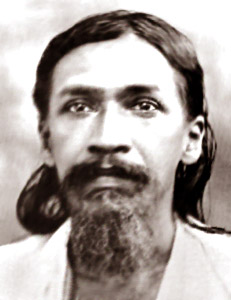 In response to the 1905 Partition of Bengal, Jatindranath had also initiated action in full potential. The journal Yugantar as well as a bomb factory was begun in this regard, solely under Bagha Jatin's initiative. The ensuings all resulted in the martyrdoms of Prafulla Chaki and Kshudiram Bose, Kanailal Dutta and Satyen Basu. Other actions, ignited at Jatindranath's instance, set luminous exemplars of self-immolation by Charu Bose and Biren Dutta Gupta. The Yugantar ideal of rebelliousness of death had produced the coveted effect: 'Awakening dawned'. Meanwhile in 1907, duly appreciated for his professional ability, Bagha Jatin was "sent to Darjeeling on some special work," for a period of three years. Since his early youth Jaitndranath Mukherjee had the status of a local Sandow. Quite obviously, he soon attracted attention in Darjeeling in cases in which he tried to assess the potency with Englishmen. In 1908, this rising Indian freedom fighter served as leader of one of the umpteen gangs that had germinated in Darjeeling, whose aim was to spread dissatisfaction. Together with his associates, Jatin started a branch of the Anushilan Samiti, called the Bandhab Samiti. Revolutionary activities by Jatindranath Mukherjee was increasing by leaps and bounds, with the British lawmakers staring almost helpless. In April 1908, in Siliguri railway station, Jatin was entangled in a fight with a group of English military officers headed by Captain Murphy and Lt. Somerville. The fight turned bitter, leading to legal proceedings and extensively covered by the press.
In the same year, Jatin was one of the thirty revolutionists accused in the Alipore Bomb Case, following the incident at Muzaffarpur. Thus, during the Alipore trial, Jatindranath assumed the leadership of the clandestine society to be known as the Jugantar Party. He then restored the links between the central organisation in Calcutta and its several branches scattered all over Bengal, Bihar, Orissa and various places in Uttar Pradesh.  A series of tyrannical measures were introduced to smother the rising sedition, since the upheavals against the Partition of Bengal in 1905. Revolting against these tyrannies and engineering defence of the revolutionaries under trial in the Alipore Bomb Case, Jatindranath issued a series of incredible actions of valiancy and desperate self-sacrifice. Quite evidently, revolutionary activities under Jatindranath Mukherjee had become much more intensified, with the sole aim to see his country free from English shackles. All the actions' nerve-centre was based in Calcutta and the districts, "to revive the confidence of the people in the movement." The instances shot the Indian freedom fighter into the limelight of radical leadership. During this time, Jatindranath Mukherjee had invented and introduced in India the novel feature of bank robbery on automobile taxi-cabs. Umpteen dishonours were committed across the country in several dates. Few of the instances were the two assassinations of the Prosecutor Ashutosh Biswas (on 10 February 1909) and the Deputy Superintendent of Police, Samsul Alam (on 24 January 1910). Both these officers were hell-bent to get all the accused condemned. Nailed and outsmarted by the police, Biren Datta-Gupta, the latter's assassin, disclosed Jatin's name as his leader.
On 27 January 1910, Jatindranath Mukherjee was arrested in relation to this murder, but was released. However, Jatin was immediately re-arrested along with forty-six others in connection with the Howrah-Shibpur Conspiracy Case. The foremost charge against Jatin Mukherjee and his party during the trial (1910-1911) was "conspiracy to wage war against the King-Emperor" and "tampering with the loyalty of the Indian soldiers" stationed in Fort William and soldiers in Upper Indian Cantonments. While confined in the Howrah jail, awaiting trial, Jatin established contact with a few fellow prisoners. Jatindranath Mukherjee's revolutionary activities had truly aggravated, despite being chained behind bars; such was this freedom fighter's reach. The fellows were well-known revolutionaries belonging to various groups functioning in different parts of Bengal, who were all incriminated in this case. Bagha Jatin was also informed by his emissaries overseas that very soon Germany was to declare war against England. Jatin banked heavily upon this war to organise an armed rebellion together with Indian soldiers in various regiments.  Jatindranath Mukherjee was discharged in February 1911 concerning the Howrah-Shibpur Conspiracy Case. Almost instantly, he debarred terrorism. During the German Crown Prince's visit to Calcutta, Jatin met him and earned a pledge concerning ammunitions supply. Having lost his government job and under house-arrest, Jatindranath managed to exit Calcutta, to begin a contract business of building the Jessore-Jhenaidah railway line. This provided him with a convincing ruse and abundant scope to move about on horse-back or on bicycle to solidify not only the district units in Bengal, but also to re-animate those in other provinces. Meanwhile, Bagha Jatin with his family was out on a pilgrimage tour and visited his Guru, Bholananda Giri at Haridwar. Later, Jatindranath travelled to Brindavan where he met Swami Niralamba (who was actually Jatindra Nath Banerjee, the legendary revolutionary, before becoming a sanyasi). On returning from his pilgrimage, Jatin started to re-organise the Jugantar Party accordingly. Jatindranath Mukherjee's revolutionary activities had triggered off a chain of seditionary activities, although Bagha Jatin was shrewd enough to keep it low-key.
The renowned and respected Indian revolutionary leader, Rashebhari Bose was in particular much impressed and delighted with Jatindranath Mukherjee. Revolutionary activities of Jatindranath Mukherjee had in fact intensified and heightened with the esteemed Rashbehari becoming Bagha Jatin's friend, philosopher and guide. In Jatin, Rashbehari Bose had discovered "a real leader of men". At the close of 1913, Bose met Jatin to discuss the possibilities of an All-India armed rebellion of the 1857 (referring to Sepoy Mutiny) type. Struck by Jatin's "fiery energy and personality", Rashbehari Bose restored negotiation with the native officers posted at Fort William in Calcutta, the nerve-centre of the various regiments of the colonial Army. There were also endeavours to organise expatriation of Indian revolutionaries in Europe and the United States. Jatindranath's tremendous influence was of international ambit. The legendary and much talked surreptitious methods that had been employed by Jatindranath Mukherjee during First World War have also been put under scanner. He had assisted and had been aided by Germany. These surreptitious efforts were directly connected with the Jugantar Party under Bagha Jatin's leadership, in its planning and engineering an armed rebellion. Rasbehari Bose had adopted the task of carrying out the plan in Uttar Pradesh and Punjab. This international chain-work conceptualised by Jatin came to be known as the German Plot, the Indo-German Conspiracy, or the Zimmermann Plan. Jatindranath Mukherjee's revolutionary activities, coupled with Satyendra Sen had assayed out laborious tasks in conspiracy and bombing cases throughout Bengal. Satyendra Sen was interned under Regulation III in the Presidency Jail. Time was now arriving for Bagha Jatin to be seized and thrown away behind bars. 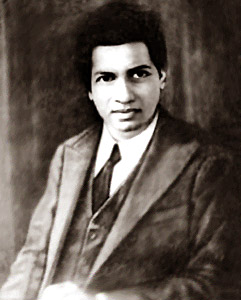 Haunted by the mounting police activities to prevent any armed rebellion, distinguished Jugantar Party members suggested that Jatindranath should transfer to a securer place. Balasore on the Orissa coast was selected as a perfect place, being very near to the spot where German arms were planned to be landed for the Indian rebellion. To facilitate transmittance of information to Jatindranath Mukherjee, a business house "Universal Emporium" was erected, as a branch of Harry & Sons in Calcutta, which was built with the aim to keep contacts with revolutionists abroad. Bagha Jatin hence moved to a hideaway outside Kaptipada village in the native state of Mayurbhanj, more than thirty miles away from Balasore. Jatindranath Mukherjee's revolutionary activities had, to some extent miserably been cut short and cramped, with the unrelenting British following like a wounded hound.
The German plot and assistance was in a horrified manner turned knowledgeable to the Britishers. And as soon as the information reached British authorities, they alerted the police, particularly the delta region of the Ganges. All the sea approach paths on the eastern coast from the Noakhali-Chittagong side to Orissa were also barricaded. Harry & Sons was raided and ransacked and the police found a clue. It led them to Kaptipada village, where Jatindranath was staying with Manoranjan Sengupta and Chittapriya Ray Chaudhuri; members from the Police Intelligence Department was despatched to Balasore. The Indian freedom fighter was kept enlightened and requested to leave his hideout. However, his consistent assertion to take Niren and Jatish with him held back his departure by a few hours. By this time a considerable force of police, manoeuvred by top European officers from Calcutta and Balasore and further strengthened by the army unit from Chandbali in Mayurbhanj State, had neared the neighbourhood. Jatindranath and his companions trudged through the forests and hills of Mayurbhanj and after two days arrived at Balasore Railway Station. 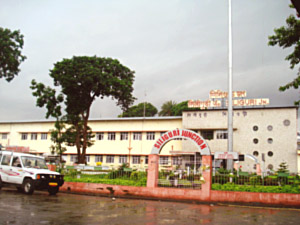 The police had declared a reward for the imprisonment of five absconding "bandits", so the local villagers had also turned pursuers. With occasional brushes, the revolutionists, running through jungles and marshy lands in torrential rain, finally took their position on September 9, 1915. The place was chosen inside a makeshift trench amidst an bushes on a hillock at Chashakhand in Balasore. Chittapriya and his companions asked Jatindranath Mukherjee to leave and run towards any refuge, while they would guard the rear. The Indian freedom fighter however denied any of their suggestions. Jatindranath Mukherjee's revolutionary activities perhaps had been forever brought to and end after this episode, finally after his nemesis had almost overwhelmed him successfully.
|
| ||||||||||||||||||||||||||||

