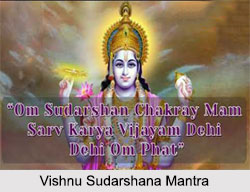
The materialization of the deity that is inherent in the mantra is known as the Mantra Siddhi. When, a Yogi calls a particular deity with the help of a mantram, he possesses a mental image and idea of the deity he is worshipping. If there is earnest devotion in the sadhana, Mantra Siddhi is bound to happen. After a considerable time of sadhana, the wavelength of the Yogi and his deity runs parallel and this stage is called tanmayata or togetherness.
Eventually the individuality of the Yogi becomes completely dissolved, and he along with his deity becomes one consciousness. When the Yogi become identical with his deity, it indicates that he has successfully reached the stage of tadrupata. At this stage there is mantra Chaitanya and total union of the Yogi`s consciousness and his mantram. Every cell in his body becomes a resonator his chanted mantram and every pore becomes a mouth with which he utters the God`s name.
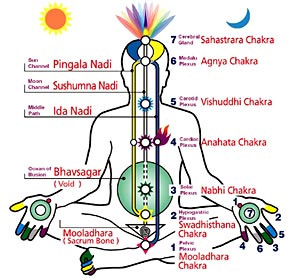
The Tantras maintain that the consciousness of a certain region of the physical body is its deity. Since every mantram is considered as a deity, the entire human body is composed of mantrams, and is a mantram itself. By repeating mantrams the Yogis are continuously recreating themselves in a new image. Eventually, when the person is truly purified, his original personality becomes totally effaced, and only the image of his deity remains.
Mantra Siddhi highly depends on the effectiveness of the appropriate mantram chosen. The Guru usually assigns the proper mantra and the proper form to his amateur disciple. There are various forms of mantrams and each of them reaches to some definite type of Mantra Siddhi. The mental pattern of a Yogi is also kept in mind while assigning him any mantram. If anyone with tender nature repeats a mantram for Smashan Tara, the results are bound to be drastic and sometimes even fatal.
Mantra Siddhi also depends on the perfect combination of the mantram chosen and the deity who shall be worshipped. Most deities have many different forms and their mantrams are equally diversified. For example, it is possible to worship Krishna as a baby, a young boy, a handsome young man, a lover, a king, a warrior, Arjuna`s friend, and so on. The Yogi can see Him in many different forms, including His universal form. But name and form of Lord Krishna are identical, so each different form must have a different name and a different mantram to reach the Mantra Siddhi.
It may take ten years of hard penance for a man to achieve Mantra Siddhi with a mantra for Anjaneya. Most men relate to Anjaneya as the greatest of heroes, but fortunately a woman can satisfy Anjaneya in only ten days. People worship Lord Krishna in the form of Lallu or Gopala, just as Baby Jesus is worshipped. However, an appropriate mantra is not only enough to attain Mantra Siddhi, one has to know the correct form to visualize with it, and follow good niyama. For the best form of Mantra Siddhi, one needs to follow a specific process called purashcharana.
Purashcharana is required to be done repetitively in a year, simultaneously with the sadhana. Purashcharana is a kind of Yajna that should be performed several times every day. After finishing at least ten percent of the offering done to the homa fire; the same offerings should be given once again along with small amount of water, this act is called tarpana. Finally, the water has to be sprinkled around the body of the Yogi in a particular way called the marjana. Finally, ten percent of that number is again offered to the fire as bhojana or gifts of food to children. When all this is complete, the Yogi is in the perfect state to start his sadhana and eventually gain Mantra Siddhi.