Ekam Evadvitiyam Brahma, Mahavakya, Hinduism - Informative & researched article on Ekam Evadvitiyam Brahma, Mahavakya, Hinduism
 Indianetzone: Largest Free Encyclopedia of India with thousand of articlesIndian Religion


in  
 Art & Culture|Entertainment|Health|Reference|Sports|Society|Travel
Forum  | Free E-magazine  | RSS Feeds  
Indian Religion : Vastu Shastra |Indian Religions |Indian Myths |Indian Mythology |Gods of India |Goddesses Of India |Religious Thinkers of India |Types of Religion in India |History of Indian Religion |Indian Yogis |Ajivikas |Sacred Scriptures in Indian Religion |Tantrism |Shaivism |Indian Communities |Sacred Animals in India |Roman Impact on South Indian Art and Society |Bhattacharyas |Indian Classical Terms
Home > Society > Indian Religion > Types of Religion in India > Hinduism > Ekam Evadvitiyam Brahma
Ekam Evadvitiyam Brahma, Mahavakya, Hinduism
Ekam Evadvitiyam Brahma is a Mahavakya, meaning that there is one absolute reality, without any secondary parts.

 Ekam Evadvitiyam Brahma, the Mahavakya of Hinduism means that Brahman is one, without a second. The analytical expression of Ekam Evadvitiyam Brahma is also that there is one absolute reality, without any secondary parts and no object are believed to be truly independent.

As the attention of common men move from object to object, image to image and keep finding that those objects and images are only relatively real. Gradually, the mundane come to see that no object exists independently from brahman, the whole. Hence, it is said there is one, without any second. Wherever one looks and whatever people think or feel, try as they will, they can find no second object or part. Everything is seen as a manifestation of something else.

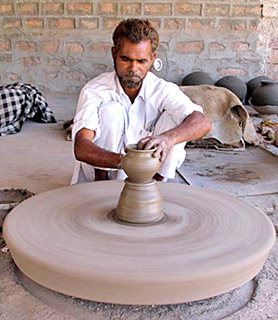
It is said that the kernel of this universe is Brahma. Life, seed, ego everything emerge from him. He is the primary as the whole world is derived from Him. An examole can be taken- it is as if visualising thousands of pots or bracelets made from clay or gold ; as one look at each of the pots and bracelets, one at a time, a person can conclude that this pot, and this bracelet is not separate from the whole field of clay and gold. Suddenly one can come to the impending that there is not a single pot, which is separate from clay, and there is not a single bracelet other than gold. In other words, one can see that there is one field, without a second object, or simply that there is one, without any second. The concept of Ekam Evadvitiyam Brahma can also be viewed in a theological way, wherein immanence versus transcendence, means the theology existing in and extending into all parts of the created world. Thus, there is no object that does not contain, or is not belonging to that creation.

To practice the Mahavakya of Ekam evadvitiyam brahma, one has to keep exploring the latter part of the sentence, the part of being without a second. The Yogi has to deliberately look at the objects of the world, and the thoughts that arise in the mind. He has to observe whether it has independent existence and durability. It is like asking the question, "Does this object or thought exist on its own? Does it stay in this form, or does it go away? Is it, therefore a second object in comparison to the whole?"

The Yogi should find a second object to concentrate on and one practice is to be done repeatedly. The object for concentration should have independent existence from the whole, from brahman. The aspirant will repeatedly find that there is no second object, which has independent existence, but that all objects derive from some other, alike the pots from clay or bracelets from gold. This brings the increasing consciousness of underlying wholeness.

If the Mahavakya Ekam Evadvitiyam Brahma is approached as a mere philosophical opinion and if the people merely believe the principle, then the deep insight that comes from exploration will be missed. Each time that some new object or thought is seen to not be a second in relative to the whole or Brahma. The personal realisation of the truth of the principle will become deeper and more philosophical. The Yogis often see the beauty in Ekam Evadvitiyam Brahma and perceives the joy of wholeness, of the unity within the diversity. The inter relationship between the Mahavakyas often gets clearer if the real meaning of these utterances are understood.
(Last Updated on : 12/02/2011)
 
 
Aghora Vaishnavism Nath Siddhas
Sarvam Khalvidam Brahma Aham Brahmasmi Ayam Atma Brahma
Ekam Evadvitiyam Brahma Tat Tvam Asi Prajnaman Brahman
Brahma Satyam Jagan Mithya Mahavakyas Mahavidya Goddesses
Theory Of Creation Hindu Gods Hindu Goddesses
Shraadh Yajna Havan
Gotra Aarti Agnihotra
Devadasis Ishvara In Hinduism Devi
Grihya Sutras Dvija Hiranyagarbha
Brahman Cremation Puja
Janmotsava Shradh Anteshti Kriya
Homa Hindu Vrata Days of the Week
Ahalya Kachwaha Jyotirlinga
Brahmin Castes in India Panchangam Ashta Dikpalas
Astomi Brahmaloka Sannyasi
Samakara Hindu Sacred Places Origin of Hinduism
Hindu Religious Texts Hindu religious leaders Marudeva
Sarvesvara Lokas Papa
Maharudra Swahaakaar Yagna Conch Shell Punarjanam
Aghori Heaven Parting with money after sunset
Shraavana Sashtanga Kshama
Agrasya Sanskaras Libation
Kerari Kusha Maharajas
Chandrayana Bhagat Jiva
Devarshis Months of Hindu Calendar Varna System in Ancient India
Purohitas Hindu Rituals Pancharatra
Gorakhnathis Citta Ramanandi Sampraday
Omkara Cult of Draupadi in South India Development of Hinduism
Shaktism Places of Worship Mantra
Hindu Iconography Teachings of Hinduism Kalpa Sutras
Saura Goddess Tara in Hinduism Vaikhanasa
Matangi System Basvi System  
Recently Updated Articles in Indian Religion
Gujjar Community
Gujjar Community belongs to the North-Western part of India. They are an ethnic caste and are known in different other names.
Lord Subrahmanya
Lord Subrahmanya Swamy is considered to be the universal lord who blesses human beings and helps them get rid of their sins.
Gods of India
Gods of India form an inseparable part of the life of the people. Indian Gods are considered to be mysterious superhuman beings who are worshipped in this country in various forms.
Folk Gods of Kumaon
Folk gods of Kumaon have a rich history and they provide expression to the famous and popular ideas of the people.
Seven Sisters
Seven Sisters are the most famous among Dravidian deities in Southern India. The seven sisters also have a younger brother Potu Eazu.
E-mail this Article | Post a Comment
Forum
Forum on Indian Religion
Free E-magazine
Subscribe to Free E-Magazine on Society
 
 
Ekam Evadvitiyam Brahma, Mahavakya, Hinduism - Informative & researched article on Ekam Evadvitiyam Brahma, Mahavakya, Hinduism
Sitemap
Contact Us   |   RSS Feeds
Copyright © 2008 Jupiter Infomedia Ltd. All rights reserved including the right to reproduce the contents in whole or in part in any form or medium without the express written permission of
Jupiter Infomedia Ltd.