Badam, Indian almond tree, Indian Medicinal Plant - Informative & researched article on Badam, Indian almond tree, Indian Medicinal Plant
 Indianetzone: Largest Free Encyclopedia of India with thousand of articlesFlora & Fauna


in  
 Art & Culture|Entertainment|Health|Reference|Sports|Society|Travel
Forum  | Free E-magazine  | RSS Feeds  
Flora & Fauna : Indian Birds |Indian Animals |Indian Flowers |Indian Reptiles |Indian National Parks |Indian Shrubs |Indian Trees |Bird Sanctuaries in India |Indian Herbs |Indian Plants |Indian Medicinal Plants |Indian Flora and Fauna |Indian Biosphere Reserves |Indian Wildlife Sanctuaries |Indian Fruits |Indian Wildlife
Home > Reference > Flora & Fauna > Indian Medicinal Plants > Badam Plant
Badam, Indian almond tree, Indian Medicinal Plant
Indian almond tree possesses medicinal properties which is cultivated in many parts of tropical India

 Badam, Indian almond tree, Indian Medicinal PlantIndian almond tree is a medicinal plant which is known by botanical name Terminalia catappa. This Indian medicinal plant is famous by various local names: in Sanskrit, it is called ingudi; badam, banglabadam or deshibadam in Bengali; badamali, deshibadam or lilibadam in Gujarati; badami, deshibadam, jan-glibadam or pattibadam in Hindi; adama-ram, badami, kadubadami, natubadami, olegra or urubadami in Kannada; adamar-ram, badam or nattubadam in Malayalam; bengal-ibadam, janglibadama or natbadam in Marathi; badambo, bodamo or desiyobadamo in Oriya; nattuvadumai, siruppinga, vathakottai or natavadom in Tamil; badam, badami, badamuchettu, or vedam in Telugu.

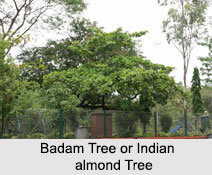
Indian almond tree is a vital Indian Medicinal Plant. This plant is generally an evergreen or briefly deciduous tree depending on locality. It is about 10-35 meter tall, with smooth grey bark and whorled branches. The young branches of the Indian almond tree is densely yellow-brown pubescent. The leaves are about 13 to 22 centimeter long and 7 to 12 centimeters wide. All leaves are spirally arranged or clustered at the ends of branches with obovate or elliptic-ovate shape. The leaves of this Indian medicinal plant are found narrowing below the middle into a narrow sub-cordate base and bear dark-coloured, sessile gland on each side of the midrib. They are finely tomentose when young and become somewhat glossy when mature. There are 9 to 11 pairs of veins and the petioles are 0.5-1 centimeter long. Indian almond tree has bracts ovate within 0.5 to 0.6 millimeter long.

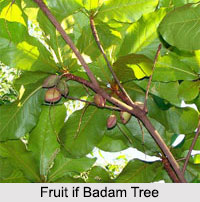
Flowers of this Indian Medicinal Plant are sessile and white in colour. All the flowers are in axillary spikes with 5 to14 centimeter long with a predominance of male flowers and a few female or hermaphrodite flowers usually only at the base. The bracts are minute and calyx-teeth are glabrous or nearly so within and without. Each fruit is about 3.5-5.5 centimeter long and 2.5 centimeter or more wide. All fruits in the Indian almond tree are ellipsoid or ovoid in shape. They are laterally more or less compressed and often ringed by a rigid wing which is 2 millimeter broad.

Indian Almond OilIndian almond tree is a native tree to coastal forests on sandy soils in India. The Indian medicinal plant is cultivated in many parts of tropical India as an ornamental tree and for its nutritious fruits. This Indian medicinal plant has great Ayurvedic properties. The fruit is considered as a cooling agent. Each fruit is aphrodisiac and astringent to the bowels and is used to treat biliousness and bronchitis. The seed of the Indian almond tree is edible and contains oil which is used medicinally for true almond oil. The leaves act as a sudorific and are applied to relieve rheumatic joint pain. The juice of the young leaves is used in southern India to prepare an ointment for treating scabies, leprosy and other skin diseases. This juice has great medicinal value and can be taken internally, it is said to be useful for treating colic and headache. The tannin from the leaves and bark is used as an astringent for treating dysentery. This Indian medicinal plant, Indian almond tree is regarded has properties such as diuretic and car-diotonic, and is applied externally on skin eruptions. The bark and leaves, and sometimes the roots and green fruits, are used for tanning leather, dyeing cloth, and for making ink.

(Last Updated on : 28/06/2011)
 
 
Hastyaluka Plant Varahikanda Plant Mustaka Plant
Cyperaceae Plant Trikosaki Plant Shankrapushpi Plant
Gabdi Plant Tamala Plant Bhadrabala Plant
Ajantri Plant Purple Convolvulus Plant Baghanulla Plant
Kanchata Plant Kharboj Plant Canda Plant
Triputa Plants Akhukarni Plant Michai Plant
Kamalata Plant Vyaghranakhi Plant Ipomoea coccinea L Plant
Railway Creeper Plant Akasavalli Plant Sankhapushpi Plants
Bahupraja Plant Danti Plant Sala Plant
Karela Plant Dhamargava Plant Jhingaka Plant
Sarahattika Plant Spilanthes Calva Plant Mundi Plant
Sigesbeckia Oriental Plant Senecio tenuifolius Plant Cottonweed Plant
Pentanema Indicum Plant Asvakarnah Plant Haritaki Plant
Badam Plant Bahira Plant Kakubha Plants
Amlavetasa Plant Vrksamlah Plant Nagakesar Plant
Swetachilli Plant Thorny staff tree Plant Jyotismati Plant
Ksharadala Plant Arjuna Asana Plant Rangoonkibel Plant
Combretum decandrum Roxb Plant Dhavah Plant Commiphora caudata Plant
Indian Cadaba Plant Kanthari Plant Acanthospermum hispidum Plant
Adhakpuspi Plant Aditya Plant Ajashrangi Plant
Akola Plant Alarka Plant Antrapachaka Plant
Arkamula Plant Ashvaghna Plant Australian pine Plant
Avighna Plant Barachandrika Plant Bhadra Plants
Bhringaraja plant Bhukharjuri Plant Bhut phal Plant
Biskandri Plant Bulb plants in India Campanilla Plant
Chakrani Plant Chironji plant Cordia macleodii Plant
Cyathocline purpurea Plant Dhania Plant Candrasura Plant
Chaskaman Hydro Power Plant Dhoajavriksha Plant Dhumapatra Plant
Ehretia laevis Roxb Plant Ervatamia heyneana Plants Glossogyne bidens Plant
Yugaphala Plant Golika Plant White Champa Plant
Gulsham Plant Harachampaka Plant Visamustih Plant
Heracleum rigens Wallichis Plant Iksvakuh Plant Trikantaka Plant
Tecoma stans Plants Indian Cherry Plants Indrayava Plant
Syamalata Plant Suryamukhi Plant Jingini Plant
Supari Plants Sugandhi Plant Kajutaka plant
Sudrabilo plant Kakadani Plant Spanish needle plant
Kaliziri Plant Soumya Plant Sinduri Plants
Silkweed Plant Kandali Plant Kantaphala Plant
Karabi Plant Seetaphal plant Karamardika Plant
Secamone emetica Plant Karambha Plant Satamuli Plant
Sasasruti Plant Kath-Semul Plants Sarvabajin Plant
Sarpagandha Kharjuri Plants Sariba Plant
Krishnasariva Plant Sangkhaphuli Plant Kunduru Plants
Laghukacchu Plant Safed Sarson Plant Lingini Plant
Rugtoora Plants Manjirika Plant Raladhupa Plant
Moca Plants Musali plant Prickly Pear Plant
Pothos scandens Plants Pithari Plant Nityakalyani Plant
Parpatakah Plant Parthenium hysterophorus Plant Patoli Plants
Patala Plants Oriental Cashew Tree Matchstick Tree
Jasmine Tree Malayan Custard Apple Amrataka Plant
Vitunna Plant Sabu Plant Khetki Plant
Jungli Anarash Plant Hamsapadi Plant Pindi Plant
Amaranthus spinosus L Plant Alternanthera Sessilis Plant Alternanthera pungens H.B.K Plant
Aerva lanata Plant Amaranthaceae Plant Aloe Barbadensis Mill or Indian Aloe
Ganderi Plant Dra-Vanti Plant Bhumyamalaki Plant
Bherenda Bhadradanti Plant Krishna-Kamboji Plant
Macaranga indica Weight Plant Kampilla Plant Svetakanchana
Orchid Tree Kandla Mahul
Kuberakshi Dividivi Plant Karanjika Plant
Guletura Plant Nelaponna Plant Sarmal Plant
Amaltas Plant Tarwar Plant Chaksu Plant
Gabur Plant Brahmani Khair Plant White Babul Plant
Babla Plant Biswul Plant Shami Plant
Aila Plant Kunchandana Plant Krishnasirish Plant
Sirisa Chakavat Plant Gulmohur Plant
Yellow Goldmohur Plant Ashoka Tree Balapatra Plant
Red Kutch Plant Kariyartharani Muria
Shivari Dhamani Pharsia
Kukurbicha Charati Panibel
Amalbel Vajravalli Benokra
Chikun Karanji Patera
Badhara Benjuen Bharangi
Gambhari Massandari Pulikampa
Tirutali Atmora Barhanta
Buli Dhunsuli Gokhru
Gothbegun Kakmachi Poduthalai
Sundri Tutturubenda Asheta
Bakul Banaganjei Brahmi
Dipya Hingon Kumarika
Mahanimb Parpoti Tobacco
Musket Tree Indravalli Aliar
Mahua Kapittha Curry Leaf
Kamini Arjaka Ramatulsi
Haldi Ginger Plant Nasinda
Ratanpurus Dokarbel Tobacco Plant
Koshta Poison Berry  
Recently Updated Articles in Flora & Fauna
Indian Animals
Indian Animals boast of a rich and varied biodiversity. A great variety of animal life can be seen in the country including mammals, reptiles as well as amphibians.
Shivalik Fossil Park
Shivalik Fossil Park is one of the most important tourist attraction sites and also the knowledge park for the young geologists and the aspirants.
National Fossil Wood Park
National Fossil Wood Park in Tamil Nadu is one of the major tourist attraction sites. People from all parts of the country come and visit this Fossil Park.
Churdhar Sanctuary
Churdhar Sanctuary, a national park in Himachal Pradesh, is located in the Sirmour of Shimla
Pin Valley National Park
Pin Valley National Park is one of the most prestigious national parks in Himachal Pradesh.
E-mail this Article | Post a Comment
Forum
Forum on Flora & Fauna
Free E-magazine
Subscribe to Free E-Magazine on Reference
 
 
Badam, Indian almond tree, Indian Medicinal Plant - Informative & researched article on Badam, Indian almond tree, Indian Medicinal Plant
Sitemap
Contact Us   |   RSS Feeds
Copyright © 2008 Jupiter Infomedia Ltd. All rights reserved including the right to reproduce the contents in whole or in part in any form or medium without the express written permission of
Jupiter Infomedia Ltd.