Transcendence in Tantric Practice
|
Transcendence in Tantric practice is the goal of all yogas that needs the consummation of the whole existence.
|
|
|
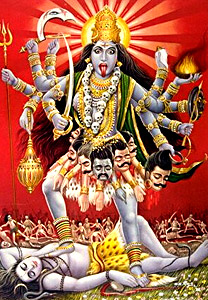 Transcendence in Tantric practice is the state of ultimate bliss. The theorem of transcendence in Tantric practices has an illustrious legend to its background. It is believed that Parvati in the embrace of Lord Shiva, while being carried above the clouds, was so ecstatic that she gave Him the name Jimutavahana. The two Supreme Beings complemented each other majestically. She was gentle and divinely refined. He was wild and forceful. Her subtle Lasya tempered his energetic Tandava which created perfect harmony. Together, the Divine cosmic couple captivated the vibrations of the Universe. Parvati gently beguiled Shiva into the ways of the world and through myriad questions enkindled his concern for the cosmos, Nature, society, life and marriage, which he was unaware about previously. This is where transcendence in Tantric practice comes into the realistic realm. Transcendence in Tantric practice is the state of ultimate bliss. The theorem of transcendence in Tantric practices has an illustrious legend to its background. It is believed that Parvati in the embrace of Lord Shiva, while being carried above the clouds, was so ecstatic that she gave Him the name Jimutavahana. The two Supreme Beings complemented each other majestically. She was gentle and divinely refined. He was wild and forceful. Her subtle Lasya tempered his energetic Tandava which created perfect harmony. Together, the Divine cosmic couple captivated the vibrations of the Universe. Parvati gently beguiled Shiva into the ways of the world and through myriad questions enkindled his concern for the cosmos, Nature, society, life and marriage, which he was unaware about previously. This is where transcendence in Tantric practice comes into the realistic realm.
Shiva, in this context, explained to his consort the meaning of transcendence in Tantric practices. According to Him, the whole of existence is consummated in transcendence, which is the end of all yogas. Transcendence reaches beyond all phenomenal restrictions and is the ultimate goal of evolution. The transcendental force of Shiva in Tantra leads one beyond worldliness, moving from the mundane to the metaphysical. Transcendence is the complete experience of reality beyond both worldliness and death.
Shiva's great wisdom which was acquired through eons of brooding and meditation was shared for the well-being of the universe. Through their cosmic united venture, the world was enriched by consecrated conversations. The secrets of the Vedas, the magnificence of the Shastras and the deep mysteries of the Tantras were revealed to every earthly being. Lost in the heights of the summit of Mount Meru, at the very centre of the Universe, Shiva, the supreme yogi and Shakti, his female consort viewed the world in unison. The cosmic couple became satisfied with the transcendental peace that followed their union bliss.
Going by transcendence in Tantric practices; one's life would be devoid of zeal. The 64 arts form a means of communication and self-expression for one's most mystifying urge. Shiva's consort, Kali is the initiator to transcendence. A woman becomes one with Kali by coming to terms with her own tremendous power of initiation. Goddess Lakshmi, Lord Vishnu's consort, is the pure incarnation of preservation, prosperity and beauty. The triad of the three forces of creativity, transcendence and preservation correspond to birth, death and life in one's very existence.
|
|
|
|





