





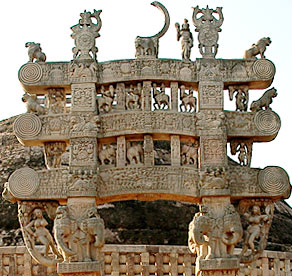
 Reckoned as an eminent expression of art, Ivory art has its root deep seated with the early civilization of India. Excavation reports that two tusks were found in Mahenjo-Daro and ample amount of Ivory objects were found in Indus Valley settlements. At Sanchi, in Madhya Pradesh, an inscription on a beautifully carved frieze was found and it was an evidence of the presentation of the ivory-carvers of the nearby town of Vidisa in second century A.D. Ancient history depicts that King Solomon was the person to acquire the Indian ivory in tenth century B.C. To decorate and enrich the palace King Darius used ivory in the sixth century B.C. Reckoned as an eminent expression of art, Ivory art has its root deep seated with the early civilization of India. Excavation reports that two tusks were found in Mahenjo-Daro and ample amount of Ivory objects were found in Indus Valley settlements. At Sanchi, in Madhya Pradesh, an inscription on a beautifully carved frieze was found and it was an evidence of the presentation of the ivory-carvers of the nearby town of Vidisa in second century A.D. Ancient history depicts that King Solomon was the person to acquire the Indian ivory in tenth century B.C. To decorate and enrich the palace King Darius used ivory in the sixth century B.C.
Ivory art was initiated and spread its development in the places like Kerala, Karnataka, especially in the coastal region, Pali and Jaipur (Rajasthan), Agra, Lucknow and Varanasi (Uttar Pradesh), Ahmedabad (Gujarat), and Behrampore and Murshidabad (West Bengal), in Orissa and in Delhi. In Kerala the history of ivory art dates back to the era of Swati Tirunal Maharaja. A throne of ivory chiseled by the Raja is an outstanding artwork. Even today ivory art in India is famed for its finesse, 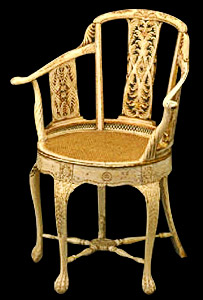 beauty, grandeur and majesty. Scenes from the Ramayana and Mahabharata find depiction in the ivory art of Kerala. The very shades of the phenomenon of the epics are effectively chiseled on the milk white ivory surface while making ivory art in Kerala to stand apart. beauty, grandeur and majesty. Scenes from the Ramayana and Mahabharata find depiction in the ivory art of Kerala. The very shades of the phenomenon of the epics are effectively chiseled on the milk white ivory surface while making ivory art in Kerala to stand apart.
Kerala inherits the tradition of painting on ivory. The paintings were generally selected from the Indian epics. Uttar Pradesh earned its fame for making figures of dancing poses, decorative plaques and the deities of Buddhist and Hindu religion. Punjab is appreciated for its art in carving the figures which depicts characters from some heroic tales or folk stories. The fans with exclusive designs for handles and the centre pieces for interior decoration are the speciality of Rajasthan. The 'Jali work' which is a distinct art, is the evidence of the efficiency of the artisanship. Not only in Kerala Ivory art as a splendid form of expression is also famous in other places of India. The doors of the Amber palace in Jaipur, the golden Temple of Amritsar and the delicacy of the art of inlay in the Mysore palace doors are the splendid instances of the ivory art in India. With the scarcity of ivory supply, semi ivory as the medium of expression is gaining importance in the recent era. The semi- ivory is basically a form of white acrylic to which powdered ivory is added to achieve a yellowing effect and used as the material for bangles, earrings and other 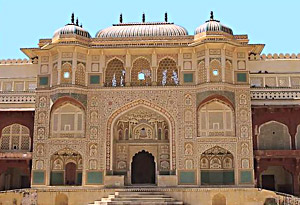 ornaments .Functional items such as combs, which were often richly decorated, fans, paper-knives, hairpins, buttons, and religious figures, particularly Hindu deities but also angels and saints for the Christian market. The tradition of making angles and religious figures was flourished in Goa, introduced by the Portuguese during the sixteenth century. Ivory is used for making the pieces for chess, 'chaupad', draughts and jewel boxes. The furniture and the instrumental items are decorated with the inlay art. ornaments .Functional items such as combs, which were often richly decorated, fans, paper-knives, hairpins, buttons, and religious figures, particularly Hindu deities but also angels and saints for the Christian market. The tradition of making angles and religious figures was flourished in Goa, introduced by the Portuguese during the sixteenth century. Ivory is used for making the pieces for chess, 'chaupad', draughts and jewel boxes. The furniture and the instrumental items are decorated with the inlay art.
The craftsmen of Rajasthan are skilled in making figures from cracked or inferior ivory and paint them in bright colours. Rajasthan is also well admired for its great artisanship in carving figures out of pure 'white ivory'. Ivory bangles are still being appreciated by the people of Rajasthan and Gujarat. The Naga traditionally use sections of local ivory as armlets in north -east India. The places in India where ivory is carved and incised like Jaipur, Delhi and Bengal are exclusive in the art of making 'ambari haathi'(processional elephants), models of book covers, sandals, bullock carts, caskets, frames and palanquins. The shoes made of ivory, called "Khadaon" were generally used by the superior casts like Brahmin and also by the pious people who considered shoes made of leather unclean. |
| ||||||||||||||||||||||||||||

