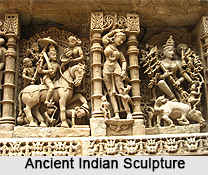
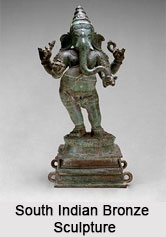
Temples of Kerala contain exquisite sculptures, particularly in stone which exhibit diverse influences of various ruling kingdoms. The wood carvings in Kerala temples are masterpieces. There are two divisions as far as the sculptural work is concerned: One is the low relief done on the outer walls of the shrine. The second is the sculpturing of the timber elements - the rafter ends, the brackets, the timber columns and their capitals, door frames and beams. Decorative sculptural work is seen in the ceiling panels of the mandapas. All sculptural works were done in accordance to the canons of proportions (ashtathala, navathala and dasathala system) applicable to different figures of men, gods and goddesses, prescribed in texts. Sculpture is done vertically in order to emphasize the different storey heights. The sculptured walls are protected by the projecting caves. These caves keep them in shade.
The Kuthambalam Mandapas have puranic figures carved on wood. Haripad Subrahmania Temple, Sri Vallabha Temple at Thiruvalla, Triprayar Rama Temple has exquisite wood carvings. Thiruvanathapuram Sree Padmanabhaswami temple, Kumaranalloor temple, Ettumanur temple, Kazhakkoottam Mahadeva, Kaviyoor Mahadeva, Irinjalakkuda Koodalmanikya Swami, Kodungalloor Sree Kurumba Bhagavathy, Thiruvanchikkulam Shiva, Kudamaloor Vasudevapuram, Parumala Panayannarkavu, Thirumandhamkunnu, Thrissur Vadakkunathan temple, Aranmula Parthasarathy, Thuravoor, Kadinamkulam Mahadeva, Vaikom Mahadeva, Pazhoor Perumthrukkovil Mahadeva, Udayamperoor Ekadasi Perumthrukkovil Mahadeva, Kidangoor Subrahmanya, Arppookkara Subrahmanya, Chiravammuttam Mahadeva, Cheriyanadu Balasubrahmanya, Pundareekapuram Vishnu, Navaikkulam Shankaranarayana and Kandiyoor Mahadeva temples are known for murals and wooden sculptures.
The platforms in Thiruvanathapuram Sree Padmanabha Swami temple which is front of the vimanam and the place where the deity rests are carved out of a single massive stone and hence called "Ottakkal-mandapam. The foundation of the present gopuram was laid in 1566 that is made in the Pandyan style. The temple has a corridor and one-quarter sculptured granite-stone pillars with elaborate carvings.
Vaikom Mahadeva Temple has exquisite sculptures and carvings. The story of Ramayana has been sculptured on the inner roof of the Namaskara Mandapa. On the east of this hall is a huge Nandi (the celestial bull) made in a single stone and a small one for Archana. The outer walls of Sreekovil are decorated with wooden sculptures and stories from Puranas.
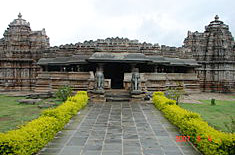
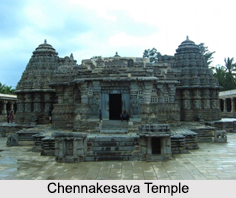
The minute ornamentation of the sculptures of Kerala is similar to that of the Hoysala tradition of Karnataka. The tradition of stone sculptures rose to great heights as is evident from the reliefs and pillar decorations in the balikkal-mandapa. It depicts local features though grafted on the Nayaka tradition.
There are several Jain monuments in Kerala. It includes rock shelters at Chitral near Nagercoil, a rock cut temple at Kallil near Perumbavoor, and remains of structural temples at Alathoor near Palakkad and at Sultanbathery. Sculptured Kerala Jaina and Dravidian figures of Mahavira, Parswanatha and other thirthankaras have been recovered. The pillared facade and the walls inside the ardhamandapa of rock cut temples have sculptured reliefs of the donor, a beared rishi, a seated four armed Ganesh and dwarapalas.
In the southernmost Kerala, the temple architecture has been influenced by the developments in Tamil Nadu. At Sucheendram and Thiruvananthapuram lofty enclosures, sculptured corridors and ornate mandapas all in granite stone conceal the view of the original main shrine in typical Kerala style.