





 Indian sculptors have absorbed the various types of metamorphosis of the art of carving out sculptures, presenting Indian sculptures which are wrapped in contemporary taste. The origin of Indian sculpture dates back to the ancient Indus Valley Civilisation. In an attempt to trace the history of sculpture and sculptors one needs to go back to the Harappan civilisation. This was more an urban set up where the cities were well planned and simple. But it was the pottery, sculptural relief, seals and other handiworks. The bronze sculptures from Indus Valley Civilization were as impressive as their well laid out cities. Indian sculptors have absorbed the various types of metamorphosis of the art of carving out sculptures, presenting Indian sculptures which are wrapped in contemporary taste. The origin of Indian sculpture dates back to the ancient Indus Valley Civilisation. In an attempt to trace the history of sculpture and sculptors one needs to go back to the Harappan civilisation. This was more an urban set up where the cities were well planned and simple. But it was the pottery, sculptural relief, seals and other handiworks. The bronze sculptures from Indus Valley Civilization were as impressive as their well laid out cities.
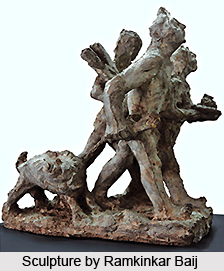
India boasts of innumerable dexterous sculptors who have produced exemplary work and are renowned for their brilliant contributions in the field of Indian sculpture art. Most of these sculpture artisans have migrated to Western nations to rediscover their upcoming ideas, as well as to communicate to the maximum quantity of target consumers. Indian sculptors are well known for their creations like sand sculpture, metal sculpture, bronze sculpture and wood sculpture, amongst innumerous other forms of sculpture crafting. Museums or galleries, as well as temporary structures are used to demonstrate the manifold aspects of this kind of art. Many modern sculptors are experimenting with interactive installations and other contemporary techniques to attract the attention of people. Nalini Mallani, Sobodh Gupta and Subodh Kerkar are a few of the Indian sculptors who are exploring new horizons in this field. Some of the Indian Sculptors are as follows: 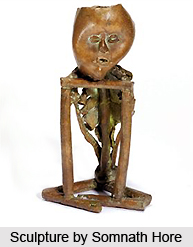 Ram kinkar Baij
Born in the Bankura district of West Bengal, Ramkinkar Baij is an acclaimed Indian sculptor who is referred to as one of the pioneers of modern Indian sculpture. Most of his works are displayed in Shantinektan, where he had worked under the inspiration of Nandalal Bose, a famous painter. Human figures and body language were his specialty. Dhruva Mistry Dhruva Mistry's creative finesse involved the beautiful fusion of standard art with ancient, traditional craft which is a product of the primitive civilizations of India. Mistry's work reflects individual curiosity and interest. He explored art in a variety of media like drawing, painting, etching, dry point, digital works, photography, and sculpture in various materials. Mistry works with scale and quality of forms, concepts and materials as a sculptor. His works reveal intrinsic appeal and perceptual beauty of the form. Mistry is inspired from civilizations and cultures like Indian, Chinese, Assyrian, Egyptian, Greek, European Mayan, Oceanic, and African, tribal, folk, old, new and modern. Dhanraj Bhagat Dhanraj Bhagat continued experimenting with innovative styles of carving sculpture and realized the significance of wood as the base material for creating sculpture. G. Ravinder Reddy This Indian sculptor, born in Andhra Pradesh built sculpture which were lively and seemed as if they communicated with your eyes, directly, like speaking to you. Classical designs, followed by sexual idols which could be categorized as lusty or vulgar were included among the creations of G. Ravinder Reddy. 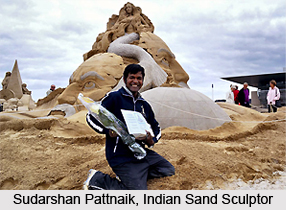 Anish Kapoor
Anish Kapoor is a distinguished Indian sculptor who won the Turner Prize in 1991 for his excellent work in the field of Indian sculpture. His work includes brightly coloured or monochromatic art forms. He is the recipient of several prestigious awards for his contribution to Indian sculpture. Anish Kapoor worked along with engineers and architects throughout his entire life and created beautiful works. Sadanand Bakre Sadanand Bakre is one of the most celebrated Indian sculptors. His creations are demonstrated in Europe and America, including the Commonwealth Institute, Nicholas Treadwell Gallery and Gallery Four. Somnath Hore The bronze figurines made by him recalled the agonies of famine and war and symbolized modern Indian art. One of his largest sculptures, Mother and Child was dedicated to the sufferings of the people of Vietnam. He died in the year 2006 at the age of 85. Somnath has expressed concern over man's inhumanity against man and blatant violation of human values. Sankho Chaudhuri Sankho Chaudhury has produced several works which are live examples of his immense potential as a sculptor in India. Many awards prove his skilled expertise at crafting wonderful sculpture. 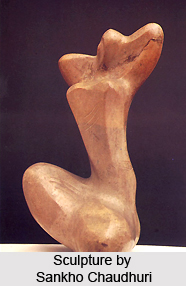 Chintamoni Kar
Chintamoni Kar was a globally recognized Indian sculptor, who created sculpture with the aide of various materials like terracotta, metal, stone and wood. He is honoured with an Olympic silver medal which was offered to him on behalf of Britain. Indian and French governments offered him civilian awards to appreciate his works of sculpture. Sudarshan Pattnaik He is the pioneer of sand art in the country and has mastered it without any formal guidance or training. Innumerable works of sand sculpture have been produced by him since he was seven years of age. Many national and global awards have been awarded to Sudarshan Pattnaik to admire his innovative sand sculpture. He holds the World record for building the tallest Santa Claus sand sculpture in the world. He also won the People's Choice Prize at the Moscow International Sand Sculpture Championship which was conducted in Russia. Other Indian Sculptors Kishore Nagappa, Krishna Reddy, Vijay Gaur, Latika Katt, Kumaradeva, Rooma Mehra, Dashrath Patel, Mallikarjuna Reddy, Trupti Patel, Meera Mukherjee, N.N.Rimzon, Raghunath Krishna Phadke, Mani Nagappa, Nek Chand Saini, Avtarjeet Singh Dhanjal, Raghunath Mohapatra and numerous other Indian sculptors are quite reputed.The contemporary sculptures include sand sculptures and various kinds of metal sculptures. With the emergence of temple building the sculptors created beautiful relief works in order to decorate the temples. However the identities of these India sculptors remained unknown. It was in some of the Pattadakaltemples that one comes across the names of the artists. One such name that appears in the Virupaksha Temple is that of Gundan Anivaritachari. However with time notions like individuality sprang up. With it came the art of signing a particular work of art. It was done to provide recognition to the sculptors and other artisans. |
| ||||||||||||||||||||||||||||

